Department of General Practice, Faculty of Medicine, Dentistry & Health Sciences, University of Melbourne, Victoria, Australia.
Centre for Health Analytics, Murdoch Children's Research Institute, Melbourne, Australia.
J Med Internet Res. 2023 Feb 27;25:e36667. doi: 10.2196/36667.
The use and acceptance of medicinal cannabis is on the rise across the globe. To support the interests of public health, evidence relating to its use, effects, and safety is required to match this community demand. Web-based user-generated data are often used by researchers and public health organizations for the investigation of consumer perceptions, market forces, population behaviors, and for pharmacoepidemiology.
In this review, we aimed to summarize the findings of studies that have used user-generated text as a data source to study medicinal cannabis or the use of cannabis as medicine. Our objectives were to categorize the insights provided by social media research on cannabis as medicine and describe the role of social media for consumers using medicinal cannabis.
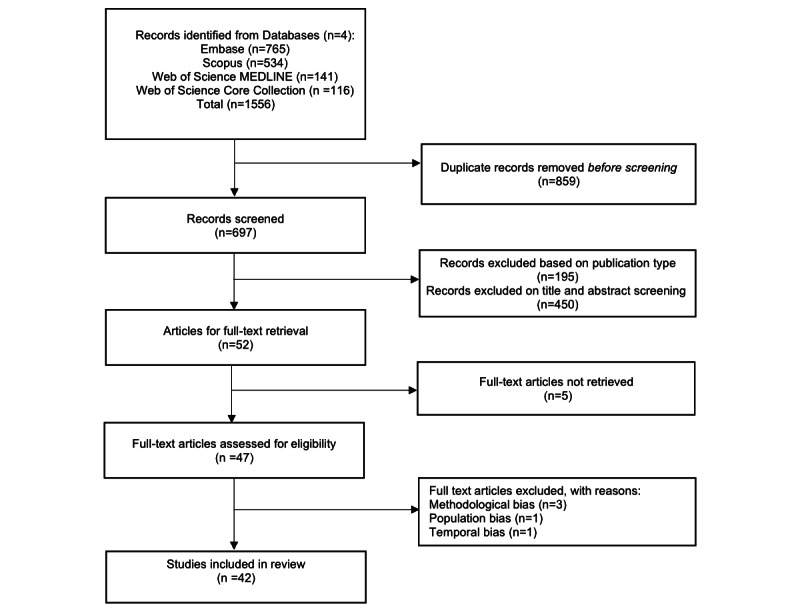
The inclusion criteria for this review were primary research studies and reviews that reported on the analysis of web-based user-generated content on cannabis as medicine. The MEDLINE, Scopus, Web of Science, and Embase databases were searched from January 1974 to April 2022.
We examined 42 studies published in English and found that consumers value their ability to exchange experiences on the web and tend to rely on web-based information sources. Cannabis discussions have portrayed the substance as a safe and natural medicine to help with many health conditions including cancer, sleep disorders, chronic pain, opioid use disorders, headaches, asthma, bowel disease, anxiety, depression, and posttraumatic stress disorder. These discussions provide a rich resource for researchers to investigate medicinal cannabis-related consumer sentiment and experiences, including the opportunity to monitor cannabis effects and adverse events, given the anecdotal and often biased nature of the information is properly accounted for.
The extensive web-based presence of the cannabis industry coupled with the conversational nature of social media discourse results in rich but potentially biased information that is often not well-supported by scientific evidence. This review summarizes what social media is saying about the medicinal use of cannabis and discusses the challenges faced by health governance agencies and professionals to make use of web-based resources to both learn from medicinal cannabis users and provide factual, timely, and reliable evidence-based health information to consumers.
全球范围内,医用大麻的使用和接受度正在上升。为了满足公众健康的需求,需要提供与大麻使用、效果和安全性相关的证据,以匹配这种社区需求。基于网络的用户生成数据通常被研究人员和公共卫生组织用于调查消费者认知、市场力量、人口行为以及药物流行病学。
在本综述中,我们旨在总结使用用户生成文本作为数据源来研究医用大麻或大麻作为药物使用的研究结果。我们的目的是对社交媒体研究关于医用大麻的发现进行分类,并描述社交媒体对使用医用大麻的消费者的作用。
本综述的纳入标准是报告分析医用大麻网络用户生成内容的原始研究和综述。从 1974 年 1 月至 2022 年 4 月,我们在 MEDLINE、Scopus、Web of Science 和 Embase 数据库中进行了检索。
我们共检查了 42 篇发表在英语期刊上的研究,发现消费者重视他们在网络上交流经验的能力,并倾向于依赖网络信息来源。大麻讨论将该物质描绘为一种安全且天然的药物,可用于治疗许多健康状况,包括癌症、睡眠障碍、慢性疼痛、阿片类药物使用障碍、头痛、哮喘、肠病、焦虑、抑郁和创伤后应激障碍。这些讨论为研究人员提供了一个丰富的资源,用于调查医用大麻相关的消费者情绪和体验,包括监测大麻效应和不良事件的机会,鉴于这些信息是轶事性的,且通常存在偏见,因此需要对其进行适当的解释。
大麻产业在网络上的广泛存在,加上社交媒体话语的对话性质,导致了丰富但潜在有偏见的信息,这些信息往往缺乏科学证据的支持。本综述总结了社交媒体对医用大麻使用的看法,并讨论了卫生治理机构和专业人员在利用网络资源向医用大麻使用者学习以及向消费者提供事实、及时和可靠的基于证据的健康信息方面面临的挑战。