MRC Centre for Global Infectious Disease Analysis, Department of Infectious Disease Epidemiology, School of Public Health, Imperial College London, United Kingdom.
Influenza Division, National Center for Immunization and Respiratory Diseases, Centers for Disease Control and Prevention, Atlanta, Georgia, United States of America.
PLoS Comput Biol. 2023 Feb 27;19(2):e1010893. doi: 10.1371/journal.pcbi.1010893. eCollection 2023 Feb.
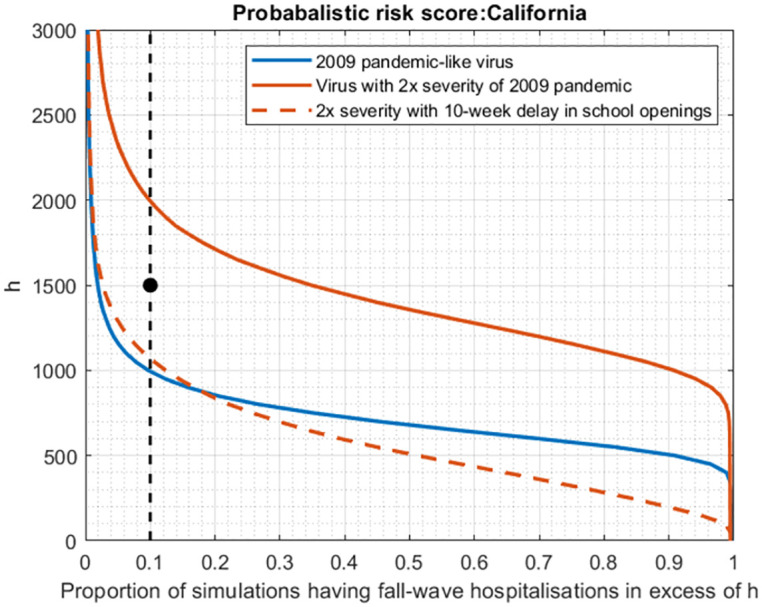
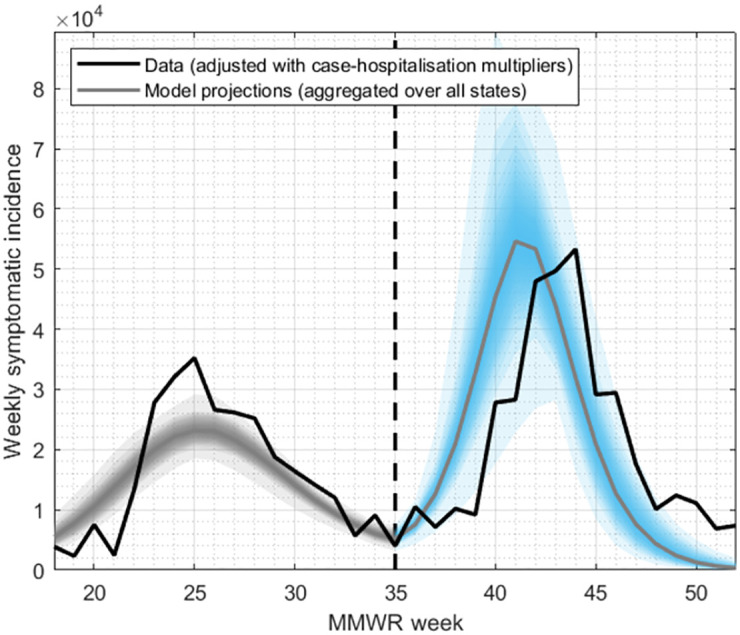
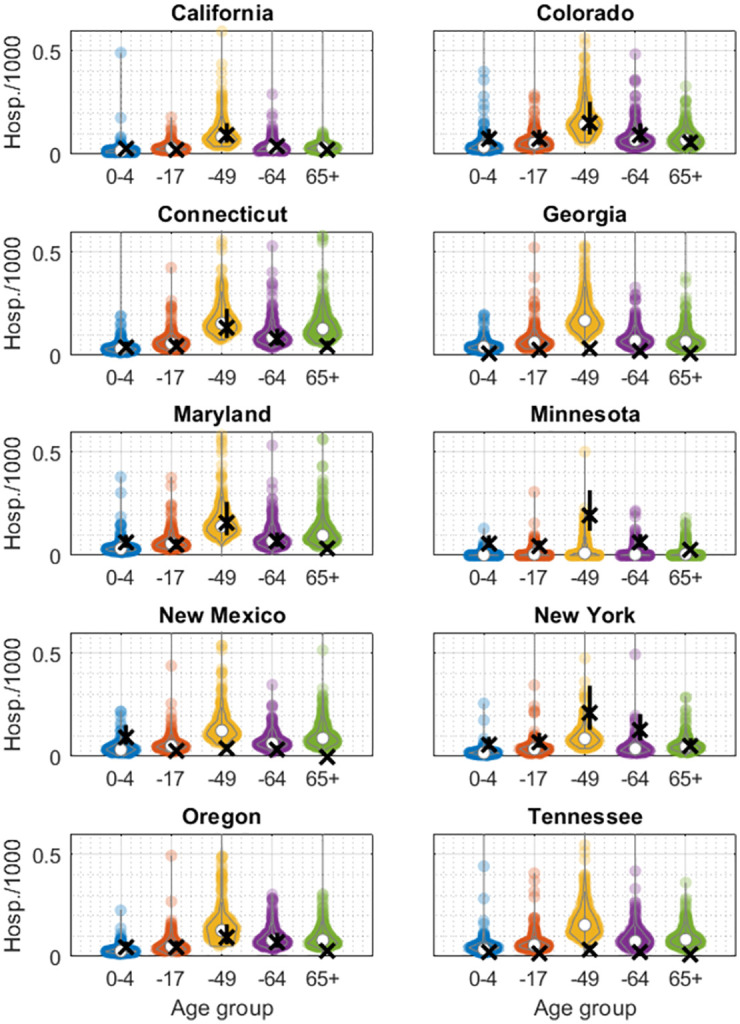
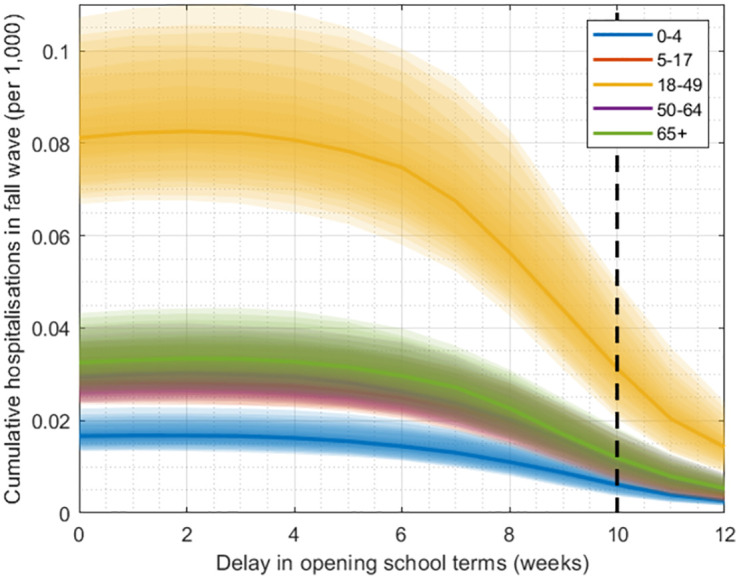
Influenza pandemics typically occur in multiple waves of infection, often associated with initial emergence of a novel virus, followed (in temperate regions) by a resurgence accompanying the onset of the annual influenza season. Here, we examined whether data collected from an initial pandemic wave could be informative, for the need to implement non-pharmaceutical measures in any resurgent wave. Drawing from the 2009 H1N1 pandemic in 10 states in the USA, we calibrated simple mathematical models of influenza transmission dynamics to data for laboratory confirmed hospitalisations during the initial 'spring' wave. We then projected pandemic outcomes (cumulative hospitalisations) during the fall wave, and compared these projections with data. Model results showed reasonable agreement for all states that reported a substantial number of cases in the spring wave. Using this model we propose a probabilistic decision framework that can be used to determine the need for preemptive measures such as postponing school openings, in advance of a fall wave. This work illustrates how model-based evidence synthesis, in real-time during an early pandemic wave, could be used to inform timely decisions for pandemic response.
流感大流行通常会发生多次感染波,通常与新型病毒的最初出现有关,随后(在温带地区)伴随着年度流感季节的开始而出现复发。在这里,我们研究了从初始大流行波收集的数据是否可以提供信息,以了解在任何复发波中实施非药物措施的必要性。我们从美国 10 个州的 2009 年 H1N1 大流行中提取了流感传播动力学的简单数学模型,将其与春季初始“春季”波中实验室确诊的住院数据进行了校准。然后,我们预测了秋季波期间的大流行结果(累积住院人数),并将这些预测与数据进行了比较。对于在春季波中报告了大量病例的所有州,模型结果均显示出合理的一致性。我们使用该模型提出了一种概率决策框架,可以在秋季波之前,用于确定是否需要采取预防措施,例如推迟开学。这项工作说明了如何在早期大流行波期间实时进行基于模型的证据综合,以告知大流行应对的及时决策。