Evandro Chagas Institute, Rodovia BR 316, km-07, Ananindeua 67030-000, Pará, Brazil.
Postgraduate Program in Biology of Infectious and Parasitic Agents, Federal University of Pará, Belém 66075-110, Pará, Brazil.
Viruses. 2023 Feb 16;15(2):551. doi: 10.3390/v15020551.
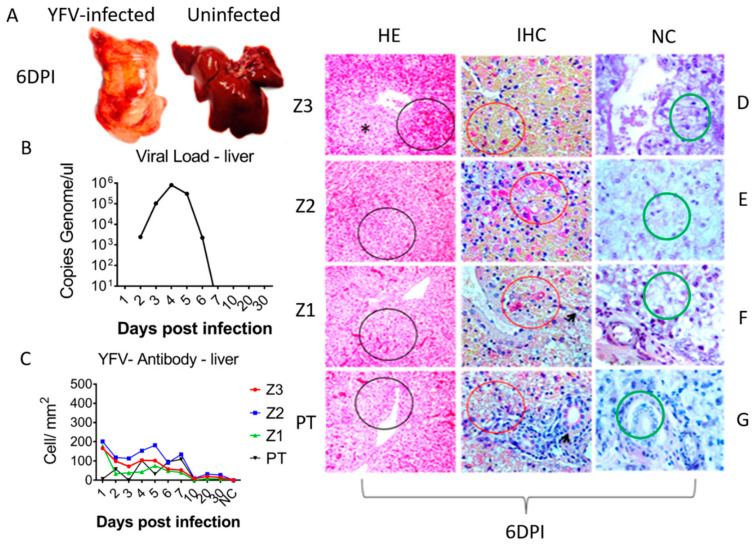
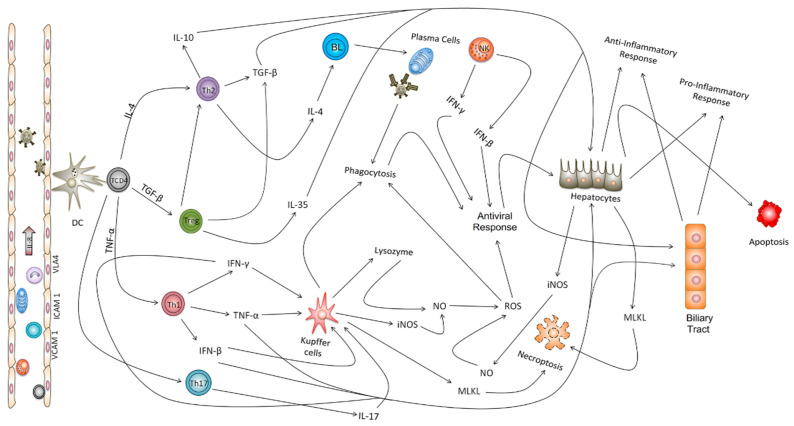
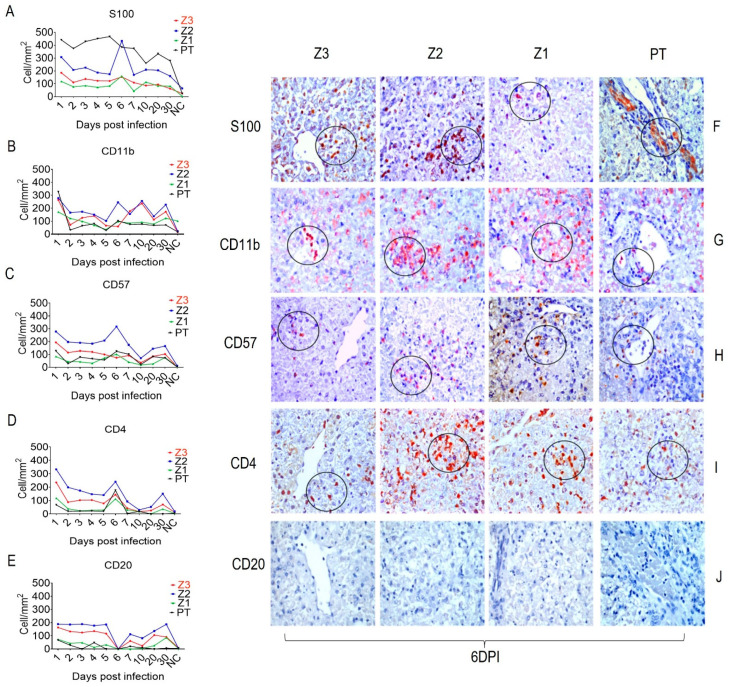
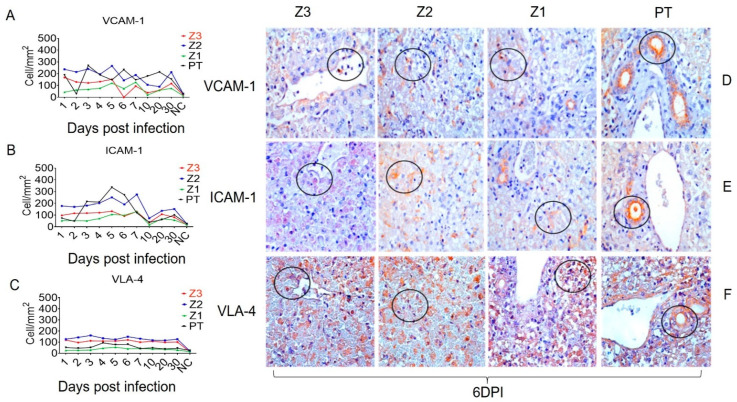
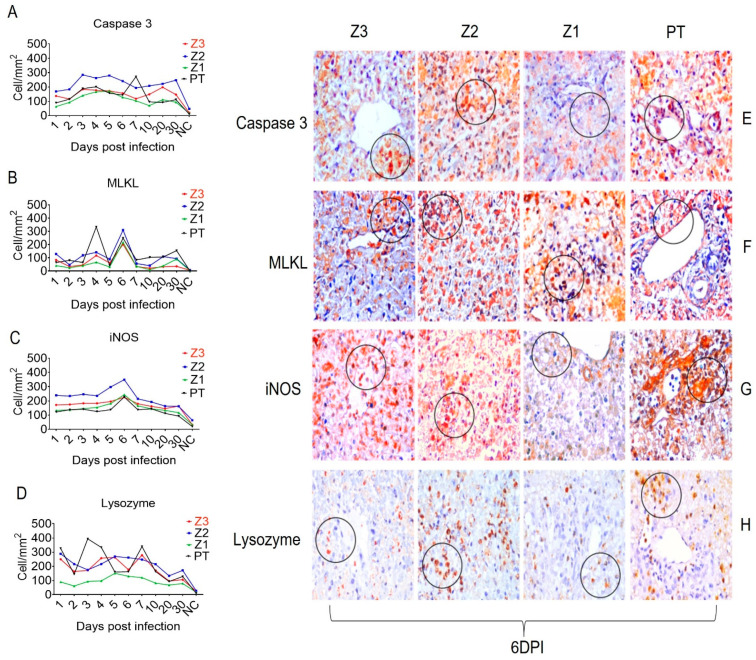
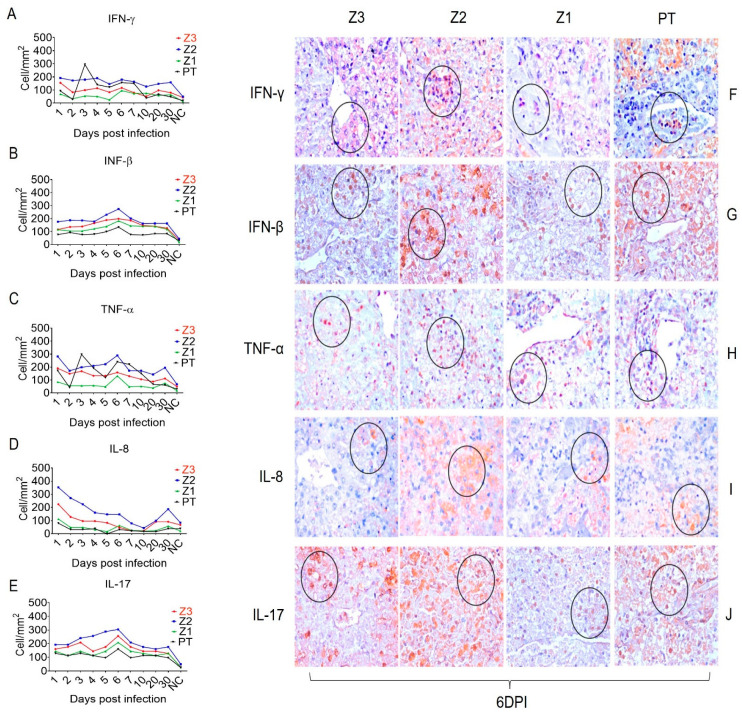
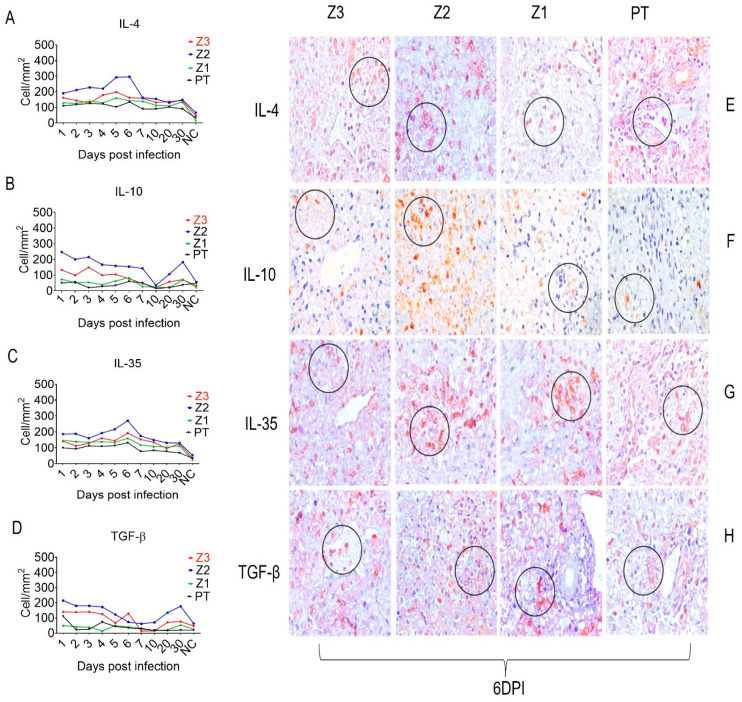
Non-human primates contribute to the spread of yellow fever virus (YFV) and the establishment of transmission cycles in endemic areas, such as Brazil. This study aims to investigate virological, histopathological and immunohistochemical findings in livers of squirrel monkeys ( spp.) infected with the YFV. Viremia occurred 1-30 days post infection (dpi) and the virus showed a predilection for the middle zone (Z2). The livers were jaundiced with subcapsular and hemorrhagic multifocal petechiae. Apoptosis, lytic and coagulative necrosis, steatosis and cellular edema were also observed. The immune response was characterized by the expression of S100, CD11b, CD57, CD4 and CD20; endothelial markers; stress and cell death; pro and anti-inflammatory cytokines, as well as Treg (IL-35) and IL-17 throughout the experimental period. Lesions during the severe phase of the disease were associated with excessive production of apoptotic pro-inflammatory cytokines, such as IFN-γ and TNF-α, released by inflammatory response cells (CD4+ and CD8+ T lymphocytes) and associated with high expression of molecules of adhesion in the inflammatory foci observed in Z2. Immunostaining of the local endothelium in vascular cells and the bile duct was intense, suggesting a fundamental role in liver damage and in the pathogenesis of the disease.
非人类灵长类动物有助于在黄热病病毒(YFV)流行地区(如巴西)传播病毒并建立传播循环。本研究旨在研究感染 YFV 的松鼠猴( spp.)的病毒学、组织病理学和免疫组织化学发现。病毒血症发生在感染后 1-30 天(dpi),病毒对中区(Z2)有偏好。肝脏呈黄疸,伴有包膜下和出血性多发性瘀点。还观察到细胞凋亡、裂解和凝固性坏死、脂肪变性和细胞水肿。免疫反应的特征是在整个实验期间表达 S100、CD11b、CD57、CD4 和 CD20;内皮标记物;应激和细胞死亡;促炎和抗炎细胞因子,以及 Treg(IL-35)和 IL-17。疾病严重期的病变与凋亡促炎细胞因子(如 IFN-γ 和 TNF-α)的过度产生有关,这些细胞因子由炎症反应细胞(CD4+和 CD8+T 淋巴细胞)释放,并与观察到的 Z2 中炎症灶中粘附分子的高表达有关。局部内皮细胞在血管细胞和胆管中的免疫染色强烈,表明其在肝损伤和疾病发病机制中具有重要作用。