Baichan Pavan, Naicker Previn, Augustine Tanya Nadine, Smith Martin, Candy Geoffrey, Devar John, Nweke Ekene Emmanuel
Department of Surgery, School of Clinical Medicine, Faculty of Health Sciences, University of the Witwatersrand, 7 York Road Parktown, Johannesburg, 2193, South Africa.
Council for Scientific and Industrial Research, Pretoria, 0001, South Africa.
Clin Proteomics. 2023 Mar 1;20(1):8. doi: 10.1186/s12014-023-09399-9.
Gallbladder cancer (GBC) is a lethal cancer with a poor prognosis. The lack of specific and sensitive biomarkers results in delayed diagnosis with most patients presenting at late stages of the disease. Furthermore, there is little known about the molecular mechanisms associated with GBC, especially in patients of African ancestry. This study aimed to determine dysregulated proteins in South African GBC patients to identify potential mechanisms of the disease progression and plausible biomarkers.
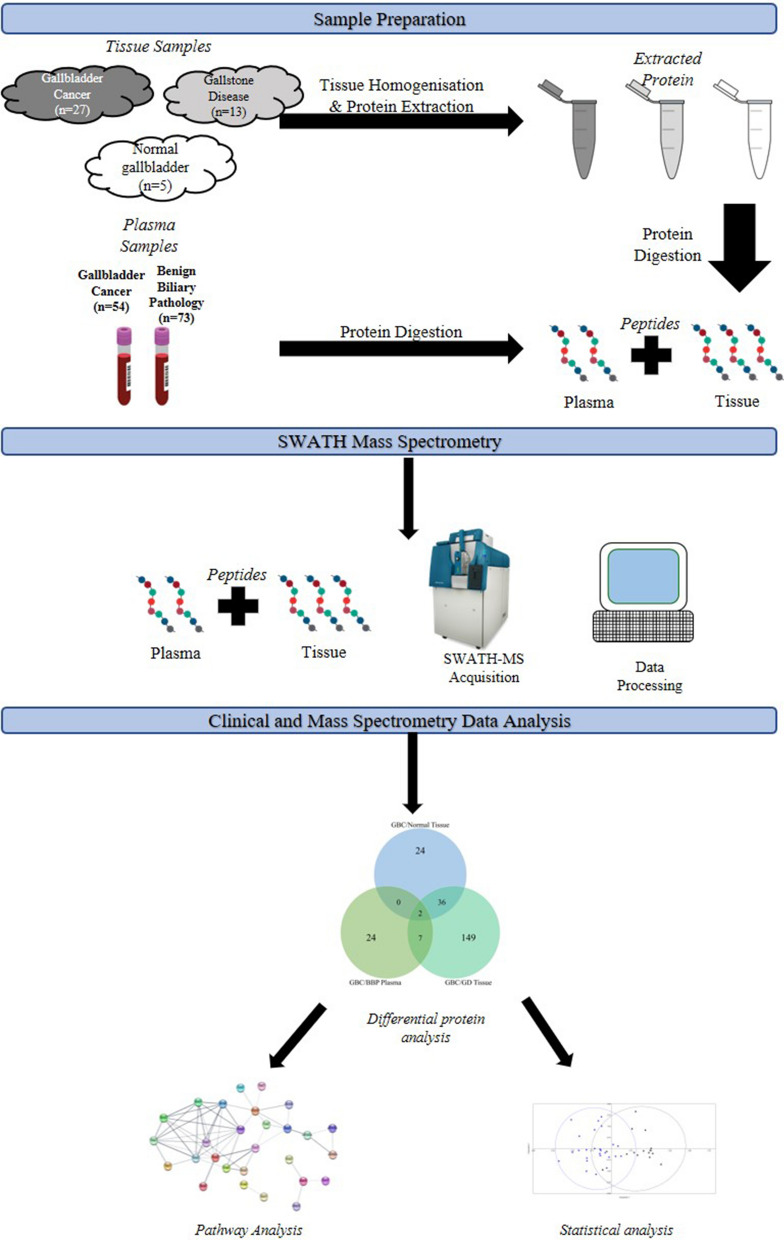
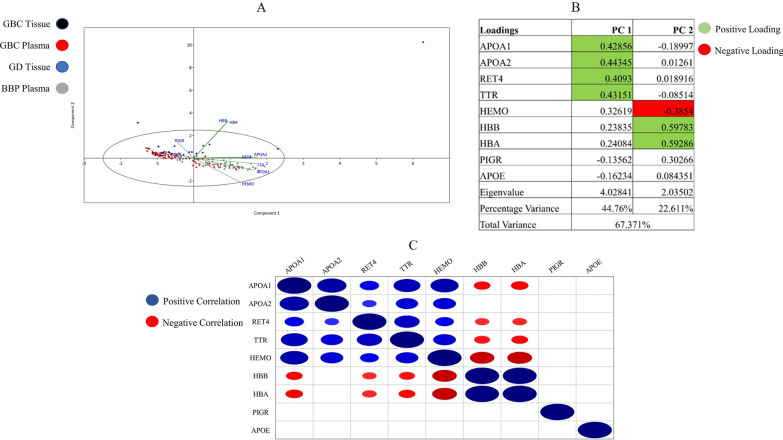
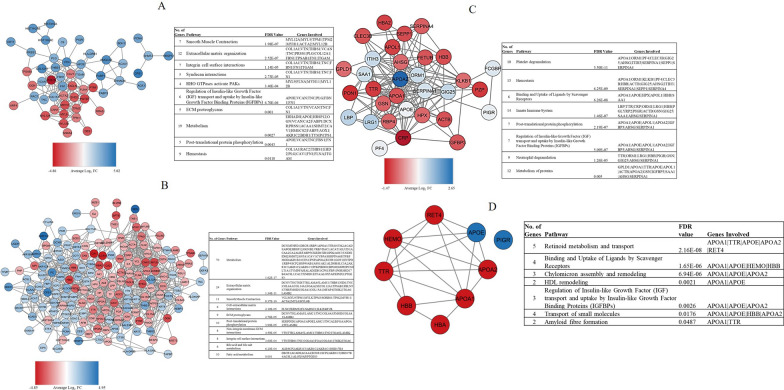
Tissues (27 GBC, 13 Gallstone disease, and 5 normal tissues) and blood plasma (54 GBC and 73 Benign biliary pathology) were obtained from consenting patients. Protein extraction was performed on all tissues and liquid chromatography-mass spectrometry was used for proteomic profiling. A project-specific spectral library was built using the Pulsar search algorithm. Principal component and Spearman's rank correlation analyses were performed using PAST (V4.07b). Pathway and Network analyses were conducted using REACTOME (v3.7) and stringAPP (v1.7.0), respectively.
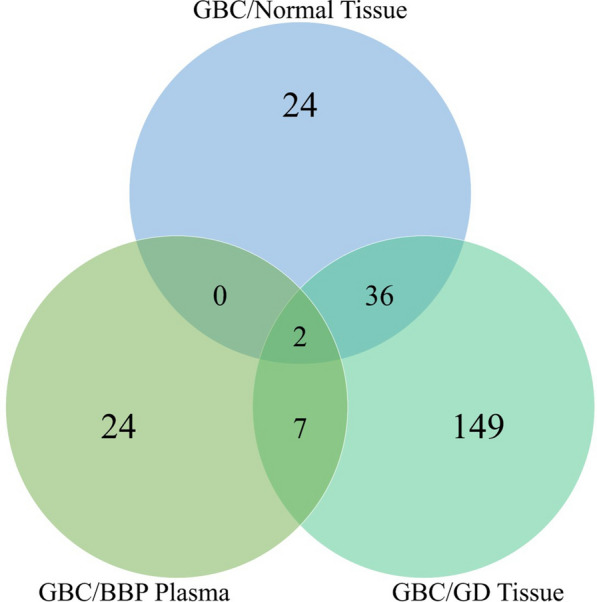
In the tissue sample group, there were 62 and 194 dysregulated proteins in GBC compared to normal and gallstone groups, respectively. In the plasma group, there were 33 altered proteins in GBC compared to the benign biliary pathology group. We found 9 proteins (APOA1, APOA2, RET4, TTR, HEMO, HBB, HBA, PIGR, and APOE) to be commonly dysregulated in both tissue and plasma. Furthermore, a subset analysis demonstrated that 2 proteins, S100A8 and S100A9, were downregulated in GBC patients with GD history compared to those without. Pathway analysis showed that the dysregulated proteins in GBC patients were enriched in pathways involved in smooth muscle contraction, metabolism, ECM organization, and integrin cell surface interactions.
The identified dysregulated proteins help in understanding GBC molecular mechanisms in our patient group. Furthermore, the alteration of specific proteins in both tissue and plasma samples suggests their potential utility as biomarkers of GBC in this sample cohort.
胆囊癌(GBC)是一种预后较差的致命性癌症。缺乏特异性和敏感性生物标志物导致诊断延迟,大多数患者在疾病晚期才被发现。此外,关于GBC相关的分子机制知之甚少,尤其是在非洲裔患者中。本研究旨在确定南非GBC患者中失调的蛋白质,以识别疾病进展的潜在机制和可能的生物标志物。
从同意参与的患者中获取组织(27例GBC、13例胆结石疾病和5例正常组织)和血浆(54例GBC和73例良性胆道疾病)。对所有组织进行蛋白质提取,并使用液相色谱-质谱联用技术进行蛋白质组分析。使用Pulsar搜索算法构建特定项目的光谱库。使用PAST(V4.07b)进行主成分分析和Spearman秩相关分析。分别使用REACTOME(v3.7)和stringAPP(v1.7.0)进行通路和网络分析。
在组织样本组中,与正常组和胆结石组相比,GBC中分别有62种和194种失调蛋白质。在血浆组中,与良性胆道疾病组相比,GBC中有33种蛋白质发生改变。我们发现9种蛋白质(载脂蛋白A1、载脂蛋白A2、RET4、甲状腺素转运蛋白、血红蛋白、血红蛋白β、血红蛋白α、多聚免疫球蛋白受体和载脂蛋白E)在组织和血浆中均普遍失调。此外,亚组分析表明,与无胆结石病史的GBC患者相比,有胆结石病史的GBC患者中2种蛋白质S100A8和S100A9表达下调。通路分析表明,GBC患者中失调的蛋白质富集于参与平滑肌收缩、代谢、细胞外基质组织和整合素细胞表面相互作用的通路中。
鉴定出的失调蛋白质有助于理解我们患者群体中GBC的分子机制。此外,组织和血浆样本中特定蛋白质的改变表明它们在该样本队列中作为GBC生物标志物的潜在用途。