Centre for Pharmaceutical Innovation, Clinical and Health Sciences, University of South Australia, Adelaide, SA, 5000, Australia.
Central Adelaide Local Health Network, The Queen Elizabeth Hospital, Woodville, SA, 5011, Australia.
Int J Nanomedicine. 2023 Feb 22;18:1007-1029. doi: 10.2147/IJN.S400610. eCollection 2023.
Imiquimod (IMQ) is an immunomodulating drug that is approved for the treatment of superficial basal cell carcinoma, actinic keratosis, external genital warts and perianal warts. However, IMQ cream (Aldara) has several drawbacks including poor skin permeation, local toxicity, and compromised patient compliance as a topical pharmacological option.
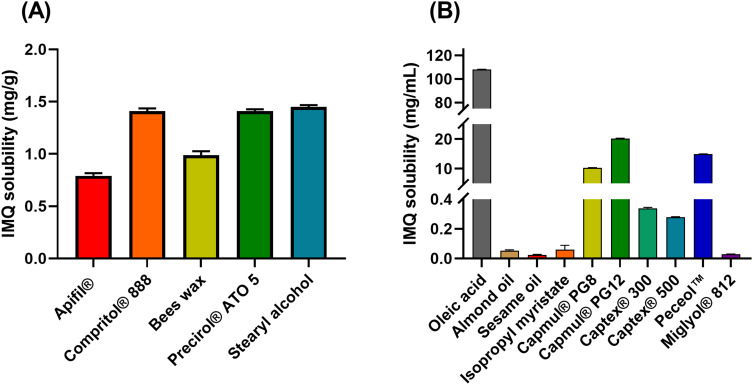
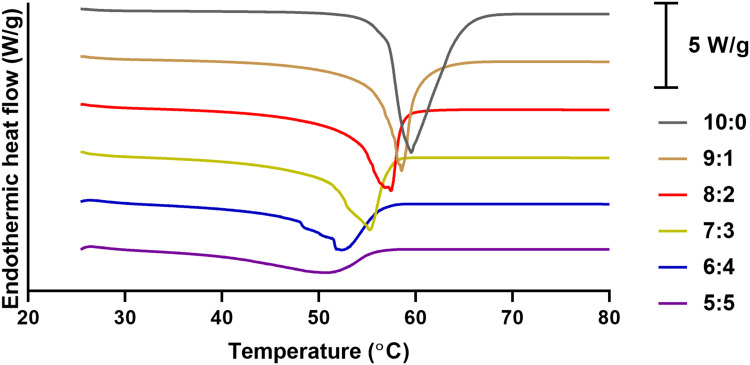
Our research aimed to develop and optimize nanostructured lipid carriers (NLCs) containing IMQ for the first time using a hybrid design of experiments approach. The optimized formulation was then incorporated into a matrix-type topical patch as an alternative dosage form for topical application and evaluated for IMQ deposition across different skin layers in comparison to the performance of the commercial product. Additionally, our work also attempted to highlight the possibility of implementing environment-friendly practices in our IMQ-NLCs formulation development by reviewing our analytical methods and experimental designs and reducing energy and solvent consumption where possible.
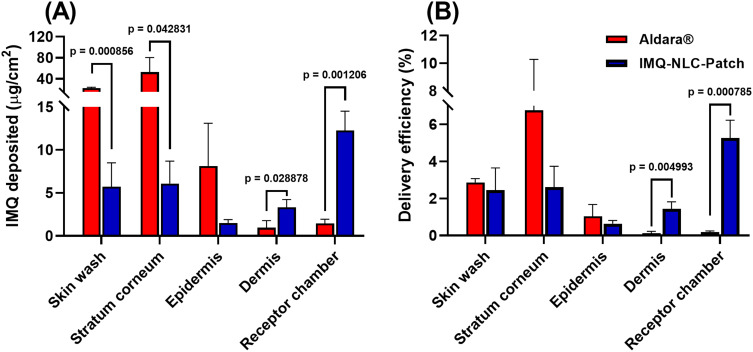
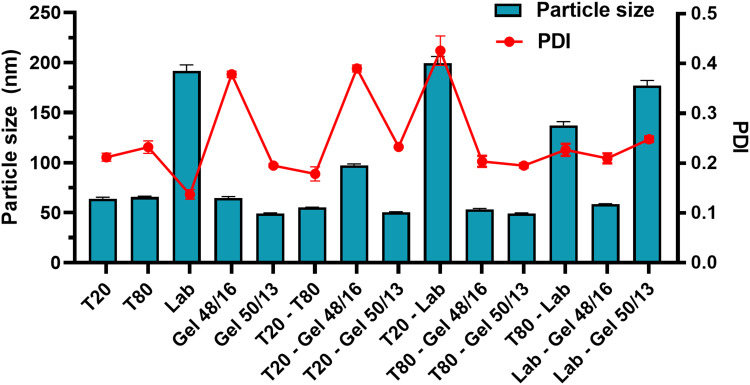
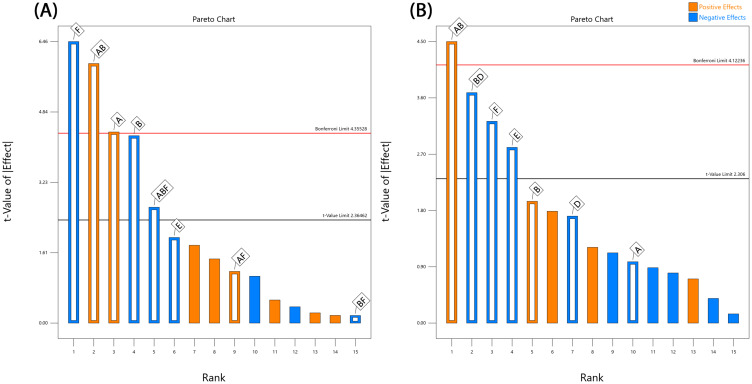
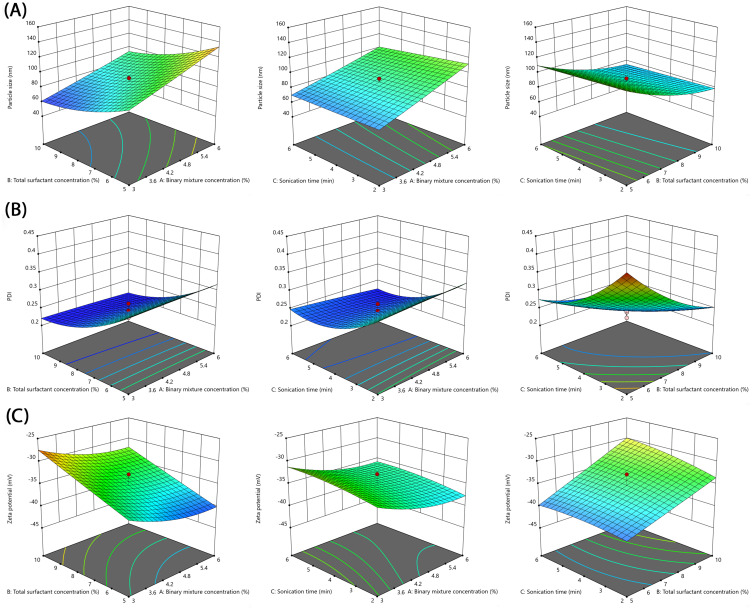
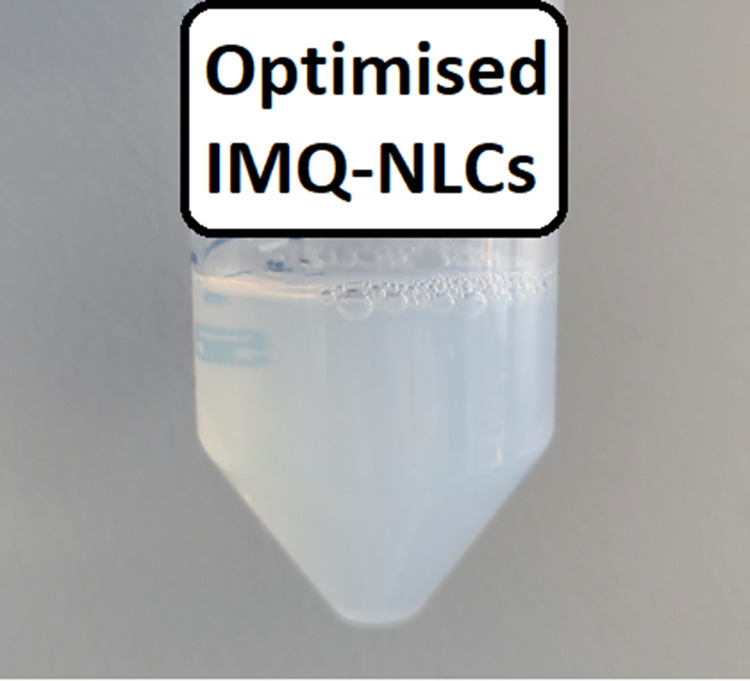
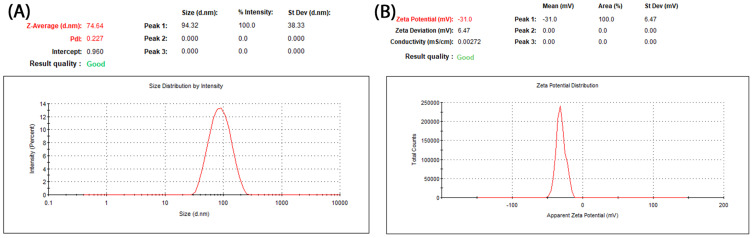
In this study, stearyl alcohol, oleic acid, Tween 80 (polysorbate 80), and Gelucire 50/13 (Stearoyl polyoxyl-32 glycerides) were selected for formulation development. The formulation was optimized using a 2 factorial design and a central composite design. The optimized formulation achieved the average particle size, polydispersity index, and zeta potential of 75.6 nm, 0.235, and - 30.9 mV, respectively. Subsequently, a matrix-type patch containing IMQ-NLCs was developed and achieved a statistically significant improvement in IMQ deposition in the deeper skin layers. The IMQ deposition from the patch into the dermis layer and receptor chamber was 3.3 ± 0.9 µg/cm and 12.3 ± 2.2 µg/cm, while the commercial cream only deposited 1.0 ± 0.8 µg/cm and 1.5 ± 0.5 µg/cm of IMQ, respectively.
In summary, IMQ-NLC-loaded patches represent great potential as a topical treatment option for skin cancer with improved patient compliance.
咪喹莫特(IMQ)是一种免疫调节剂药物,已获批准用于治疗浅表基底细胞癌、光化性角化病、外阴和肛周疣。然而,IMQ 乳膏(Aldara)有几个缺点,包括皮肤渗透性差、局部毒性和作为局部药理学选择时患者顺应性差。
我们的研究旨在首次使用实验设计的混合方法开发和优化含有咪喹莫特的纳米结构化脂质载体(NLC)。然后,将优化的配方纳入基质型局部贴剂中,作为局部应用的替代剂型,并评估其在不同皮肤层中的 IMQ 沉积情况,与商业产品的性能进行比较。此外,我们还尝试通过审查我们的分析方法和实验设计并尽可能减少能源和溶剂消耗,来突出在我们的 IMQ-NLC 配方开发中实施环保实践的可能性。
在这项研究中,选择硬脂醇、油酸、吐温 80(聚山梨醇酯 80)和 Gelucire 50/13(硬脂酰聚氧 32 甘油酯)进行配方开发。该配方使用 2 因素设计和中心复合设计进行优化。优化后的配方的平均粒径、多分散指数和 Zeta 电位分别为 75.6nm、0.235 和-30.9mV。随后,开发了一种含有 IMQ-NLC 的基质型贴剂,实现了 IMQ 在更深层皮肤中的沉积的统计学显著改善。贴剂中 IMQ-NLC 的沉积量在真皮层和接受室分别为 3.3±0.9μg/cm 和 12.3±2.2μg/cm,而商业乳膏仅沉积 1.0±0.8μg/cm 和 1.5±0.5μg/cm 的 IMQ。
总之,载有咪喹莫特的 NLC 贴剂作为一种改善患者顺应性的皮肤癌局部治疗选择具有很大的潜力。