Sheppard John D, Nichols Kelly K
Virginia Eye Consultants and Eastern Virginia Medical School, Suite #210, 241 Corporate Blvd, Norfolk, VA, 23502, USA.
Eyecare Partners, St. Louis, MO, USA.
Ophthalmol Ther. 2023 Jun;12(3):1397-1418. doi: 10.1007/s40123-023-00669-1. Epub 2023 Mar 1.
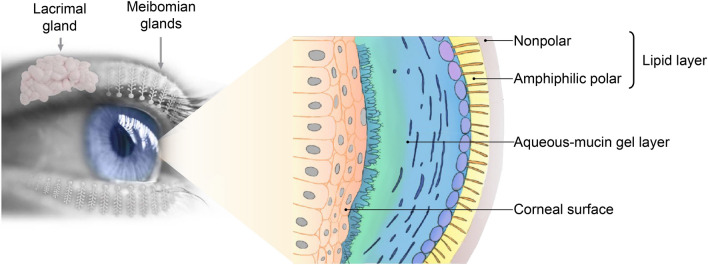
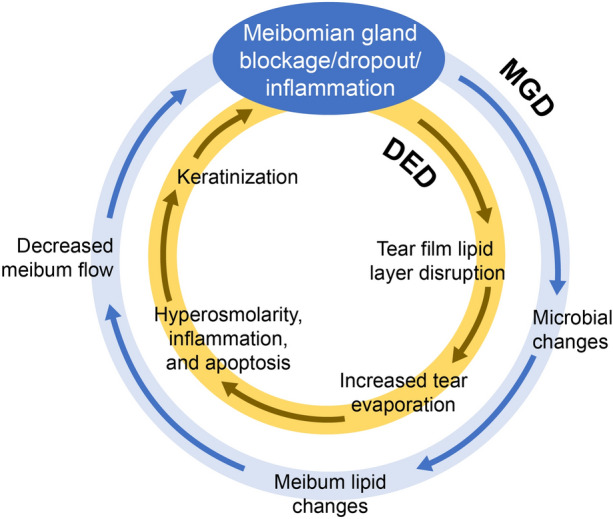
Meibomian gland dysfunction (MGD) is highly prevalent and is the leading cause of evaporative dry eye disease (DED). MGD is characterized by a reduction in meibum secretion and/or a change in meibum composition that results in the disruption of the tear film lipid layer and an increase in the tear film evaporation rate. Excessive evaporation causes tear film instability, desiccation, tear hyperosmolarity, inflammation, and apoptosis of ocular surface cells, resulting in a continuous cycle of DED. The primary treatment goal for DED associated with MGD is to restore the tear film lipid layer and decrease evaporation, thereby reducing ocular signs and symptoms. The management of MGD includes home care options (eyelid hygiene, warming eye masks, ocular lubricants) and office-based treatments (manual expression, microblepharoexfoliation, thermal pulsation, intense pulsed light, intraductal probing). Topical ophthalmic prescription medications attempt to alter various factors that may contribute to DED (e.g., inflammation, bacterial growth, inadequate tear production). In this review, clinical evidence regarding available treatments and emerging therapies from randomized studies in patients with DED associated with MGD is summarized. Although some treatment modalities have been evaluated specifically for DED patients with MGD, large-scale randomized controlled trials are needed to confirm efficacy and safety in this patient population. Currently, there are no approved prescription pharmacologic treatments specifically indicated for DED associated with MGD, and those medications approved for the treatment of DED do not target the key driver of the disease (i.e., excessive evaporation). NOV03 (perfluorohexyloctane; under review with the US Food and Drug Administration) is the most advanced emerging therapy for DED associated with MGD and has demonstrated statistically significant improvements in both signs and symptoms in randomized controlled trials. Development of novel pharmacotherapies will improve therapeutic options and allow for a more individualized approach for patients with DED associated with MGD.
睑板腺功能障碍(MGD)非常普遍,是蒸发型干眼疾病(DED)的主要原因。MGD的特征是睑脂分泌减少和/或睑脂成分改变,导致泪膜脂质层破坏,泪膜蒸发率增加。过度蒸发会导致泪膜不稳定、干燥、泪液高渗、炎症以及眼表细胞凋亡,从而导致DED的持续循环。与MGD相关的DED的主要治疗目标是恢复泪膜脂质层并减少蒸发,从而减轻眼部体征和症状。MGD的管理包括家庭护理措施(眼睑清洁、热敷眼罩、眼部润滑剂)和门诊治疗(手工挤压、微睑板腺切除术、热脉动、强脉冲光、导管内探查)。局部眼科处方药试图改变可能导致DED的各种因素(例如炎症、细菌生长、泪液分泌不足)。在本综述中,总结了关于MGD相关DED患者随机研究中可用治疗方法和新兴疗法的临床证据。尽管一些治疗方式已专门针对MGD的DED患者进行了评估,但仍需要大规模随机对照试验来证实该患者群体的疗效和安全性。目前,尚无专门批准用于MGD相关DED的处方药物治疗,而那些批准用于治疗DED的药物并未针对该疾病的关键驱动因素(即过度蒸发)。NOV03(全氟己基辛烷;正在接受美国食品药品监督管理局审查)是用于MGD相关DED的最先进的新兴疗法,在随机对照试验中已显示出在体征和症状方面均有统计学上显著改善。新型药物疗法的开发将改善治疗选择,并为MGD相关DED患者提供更个性化的治疗方法。