Teoh Chia Wei, Riedl Khursigara Magdalena, Ortiz-Sandoval Carolina G, Park Jee Woo, Li Jun, Bohorquez-Hernandez Arlette, Bruno Valentina, Bowen Emily E, Freeman Spencer A, Robinson Lisa A, Licht Christoph
Division of Nephrology, The Hospital for Sick Children, Toronto, ON, Canada.
Department of Paediatrics, University of Toronto, Toronto, ON, Canada.
Front Med (Lausanne). 2023 Feb 13;10:891513. doi: 10.3389/fmed.2023.891513. eCollection 2023.
Calcineurin inhibitors (CNIs) are associated with nephrotoxicity, endothelial cell dysfunction, and thrombotic microangiopathy (TMA). Evolving evidence suggests an important role for complement dysregulation in the pathogenesis of CNI-induced TMA. However, the exact mechanism(s) of CNI-induced TMA remain(s) unknown.
Using blood outgrowth endothelial cells (BOECs) from healthy donors, we evaluated the effects of cyclosporine on endothelial cell integrity. Specifically, we determined complement activation (C3c and C9) and regulation (CD46, CD55, CD59, and complement factor H [CFH] deposition) as these occurred on the endothelial cell surface membrane and glycocalyx.
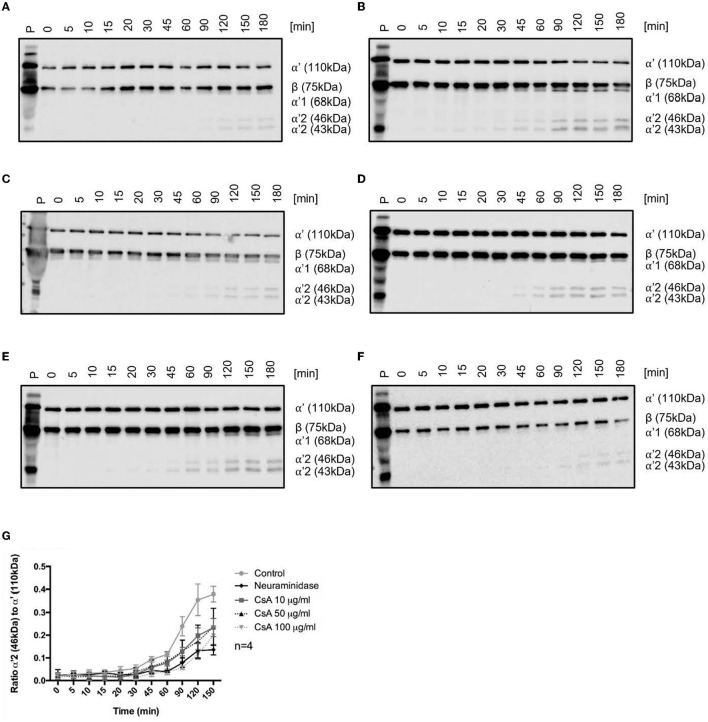
We found that exposing the endothelium to cyclosporine resulted in a dose- and time-dependent enhancement of complement deposition and cytotoxicity. We, therefore, employed flow cytometry, Western blotting/CFH cofactor assays, and immunofluorescence imaging to determine the expression of complement regulators and the functional activity and localization of CFH. Notably, while cyclosporine led to the upregulation of complement regulators CD46, CD55, and CD59 on the endothelial cell surface, it also diminished the endothelial cell glycocalyx through the shedding of heparan sulfate side chains. The weakened endothelial cell glycocalyx resulted in decreased CFH surface binding and surface cofactor activity.
Our findings confirm a role for complement in cyclosporine-induced endothelial injury and suggest that decreased glycocalyx density, induced by cyclosporine, is a mechanism that leads to complement alternative pathway dysregulation decreased CFH surface binding and cofactor activity. This mechanism may apply to other secondary TMAs-in which a role for complement has so far not been recognized-and provide a potential therapeutic target and an important marker for patients on calcineurin inhibitors.
钙调神经磷酸酶抑制剂(CNIs)与肾毒性、内皮细胞功能障碍及血栓性微血管病(TMA)相关。越来越多的证据表明补体失调在CNI诱导的TMA发病机制中起重要作用。然而,CNI诱导TMA的确切机制仍不清楚。
利用健康供体的血液来源内皮细胞(BOECs),我们评估了环孢素对内皮细胞完整性的影响。具体而言,我们测定了补体激活(C3c和C9)及调节(CD46、CD55、CD59和补体因子H [CFH]沉积)情况,这些过程发生在内皮细胞表面膜和糖萼上。
我们发现将内皮细胞暴露于环孢素会导致补体沉积和细胞毒性呈剂量和时间依赖性增强。因此,我们采用流式细胞术、蛋白质免疫印迹/CFH辅因子分析及免疫荧光成像来确定补体调节蛋白的表达以及CFH的功能活性和定位。值得注意的是,虽然环孢素导致内皮细胞表面补体调节蛋白CD46、CD55和CD59上调,但它也通过硫酸乙酰肝素侧链的脱落减少了内皮细胞糖萼。内皮细胞糖萼减弱导致CFH表面结合和表面辅因子活性降低。
我们的研究结果证实了补体在环孢素诱导的内皮损伤中的作用,并表明环孢素诱导的糖萼密度降低是导致补体替代途径失调——CFH表面结合和辅因子活性降低的一种机制。这种机制可能适用于其他继发性TMA(迄今为止尚未认识到补体在其中的作用),并为使用钙调神经磷酸酶抑制剂的患者提供潜在的治疗靶点和重要标志物。