Skin Cancer Unit, German Cancer Research Center (DKFZ), Heidelberg, Germany.
Department of Dermatology, Venereology and Allergology, University Medical Center Mannheim, Ruprecht-Karl University of Heidelberg, Mannheim, Germany.
Front Immunol. 2023 Feb 13;14:1065767. doi: 10.3389/fimmu.2023.1065767. eCollection 2023.
Although the treatment of advanced melanoma patients with immune checkpoint inhibitors (ICI) significantly increased the therapeutic efficiency, many patients remain resistant to ICI that could be due to immunosuppression mediated by myeloid-derived suppressor cells (MDSC). These cells are enriched and activated in melanoma patients and could be considered as therapeutic targets. Here we studied dynamic changes in immunosuppressive pattern and activity of circulating MDSC from melanoma patients treated with ICI.
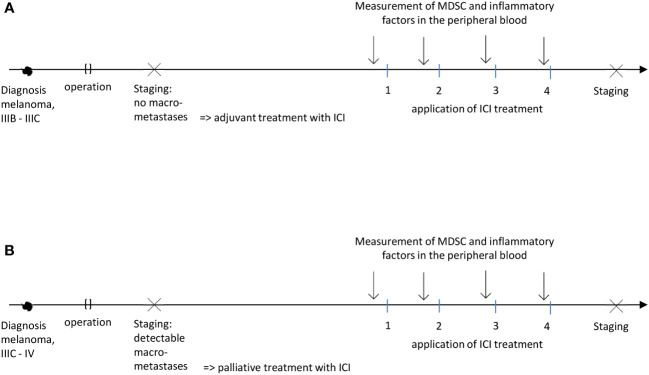
MDSC frequency, immunosuppressive markers and function were evaluated in freshly isolated peripheral blood mononuclear cells (PBMC) from 29 melanoma patients receiving ICI. Blood samples were taken prior and during the treatment and analyzed by flow cytometry and bio-plex assay.
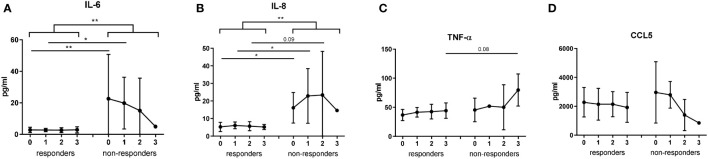
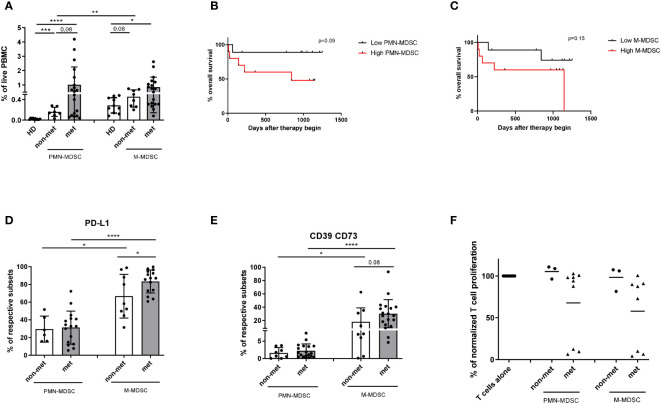
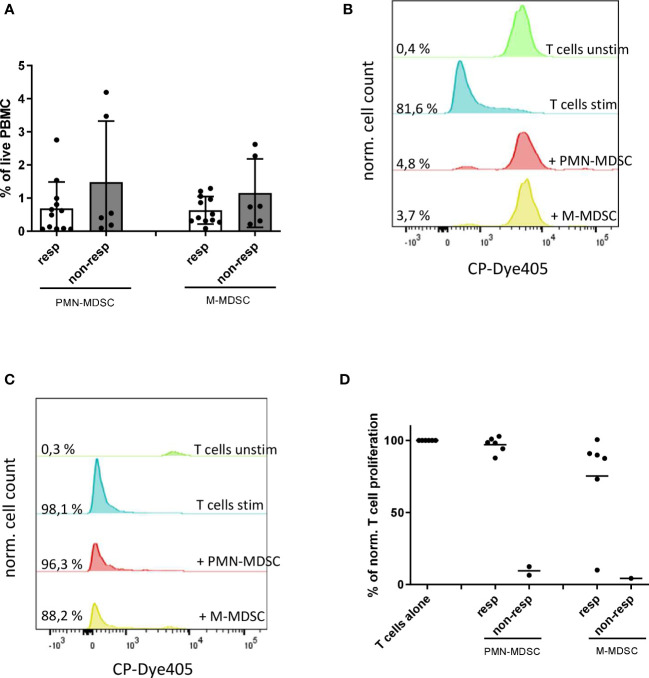
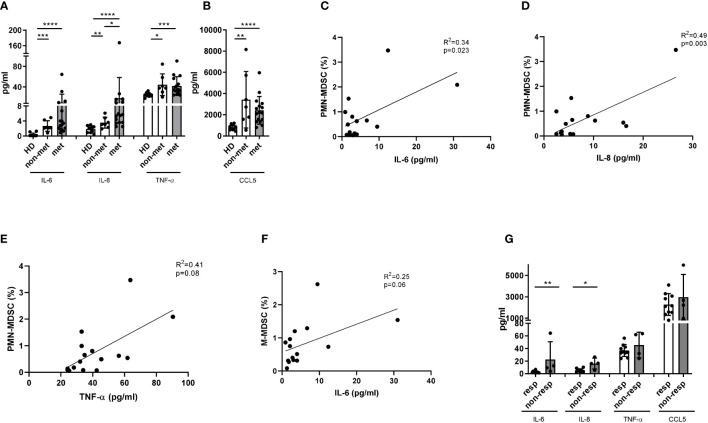
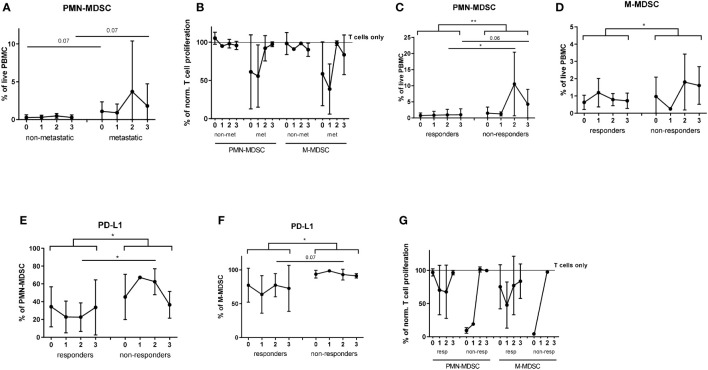
MDSC frequency was significantly increased before the therapy and through three months of treatment in non-responders as compared to responders. Prior to the ICI therapy, MDSC from non-responders displayed high levels of immunosuppression measured by the inhibition of T cell proliferation assay, whereas MDSC from responding patients failed to inhibit T cells. Patients without visible metastasis were characterized by the absence of MDSC immunosuppressive activity during the ICI treatment. Moreover, non-responders showed significantly higher IL-6 and IL-8 concentrations before therapy and after the first ICI application as compared to responders.
Our findings highlight the role of MDSC during melanoma progression and suggest that frequency and immunosuppressive activity of circulating MDSC before and during the ICI treatment of melanoma patients could be used as biomarkers of response to ICI therapy.
尽管免疫检查点抑制剂 (ICI) 治疗晚期黑色素瘤患者显著提高了治疗效率,但许多患者仍然对 ICI 有耐药性,这可能是由于髓系来源的抑制细胞 (MDSC) 介导的免疫抑制。这些细胞在黑色素瘤患者中丰富并被激活,可被视为治疗靶点。在此,我们研究了接受 ICI 治疗的黑色素瘤患者循环 MDSC 的免疫抑制模式和活性的动态变化。
我们评估了 29 名接受 ICI 治疗的黑色素瘤患者新鲜分离的外周血单核细胞 (PBMC) 中 MDSC 的频率、免疫抑制标志物和功能。在治疗前和治疗期间采集血液样本,并通过流式细胞术和生物素标记测定进行分析。
与应答者相比,无应答者在治疗前和治疗的前三个月 MDSC 频率显著增加。在 ICI 治疗前,无应答者的 MDSC 显示出高水平的免疫抑制作用,通过 T 细胞增殖抑制试验测量,而应答者的 MDSC 未能抑制 T 细胞。在 ICI 治疗期间无可见转移的患者特征是 MDSC 无免疫抑制活性。此外,与应答者相比,无应答者在治疗前和首次 ICI 应用后表现出显著更高的 IL-6 和 IL-8 浓度。
我们的研究结果强调了 MDSC 在黑色素瘤进展过程中的作用,并表明在 ICI 治疗黑色素瘤患者之前和期间循环 MDSC 的频率和免疫抑制活性可以作为对 ICI 治疗反应的生物标志物。