Semmelweis University, Department of Neurology, Budapest, Hungary.
Semmelweis University, "János Szentágothai" Doctoral School of Neurosciences, Budapest, Hungary.
PLoS One. 2023 Mar 2;18(3):e0282045. doi: 10.1371/journal.pone.0282045. eCollection 2023.
Acute ischemic stroke (AIS) is a common complication of severe acute respiratory syndrome coronavirus 2 (SARS‑CoV‑2) infection (COVID-19), but the prognosis of these patients is poorly understood.
To explore the impact of COVID-19 on neurological outcomes in AIS patients.
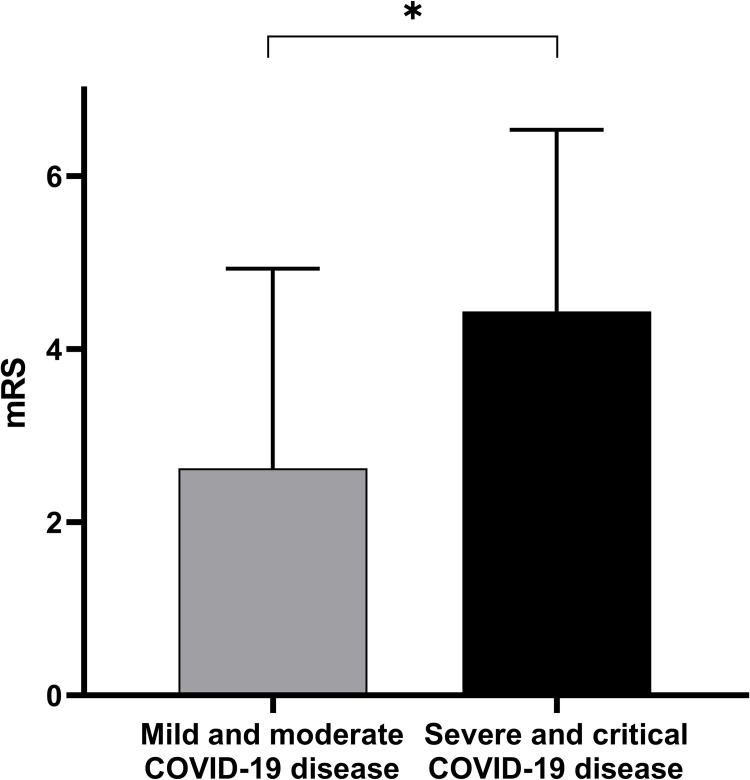
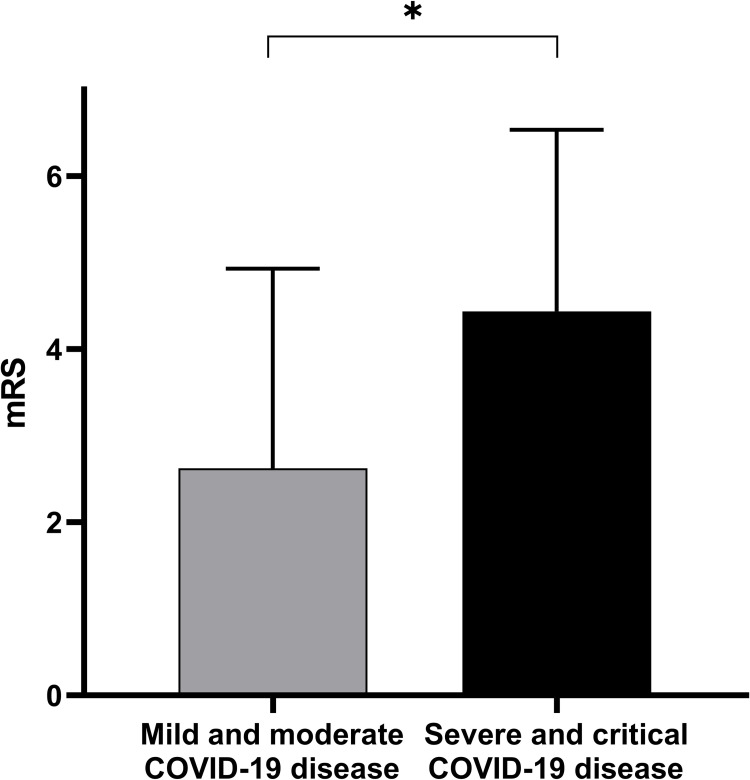
A comparative retrospective cohort study was conducted in 32 consecutive AIS patients with and 51 without COVID-19 between the 1st of March 2020 and 1st of May 2021. The evaluation was based on a detailed chart review for demographic data, medical history, stroke severity, cranial and vessel imaging results, laboratory parameters, COVID-19 severity, hospitalization time, in-hospital mortality, and functional deficits at discharge (modified Rankin Scale, mRS).
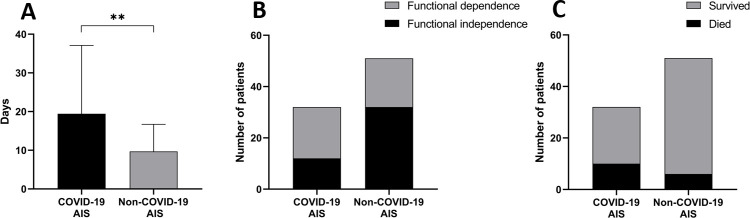
COVID-19 AIS patients showed tendency to worse initial neurological deficit (NIHSS 9 (3-13) vs. 4 (2-10); p = 0.06), higher rate of large vessel occlusion (LVO; 13/32 vs. 14/51; p = 0.21), had prolonged hospitalization (19.4 ± 17.7 vs. 9.7 ± 7 days; p = 0.003), had lower chance of functional independence (mRS≤2) (12/32 vs. 32/51; p = 0.02) and showed higher in-hospital mortality (10/32 vs. 6/51; p = 0.02). In COVID-19 AIS patients, LVO was more common with COVID-19 pneumonia than without (55.6% vs. 23.1%; p = 0.139).
COVID-19-related AIS carries a worse prognosis. COVID-19 with pneumonia seems to be associated with a higher rate of LVO.
严重急性呼吸综合征冠状病毒 2 感染(COVID-19)是急性缺血性脑卒中(AIS)的常见并发症,但这些患者的预后情况了解甚少。
探讨 COVID-19 对 AIS 患者神经功能结局的影响。
本研究为回顾性队列研究,纳入 2020 年 3 月 1 日至 2021 年 5 月 1 日期间的 32 例 AIS 合并 COVID-19 患者和 51 例 AIS 不合并 COVID-19 患者。通过详细的病历回顾,评估两组患者的人口统计学数据、既往病史、卒中严重程度、颅内外血管影像学结果、实验室参数、COVID-19 严重程度、住院时间、住院死亡率以及出院时的功能缺损(改良 Rankin 量表,mRS)。
COVID-19 相关 AIS 患者的初始神经功能缺损程度更高(NIHSS 9[3-13] vs. 4[2-10];p = 0.06)、大血管闭塞(LVO)的比例更高(13/32 例 vs. 14/51 例;p = 0.21)、住院时间更长(19.4 ± 17.7 天 vs. 9.7 ± 7 天;p = 0.003)、功能独立性(mRS≤2)的机会更低(12/32 例 vs. 32/51 例;p = 0.02)、住院死亡率更高(10/32 例 vs. 6/51 例;p = 0.02)。COVID-19 相关 AIS 患者中,伴有 COVID-19 肺炎的 LVO 更为常见(55.6% vs. 23.1%;p = 0.139)。
COVID-19 相关 AIS 的预后较差。伴有 COVID-19 肺炎的 AIS 患者 LVO 的发生率更高。