San Raffaele Telethon Institute for Gene Therapy, IRCCS San Raffaele Scientific Institute, Milan 20132, Italy; Istituto di Ricerca Genetica e Biomedica, Consiglio Nazionale delle Ricerche (IRGB-CNR), Milan, Italy.
San Raffaele Telethon Institute for Gene Therapy, IRCCS San Raffaele Scientific Institute, Milan 20132, Italy; Vita-Salute San Raffaele University, Milan 20132, Italy.
Semin Immunol. 2023 Mar;66:101731. doi: 10.1016/j.smim.2023.101731. Epub 2023 Feb 28.
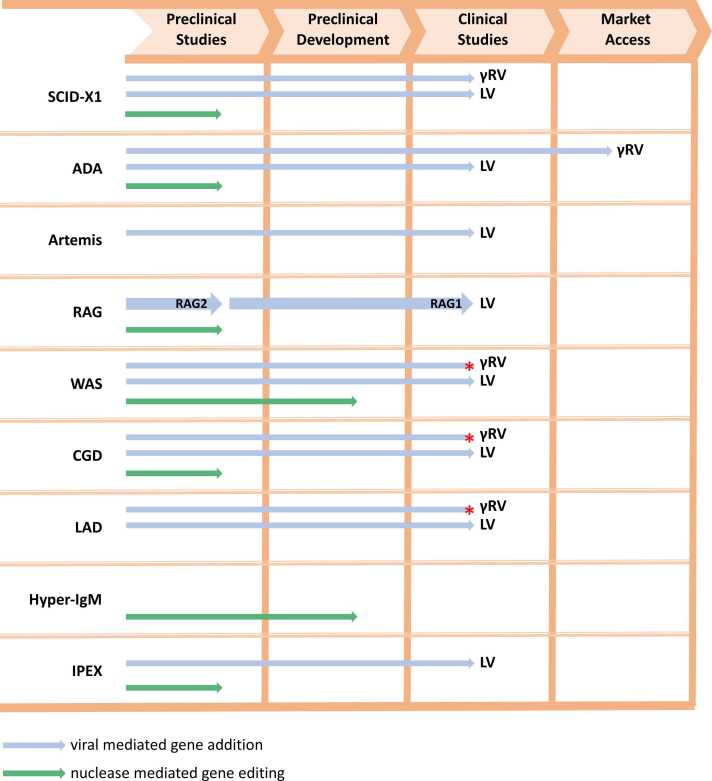
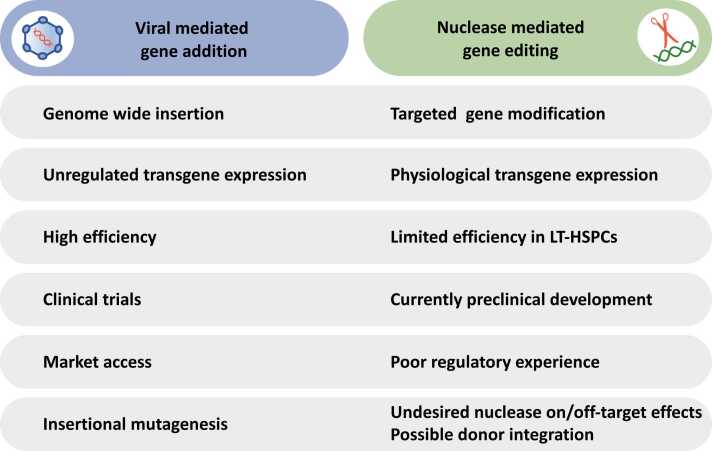
Allogeneic hematopoietic stem cell transplantation is an effective treatment to cure inborn errors of immunity. Remarkable progress has been achieved thanks to the development and optimization of effective combination of advanced conditioning regimens and use of immunoablative/suppressive agents preventing rejection as well as graft versus host disease. Despite these tremendous advances, autologous hematopoietic stem/progenitor cell therapy based on ex vivo gene addition exploiting integrating γ-retro- or lenti-viral vectors, has demonstrated to be an innovative and safe therapeutic strategy providing proof of correction without the complications of the allogeneic approach. The recent advent of targeted gene editing able to precisely correct genomic variants in an intended locus of the genome, by introducing deletions, insertions, nucleotide substitutions or introducing a corrective cassette, is emerging in the clinical setting, further extending the therapeutic armamentarium and offering a cure to inherited immune defects not approachable by conventional gene addition. In this review, we will analyze the current state-of-the art of conventional gene therapy and innovative protocols of genome editing in various primary immunodeficiencies, describing preclinical models and clinical data obtained from different trials, highlighting potential advantages and limits of gene correction.
异基因造血干细胞移植是治疗先天性免疫缺陷的有效方法。由于有效的预处理方案的发展和优化,以及免疫抑制/清除剂的使用以预防排斥反应和移植物抗宿主病,取得了显著的进展。尽管取得了这些巨大的进展,但基于体外基因添加利用整合γ逆转录病毒或慢病毒载体的自体造血干细胞/祖细胞治疗已被证明是一种创新且安全的治疗策略,可提供无需异体方法并发症的纠正证明。最近出现的靶向基因编辑技术能够通过在基因组的预期位置引入缺失、插入、核苷酸取代或引入校正盒,精确纠正基因组变异,正在临床中崭露头角,进一步扩展了治疗手段,并为传统基因添加方法无法治疗的遗传性免疫缺陷提供了治愈方法。在这篇综述中,我们将分析各种原发性免疫缺陷中传统基因治疗和创新基因组编辑方案的最新进展,描述来自不同试验的临床前模型和临床数据,突出基因纠正的潜在优势和限制。