Colin Philippe, Ringe Rajesh P, Yasmeen Anila, Ozorowski Gabriel, Ketas Thomas J, Lee Wen-Hsin, Ward Andrew B, Moore John P, Klasse P J
Cornell University.
The Scripps Research Institute.
Res Sq. 2023 Feb 24:rs.3.rs-2613503. doi: 10.21203/rs.3.rs-2613503/v1.
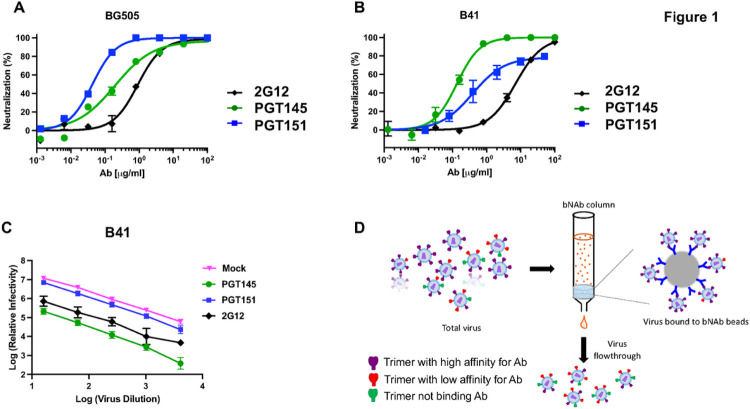
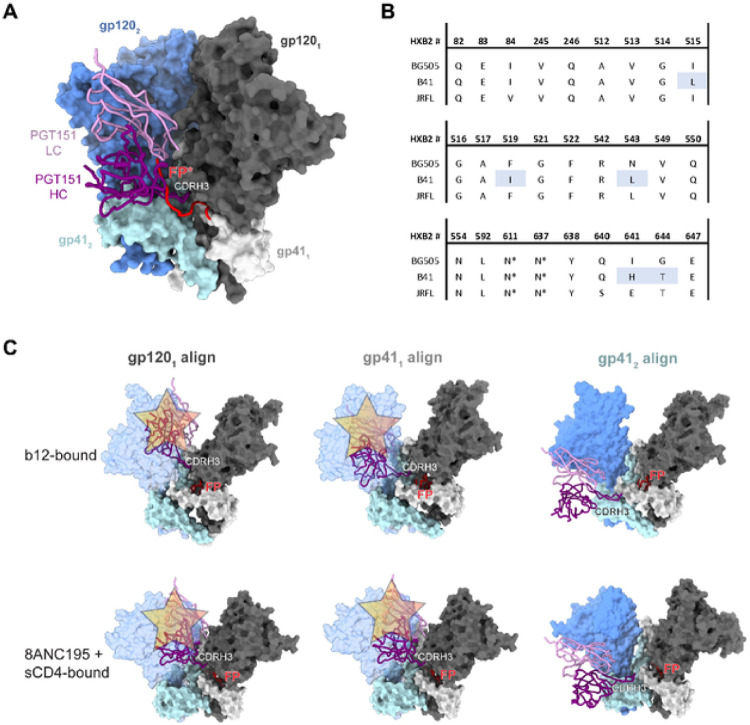
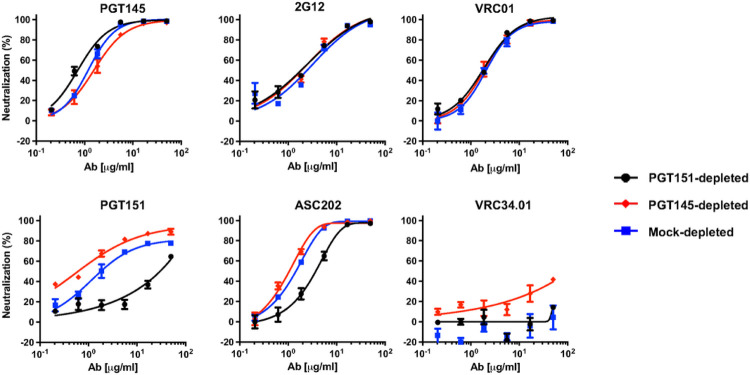
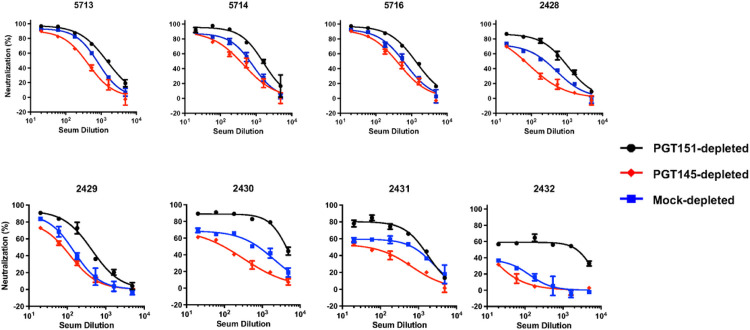
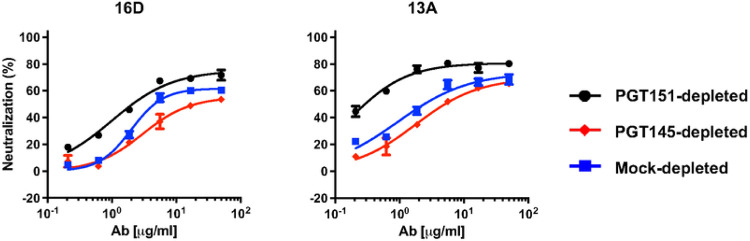
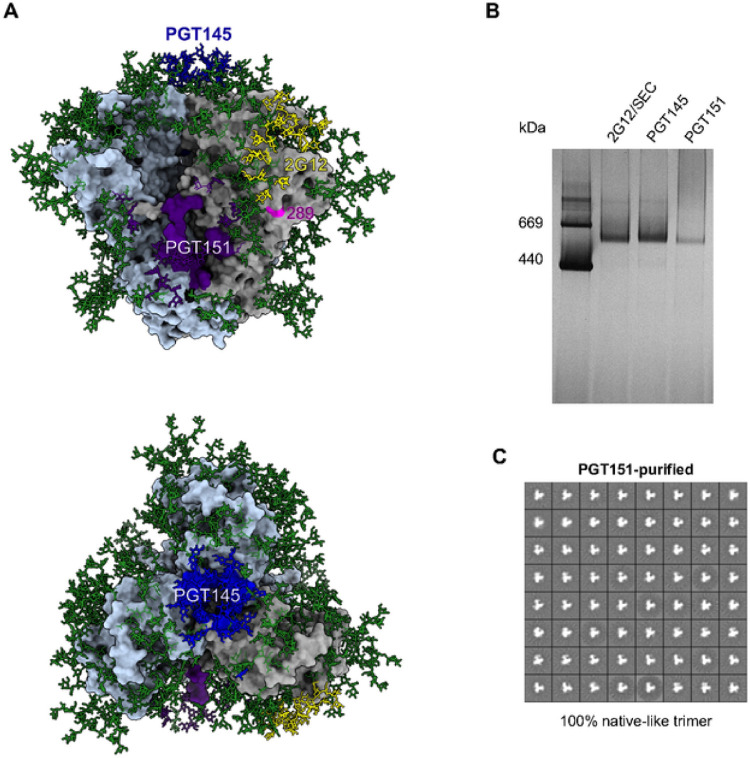
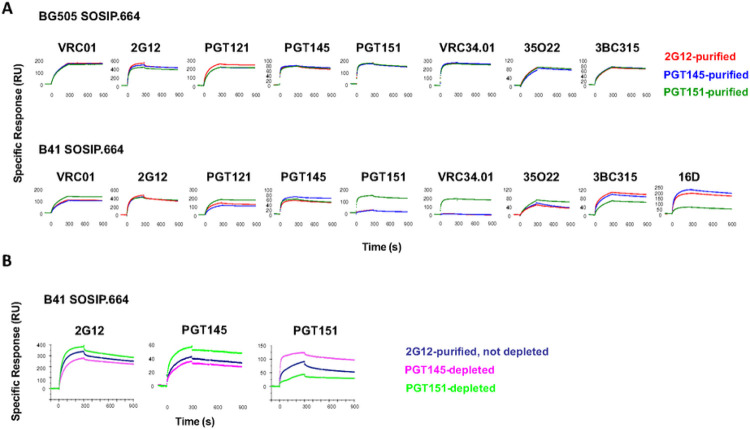
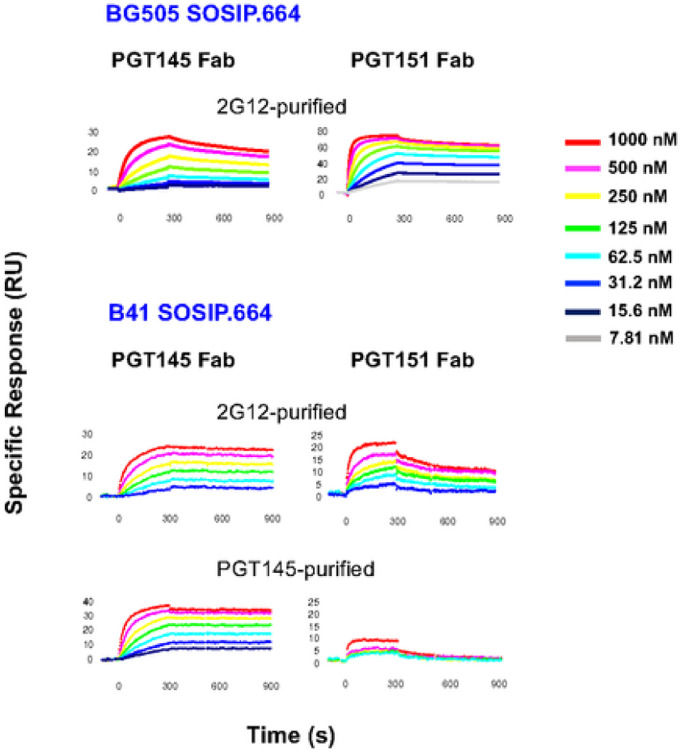
Neutralizing antibodies (NAbs) protect against HIV-1 acquisition in animal models and show promise in treatment of infection. They act by binding to the viral envelope glycoprotein (Env), thereby blocking its receptor interactions and fusogenic function. The potency of neutralization is largely determined by affinity. Less well explained is the persistent fraction, the plateau of remaining infectivity at the highest antibody concentrations. We observed different persistent fractions for NAb neutralization of pseudovirus derived from two Tier-2 isolates of HIV-1, BG505 (Clade A) and B41 (Clade B): it was pronounced for B41 but not BG505 neutralization by NAb PGT151, directed to the interface between the outer and transmembrane subunits of Env, but negligible for either virus by NAb PGT145 to an apical epitope. Autologous neutralization by poly- and monoclonal NAbs from rabbits immunized with soluble native-like B41 trimer also left substantial persistent fractions. These NAbs largely target a cluster of epitopes in a hole in the dense glycan shield of Env around residue 289. We partially depleted B41-virion populations by incubating them with PGT145- or PGT151-conjugated beads. Each depletion reduced the sensitivity to the depleting NAb and enhanced it to the other. Autologous neutralization by the rabbit NAbs was reduced for PGT145-depleted and enhanced for PGT151-depleted B41 pseudovirus. Those changes in sensitivity encompassed both potency and the persistent fraction. We then compared soluble native-like BG505 and B41 Env trimers affinity-purified by one of three NAbs: 2G12, PGT145, or PGT151. Surface plasmon resonance showed differences among the fractions in antigenicity, including kinetics and stoichiometry, congruently with the differential neutralization. The large persistent fraction after PGT151 neutralization of B41 was attributable to low stoichiometry, which we explained structurally by the conformational plasticity of B41 Env. Distinct antigenic forms even of clonal HIV-1 Env, detectable among soluble native-like trimer molecules, are distributed over virions and may profoundly mold neutralization of certain isolates by certain NAbs. Affinity purifications with some antibodies may yield immunogens that preferentially expose epitopes for broadly active NAbs, while shielding less cross-reactive ones. NAbs reactive with multiple conformers will together reduce the persistent fraction after passive and active immunization.
中和抗体(NAbs)在动物模型中可预防HIV-1感染,并在感染治疗方面显示出前景。它们通过与病毒包膜糖蛋白(Env)结合发挥作用,从而阻断其受体相互作用和融合功能。中和效力在很大程度上由亲和力决定。而对于持续感染率,即在最高抗体浓度下剩余感染性的平稳状态,目前的解释尚不充分。我们观察到,针对源自HIV-1两个二级毒株BG505(A亚型)和B41(B亚型)的假病毒,NAb中和的持续感染率有所不同:由针对Env外膜亚基和跨膜亚基之间界面的NAb PGT151对B41进行中和时,持续感染率很明显,但对BG505则不明显;而由针对顶端表位的NAb PGT145对这两种病毒进行中和时,持续感染率均可忽略不计。用可溶性天然样B41三聚体免疫的兔产生的多克隆和单克隆NAb进行自体中和时,也会留下相当大的持续感染率。这些NAb主要靶向Env中围绕第289位残基的密集聚糖屏蔽上一个空洞中的一组表位。我们通过将B41病毒粒子与PGT145或PGT151偶联的珠子孵育,部分耗尽了B41病毒粒子群体。每次耗尽都会降低对耗尽性NAb的敏感性,并提高对另一种NAb的敏感性。对于PGT145耗尽的B41假病毒,兔NAb的自体中和作用降低;对于PGT151耗尽的B41假病毒,兔NAb的自体中和作用增强。这些敏感性变化包括效力和持续感染率。然后,我们比较了通过三种NAb之一(2G12、PGT145或PGT151)亲和纯化的可溶性天然样BG505和B41 Env三聚体。表面等离子体共振显示各组分在抗原性方面存在差异,包括动力学和化学计量,这与中和差异一致。PGT151对B41进行中和后出现的较大持续感染率归因于化学计量较低,我们从结构上解释为B41 Env的构象可塑性。即使是克隆的HIV-Env,在可溶性天然样三聚体分子中可检测到的不同抗原形式,也分布在病毒粒子上,并可能深刻影响某些NAb对某些毒株的中和作用。用某些抗体进行亲和纯化可能会产生免疫原,这些免疫原优先暴露广泛活性NAb的表位,同时屏蔽交叉反应性较低的表位。与多种构象反应的NAb共同作用将降低被动和主动免疫后的持续感染率。