National Human Genome Research Institute, National Institutes of Health, Bethesda, MD 20892, USA.
Department of Biological Sciences, University of South Carolina, Columbia, SC 29208, USA.
Sci Adv. 2023 Mar 3;9(9):eade2537. doi: 10.1126/sciadv.ade2537.
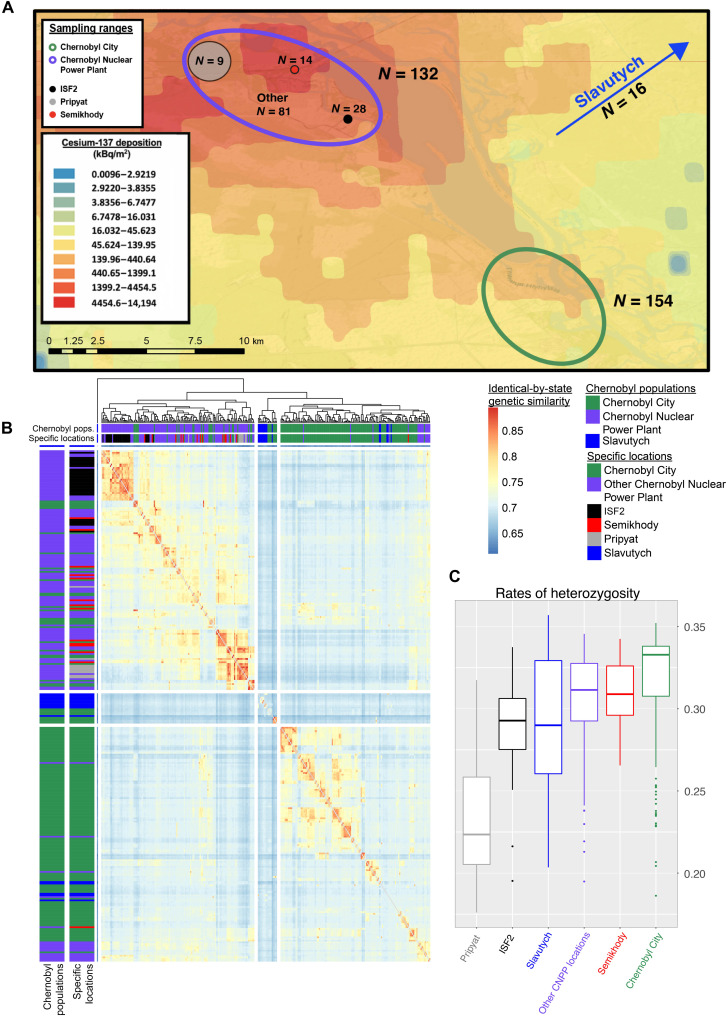
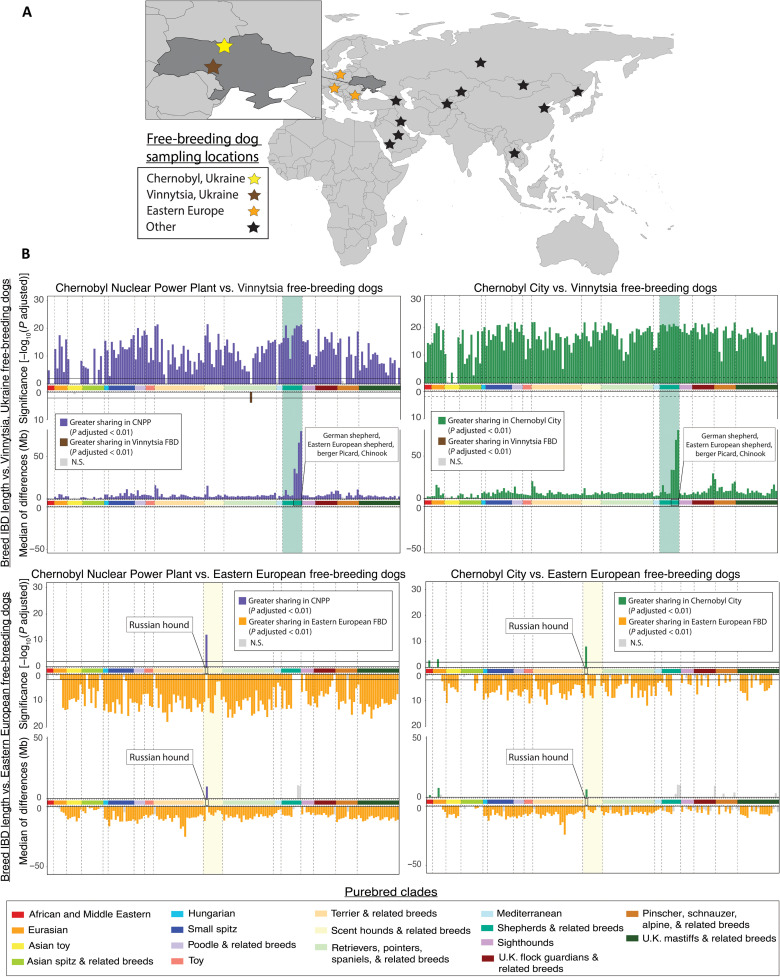
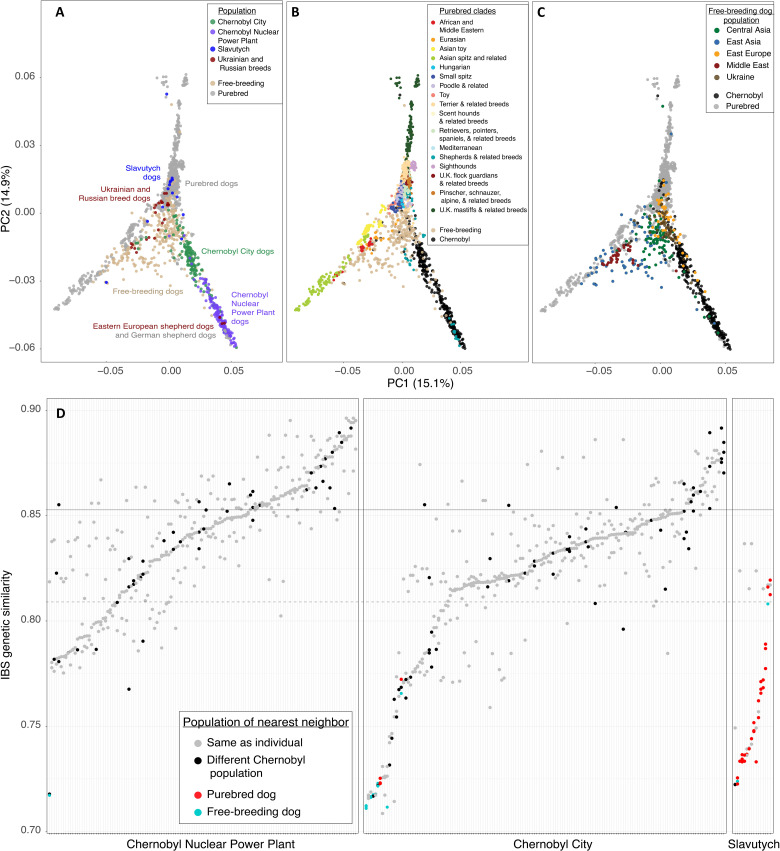
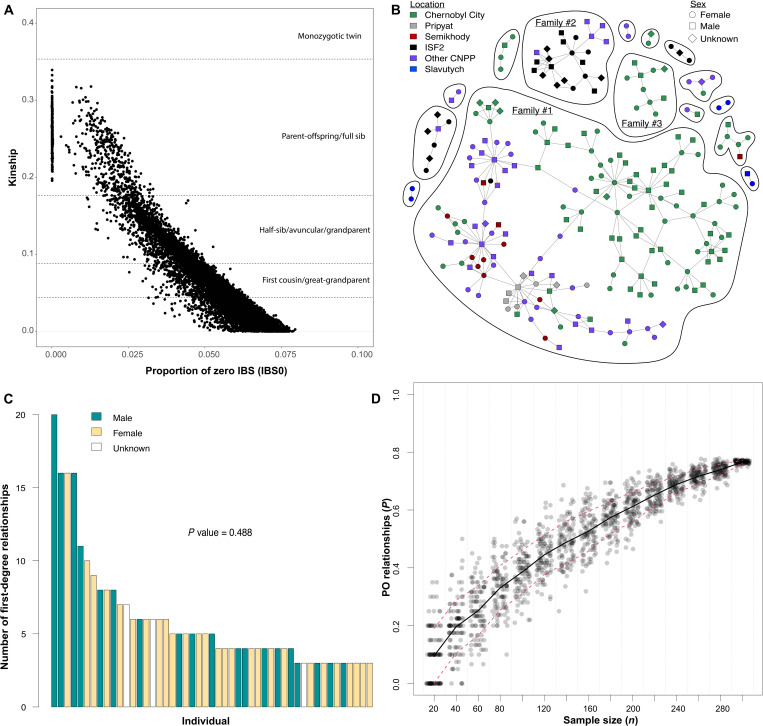
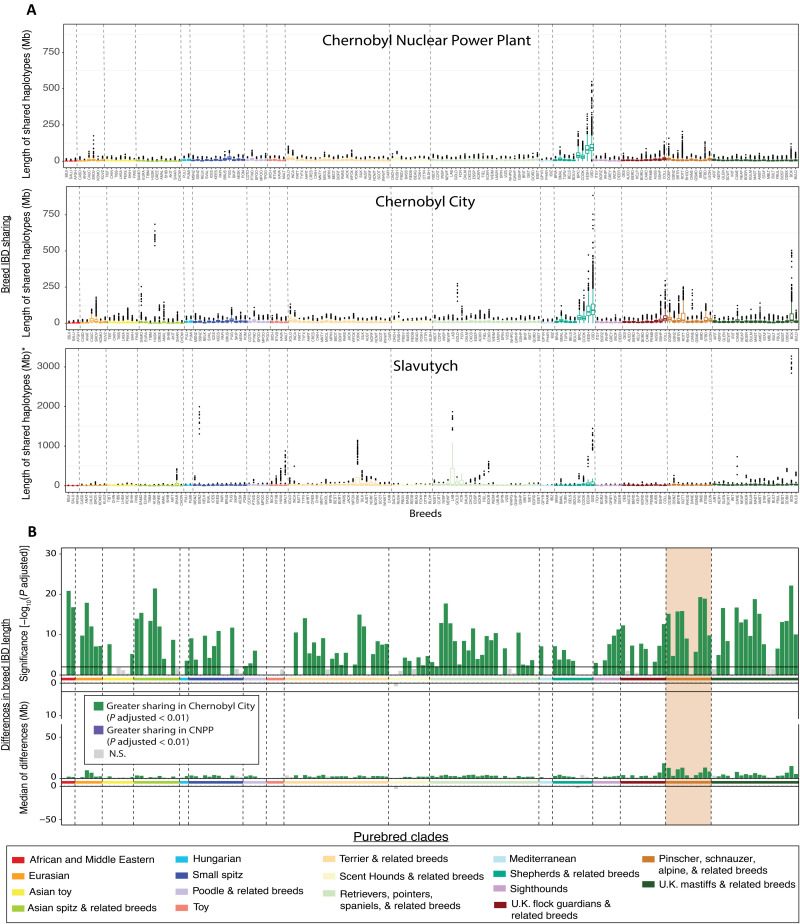
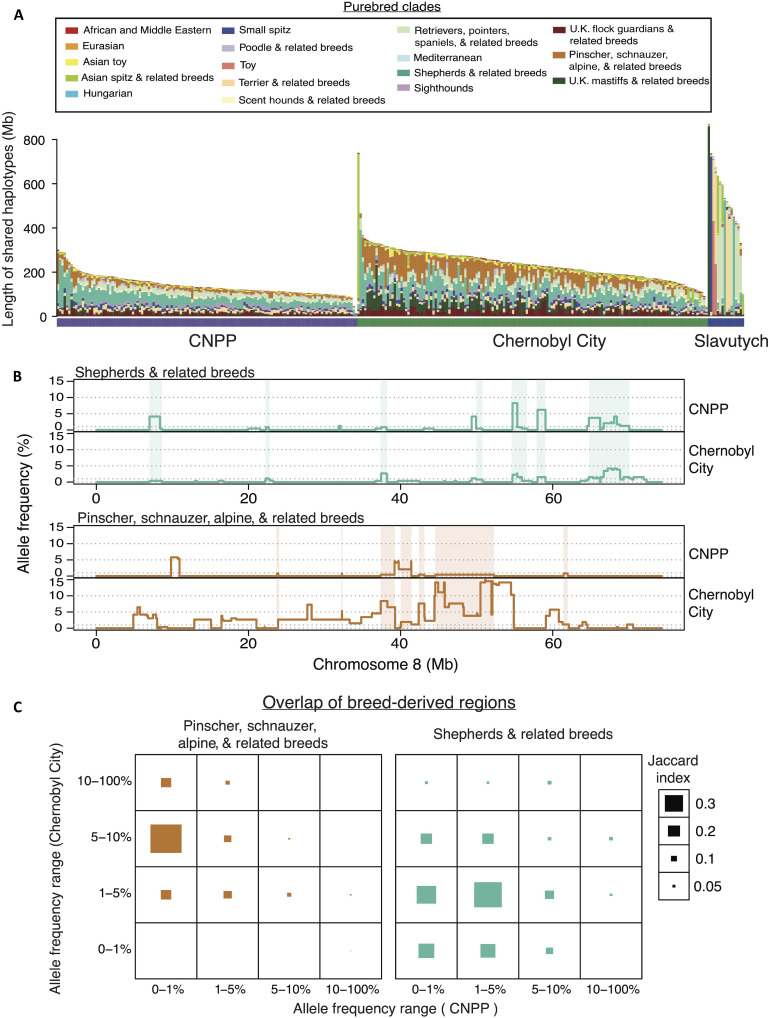
The 1986 Chernobyl nuclear disaster initiated a series of catastrophic events resulting in long-term and widespread environmental contamination. We characterize the genetic structure of 302 dogs representing three free-roaming dog populations living within the power plant itself, as well as those 15 to 45 kilometers from the disaster site. Genome-wide profiles from Chernobyl, purebred and free-breeding dogs, worldwide reveal that the individuals from the power plant and Chernobyl City are genetically distinct, with the former displaying increased intrapopulation genetic similarity and differentiation. Analysis of shared ancestral genome segments highlights differences in the extent and timing of western breed introgression. Kinship analysis reveals 15 families, with the largest spanning all collection sites within the radioactive exclusion zone, reflecting migration of dogs between the power plant and Chernobyl City. This study presents the first characterization of a domestic species in Chernobyl, establishing their importance for genetic studies into the effects of exposure to long-term, low-dose ionizing radiation.
1986 年切尔诺贝利核灾难引发了一系列灾难性事件,导致长期广泛的环境污染。我们对 302 只狗进行了基因结构特征分析,这些狗代表了生活在核电站内部以及距离灾难现场 15 至 45 公里范围内的三个自由放养狗群。来自切尔诺贝利的全基因组图谱、纯种狗和自由繁殖的狗,以及来自世界各地的狗的图谱显示,来自核电站和切尔诺贝利市的个体在基因上是不同的,前者表现出了更高的群体内遗传相似性和分化。对共享祖先基因组片段的分析突出了西方品种渗入程度和时间的差异。亲缘关系分析揭示了 15 个家族,其中最大的家族跨越了放射性禁区内的所有采集点,反映了狗在核电站和切尔诺贝利市之间的迁移。这项研究首次对切尔诺贝利的家养物种进行了特征描述,为研究长期低剂量电离辐射暴露对其的影响提供了重要的遗传信息。