Division of Infectious Diseases and International Health, University of Virginia, Charlottesville, VA, USA.
Global TB Institute and Department of Medicine, Rutgers, The State University of New Jersey, Newark, NJ, USA.
Clin Pharmacokinet. 2023 Mar;62(3):375-398. doi: 10.1007/s40262-023-01220-y. Epub 2023 Mar 4.
Quantifying exposure to drugs for personalized dose adjustment is of critical importance in patients with tuberculosis who may be at risk of treatment failure or toxicity due to individual variability in pharmacokinetics. Traditionally, serum or plasma samples have been used for drug monitoring, which only poses collection and logistical challenges in high-tuberculosis burden/low-resourced areas. Less invasive and lower cost tests using alternative biomatrices other than serum or plasma may improve the feasibility of therapeutic drug monitoring.
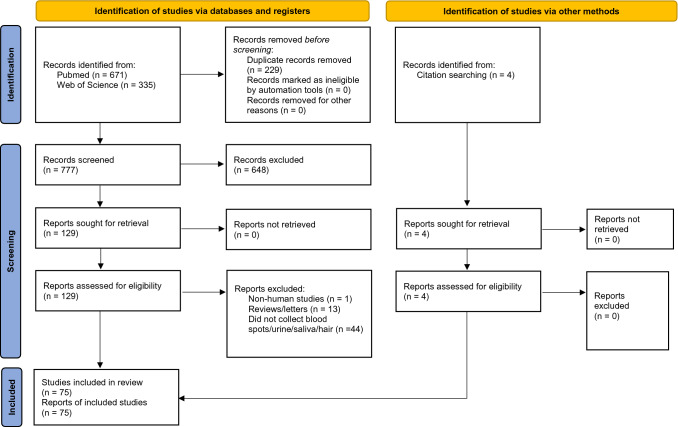
A systematic review was conducted to include studies reporting anti-tuberculosis drug concentration measurements in dried blood spots, urine, saliva, and hair. Reports were screened to include study design, population, analytical methods, relevant pharmacokinetic parameters, and risk of bias.
A total of 75 reports encompassing all four biomatrices were included. Dried blood spots reduced the sample volume requirement and cut shipping costs whereas simpler laboratory methods to test the presence of drug in urine can allow point-of-care testing in high-burden settings. Minimal pre-processing requirements with saliva samples may further increase acceptability for laboratory staff. Multi-analyte panels have been tested in hair with the capacity to test a wide range of drugs and some of their metabolites.
Reported data were mostly from small-scale studies and alternative biomatrices need to be qualified in large and diverse populations for the demonstration of feasibility in operational settings. High-quality interventional studies will improve the uptake of alternative biomatrices in guidelines and accelerate implementation in programmatic tuberculosis treatment.
在因个体药代动力学差异而有治疗失败或毒性风险的结核病患者中,量化药物暴露以进行个体化剂量调整至关重要。传统上,血清或血浆样本已用于药物监测,但在结核病负担高/资源有限的地区,这仅带来了采集和后勤方面的挑战。使用除血清或血浆之外的其他替代生物基质进行侵入性更小且成本更低的检测,可能会提高治疗药物监测的可行性。
系统综述纳入了报告在干血斑、尿液、唾液和头发中检测抗结核药物浓度的研究。对报告进行筛选,以纳入研究设计、人群、分析方法、相关药代动力学参数和偏倚风险。
共纳入了涵盖所有四种生物基质的 75 份报告。干血斑减少了样本体积需求并降低了运输成本,而尿液中药物检测的实验室方法更为简单,可允许在高负担环境中进行即时检测。唾液样本的预处理要求较低,可能会进一步提高实验室工作人员的接受度。多分析物检测面板已在头发中进行了测试,具有检测广泛药物及其某些代谢物的能力。
报告的数据主要来自小规模研究,替代生物基质需要在大规模和多样化人群中进行资格认证,以证明在实际操作环境中的可行性。高质量的干预性研究将提高替代生物基质在指南中的应用,并加速在结核病治疗规划中的实施。