Doctor of Physiotherapy, Faculty of Health Sciences and Medicine, Bond University, Gold Coast, Australia.
Integrated Specialist ENT Service, Logan Hospital, Meadowbrook, Australia.
J Neuroeng Rehabil. 2023 Mar 3;20(1):31. doi: 10.1186/s12984-023-01145-4.
Concussions and mild traumatic brain injuries are the most common causes of physical and cognitive disability worldwide. Concussion can result in post-injury vestibular and balance impairments that can present up to five years post initial concussion event, ultimately affecting many daily and functional activities. While current clinical treatment aims to reduce symptoms, the developing use of technology in everyday life has seen the emergence of virtual reality. Current literature has failed to identify substantial evidence regarding the use of virtual reality in rehabilitation. The primary aim of this scoping review is to identify, synthesise, and assess the quality of studies reporting on the effectiveness of virtual reality for the rehabilitation of vestibular and balance impairments post-concussion. Additionally, this review aims to summarise the volume of scientific literature and identify the knowledge gaps in current research pertaining to this topic.
A scoping review of six databases (PubMed, Embase, CINAHL, ProQuest, SportDiscus, Scopus) and a grey literature (Google Scholar) was conducted using three key concepts (virtual reality, vestibular symptoms, and post-concussion). Data was charted from studies and outcomes were categorised into one of three categories: (1) balance; (2) gait; or (3) functional outcome measures. Critical appraisal of each study was conducted using the Joanna Briggs Institute checklists. A critical appraisal of each outcome measure was also completed utilising a modified GRADE appraisal tool to summarise the quality of evidence. Effectiveness was assessed using calculations of change in performance and change per exposure time.
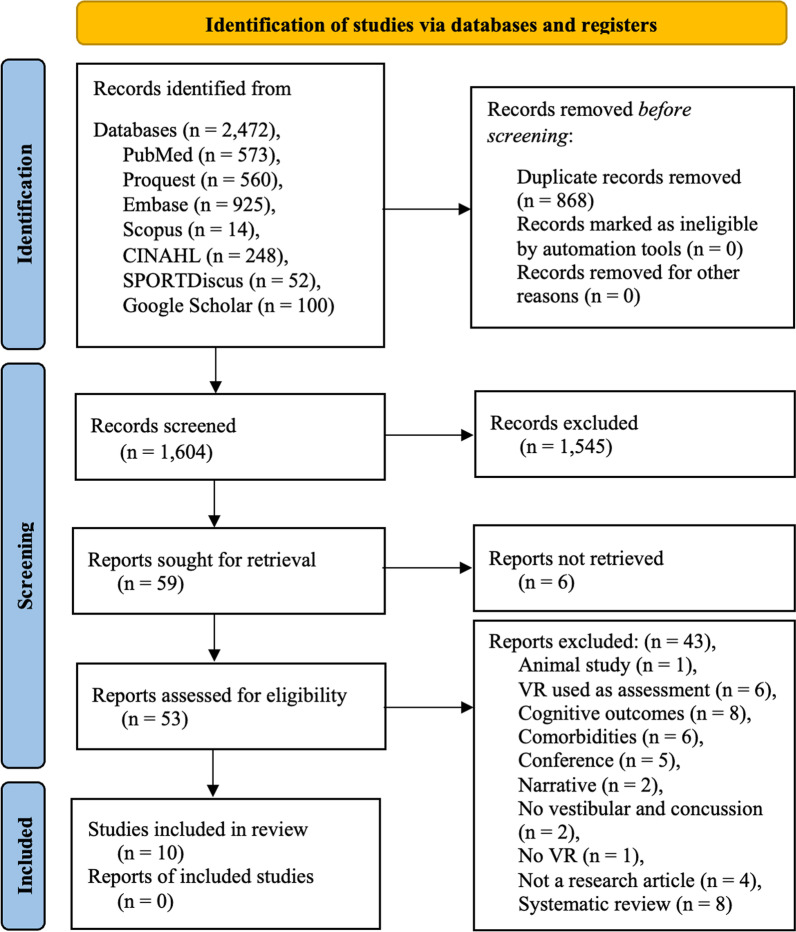
Three randomised controlled trials, three quasi-experimental studies, three case studies, and one retrospective cohort study were ultimately included, using a thorough eligibility criteria. All studies were inclusive of different virtual reality interventions. The ten studies had a 10-year range and identified 19 different outcome measures.
The findings from this review suggests that virtual reality is an effective tool for the rehabilitation of vestibular and balance impairments post-concussion. Current literature shows sufficient but low level of evidence, and more research is necessary to develop a quantitative standard and to better understand appropriate dosage of virtual reality intervention.
脑震荡和轻度创伤性脑损伤是全球范围内导致身体和认知功能障碍的最常见原因。脑震荡可导致受伤后前庭和平衡功能障碍,这些障碍可能在脑震荡后五年内出现,最终影响许多日常和功能性活动。虽然目前的临床治疗旨在减轻症状,但日常生活中技术的发展已经出现了虚拟现实。目前的文献未能确定使用虚拟现实进行康复治疗的大量证据。本研究的主要目的是确定、综合和评估报告虚拟现实在脑震荡后前庭和平衡障碍康复中的有效性的研究的质量。此外,本综述旨在总结科学文献的数量,并确定当前研究在这一主题上的知识空白。
对六个数据库(PubMed、Embase、CINAHL、ProQuest、SportDiscus、Scopus)和灰色文献(Google Scholar)进行了范围综述,使用三个关键概念(虚拟现实、前庭症状和脑震荡后)。从研究中提取数据,并将结果分为三类:(1)平衡;(2)步态;或(3)功能结果测量。使用 Joanna Briggs 研究所检查表对每项研究进行了批判性评价。还使用改良的 GRADE 评价工具对每个结果测量进行了批判性评价,以总结证据质量。使用性能变化和每暴露时间变化的计算来评估效果。
最终纳入了三项随机对照试验、三项准实验研究、三项病例研究和一项回顾性队列研究,使用了严格的纳入标准。所有研究都包括不同的虚拟现实干预措施。这 10 项研究的时间跨度为 10 年,确定了 19 种不同的结果测量方法。
本综述的结果表明,虚拟现实是脑震荡后前庭和平衡障碍康复的有效工具。目前的文献提供了足够但低水平的证据,需要进一步研究以制定定量标准,并更好地理解虚拟现实干预的适当剂量。