López Nadal Adrià, Boekhorst Jos, Lute Carolien, van den Berg Frank, Schorn Michelle A, Bergen Eriksen Tommy, Peggs David, McGurk Charles, Sipkema Detmer, Kleerebezem Michiel, Wiegertjes Geert F, Brugman Sylvia
Cell Biology and Immunology Group, Wageningen University and Research, Wageningen, The Netherlands.
Aquaculture and Fisheries Group, Wageningen University and Research, Wageningen, The Netherlands.
Anim Microbiome. 2023 Mar 3;5(1):15. doi: 10.1186/s42523-023-00230-2.
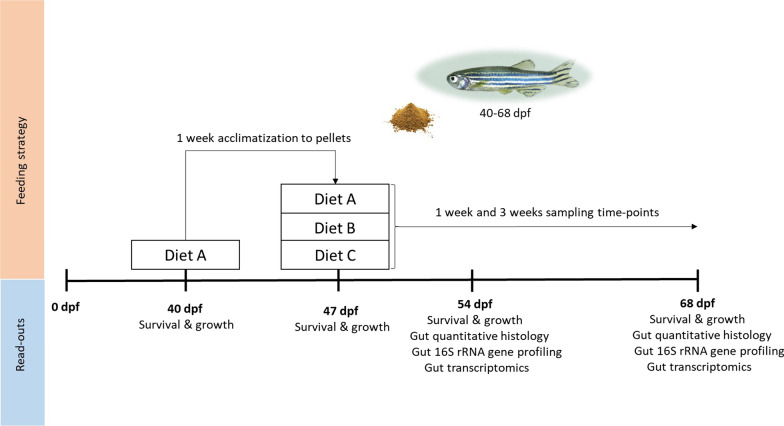
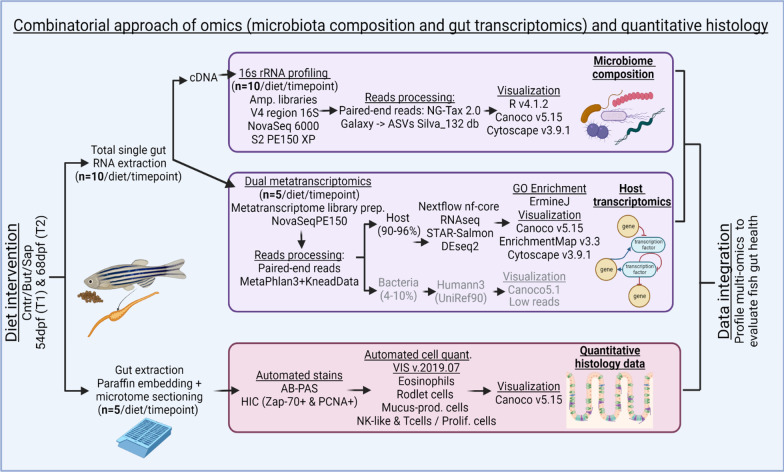
Prebiotic feed additives aim to improve gut health by influencing the microbiota and the gut barrier. Most studies on feed additives concentrate on one or two (monodisciplinary) outcome parameters, such as immunity, growth, microbiota or intestinal architecture. A combinatorial and comprehensive approach to disclose the complex and multifaceted effects of feed additives is needed to understand their underlying mechanisms before making health benefit claims. Here, we used juvenile zebrafish as a model species to study effects of feed additives by integrating gut microbiota composition data and host gut transcriptomics with high-throughput quantitative histological analysis. Zebrafish received either control, sodium butyrate or saponin-supplemented feed. Butyrate-derived components such as butyric acid or sodium butyrate have been widely used in animal feeds due to their immunostimulant properties, thereby supporting intestinal health. Soy saponin is an antinutritional factor from soybean meal that promotes inflammation due to its amphipathic nature.
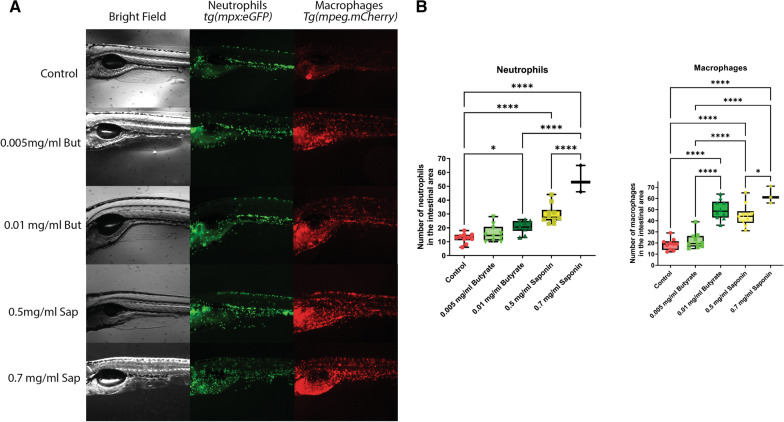
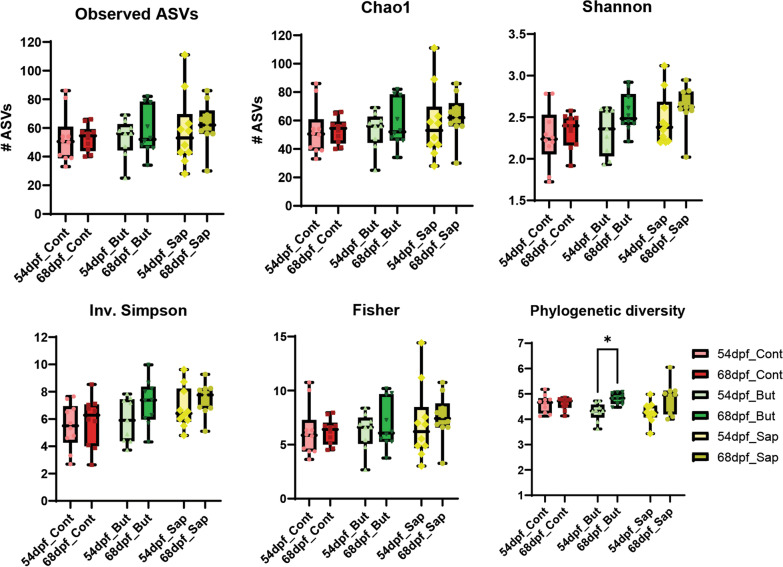
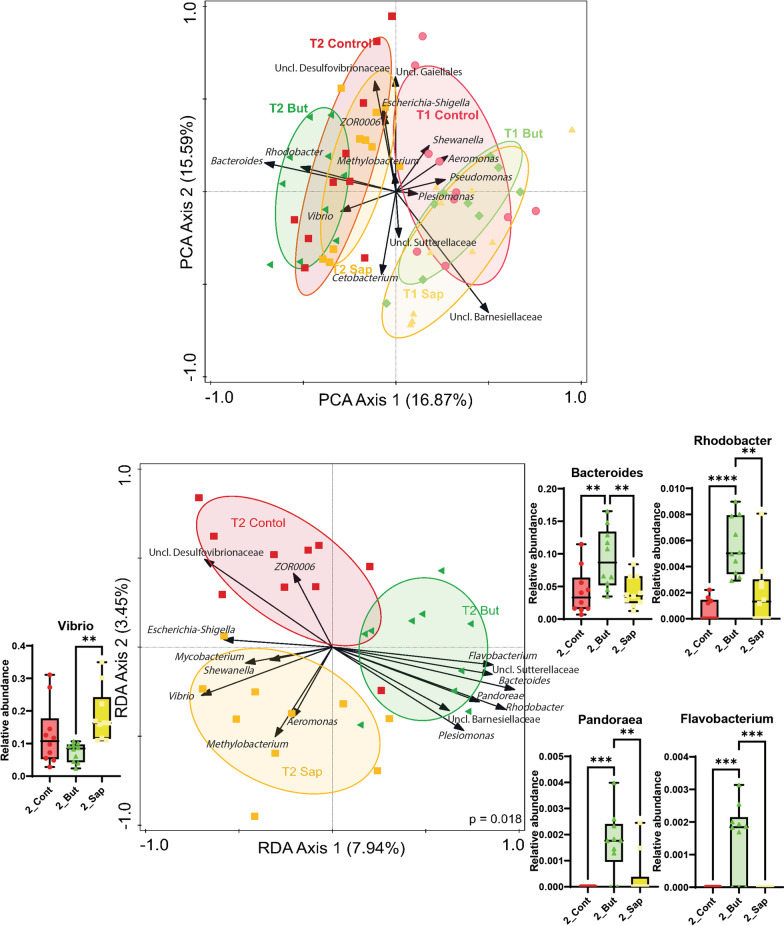
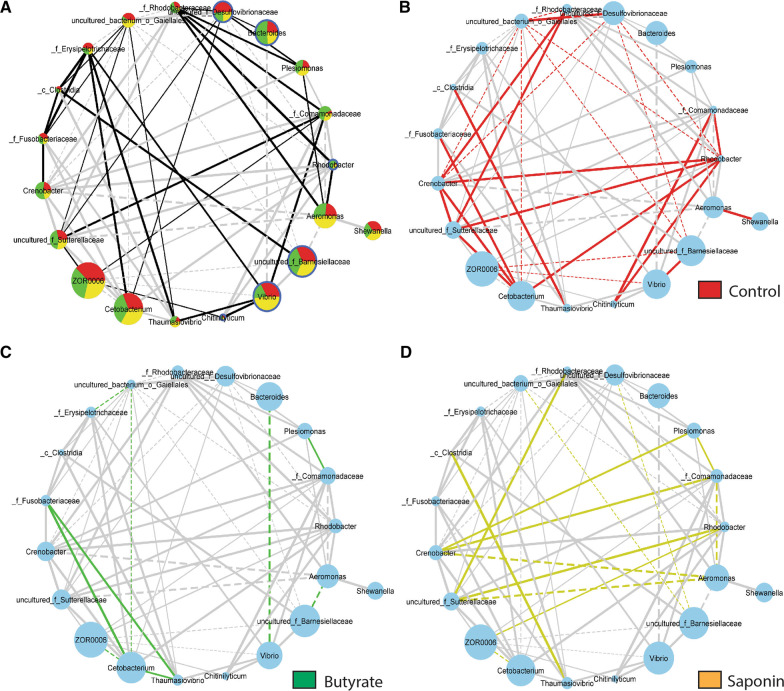
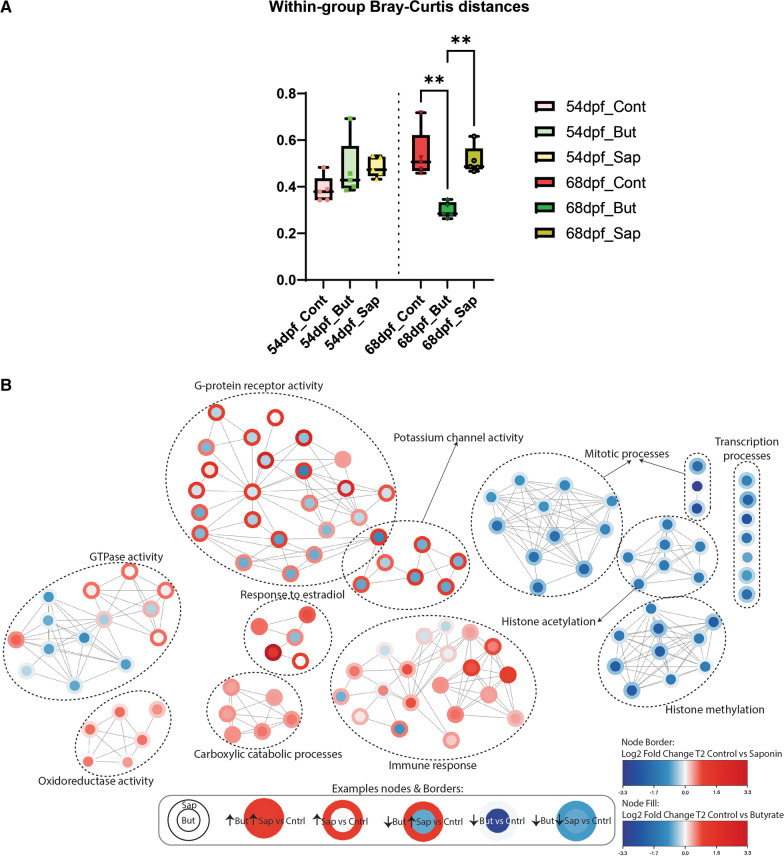
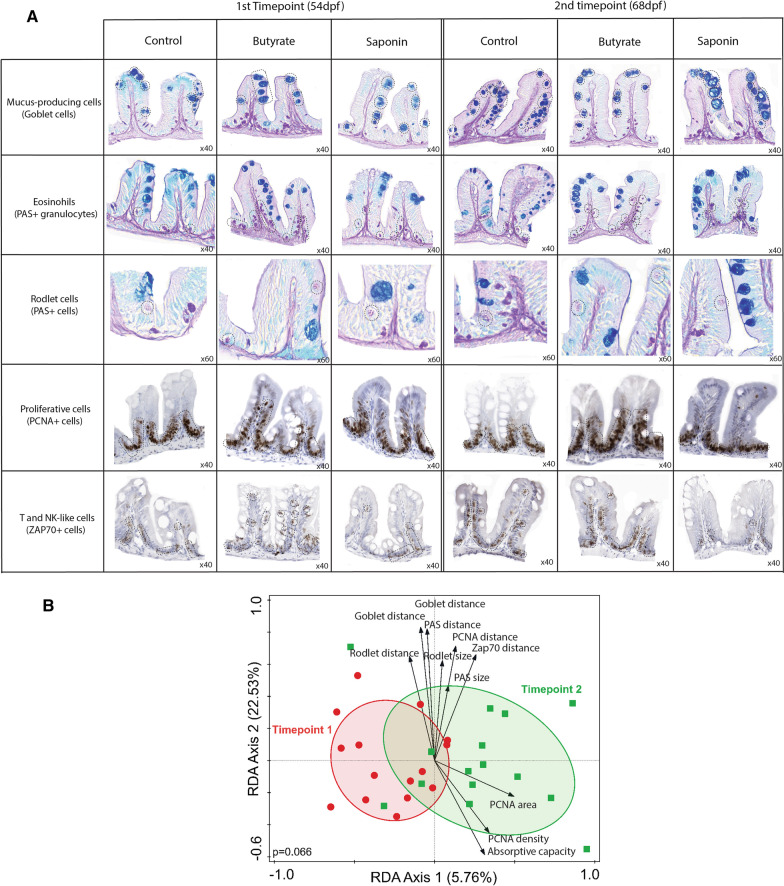
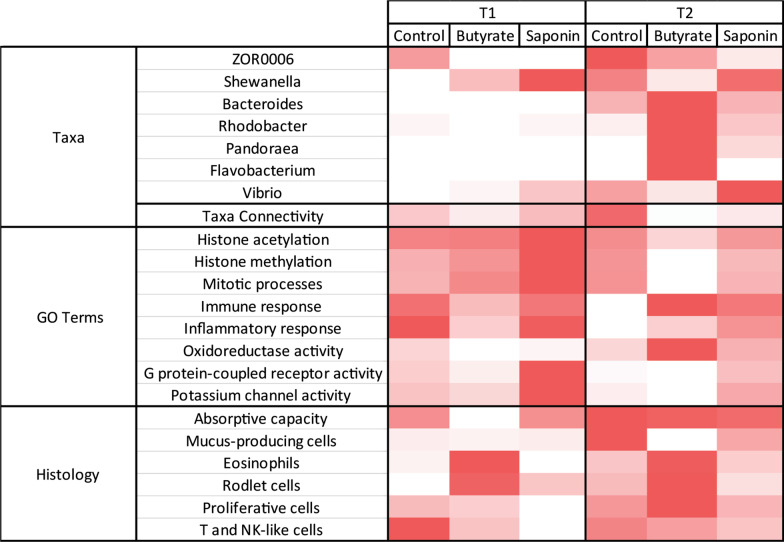
We observed distinct microbial profiles associated with each diet, discovering that butyrate (and saponin to a lesser extent) affected gut microbial composition by reducing the degree of community-structure (co-occurrence network analysis) compared to controls. Analogously, butyrate and saponin supplementation impacted the transcription of numerous canonical pathways compared to control-fed fish. For example, both butyrate and saponin increased the expression of genes associated with immune response and inflammatory response, as well as oxidoreductase activity, compared to controls. Furthermore, butyrate decreased the expression of genes associated with histone modification, mitotic processes and G-coupled receptor activity. High-throughput quantitative histological analysis depicted an increase of eosinophils and rodlet cells in the gut tissue of fish receiving butyrate after one week of feeding and a depletion of mucus-producing cells after 3 weeks of feeding this diet. Combination of all datasets indicated that in juvenile zebrafish, butyrate supplementation increases the immune and the inflammatory response to a greater extent than the established inflammation-inducing anti-nutritional factor saponin. Such comprehensive analysis was supplemented by in vivo imaging of neutrophil and macrophage transgenic reporter zebrafish (mpeg1:mCherry/mpx:eGFPi) larvae. Upon exposure to butyrate and saponin, these larvae displayed a dose-dependent increase of neutrophils and macrophages in the gut area.
The omics and imaging combinatorial approach provided an integrated evaluation of the effect of butyrate on fish gut health and unraveled inflammatory-like features not previously reported that question the usage of butyrate supplementation to enhance fish gut health under basal conditions. The zebrafish model, due to its unique advantages, provides researchers with an invaluable tool to investigate effects of feed components on fish gut health throughout life.
益生元饲料添加剂旨在通过影响微生物群和肠道屏障来改善肠道健康。大多数关于饲料添加剂的研究集中在一两个(单一学科的)结果参数上,如免疫力、生长、微生物群或肠道结构。在提出健康益处声明之前,需要一种组合式和综合性的方法来揭示饲料添加剂的复杂多面效应,以了解其潜在机制。在此,我们使用幼年斑马鱼作为模型物种,通过将肠道微生物群组成数据和宿主肠道转录组学与高通量定量组织学分析相结合,来研究饲料添加剂的影响。斑马鱼分别喂食对照饲料、添加丁酸钠或皂苷的饲料。丁酸盐衍生成分如丁酸或丁酸钠因其免疫刺激特性已被广泛用于动物饲料中,从而有助于肠道健康。大豆皂苷是豆粕中的一种抗营养因子,因其两亲性会促进炎症。
我们观察到与每种饮食相关的独特微生物谱,发现丁酸盐(皂苷的影响程度较小)与对照相比,通过降低群落结构程度(共现网络分析)影响肠道微生物组成。类似地,与喂食对照饲料的鱼相比,添加丁酸盐和皂苷也影响了众多经典途径的转录。例如,与对照相比,丁酸盐和皂苷均增加了与免疫反应、炎症反应以及氧化还原酶活性相关基因的表达。此外,丁酸盐降低了与组蛋白修饰、有丝分裂过程和G偶联受体活性相关基因的表达。高通量定量组织学分析显示,喂食丁酸盐一周后,鱼肠道组织中的嗜酸性粒细胞和小棒状细胞增加,喂食这种饲料3周后,产生黏液的细胞减少。所有数据集的组合表明,在幼年斑马鱼中,添加丁酸盐比已确定的诱导炎症的抗营养因子皂苷在更大程度上增加免疫和炎症反应。中性粒细胞和巨噬细胞转基因报告斑马鱼(mpeg1:mCherry/mpx:eGFPi)幼虫的体内成像补充了这种综合分析。暴露于丁酸盐和皂苷后,这些幼虫在肠道区域的中性粒细胞和巨噬细胞呈剂量依赖性增加。
组学和成像组合方法对丁酸盐对鱼肠道健康的影响提供了综合评估,并揭示了以前未报道的类似炎症的特征,这对在基础条件下使用丁酸盐补充剂来增强鱼肠道健康提出了质疑。斑马鱼模型因其独特优势,为研究人员提供了一个宝贵工具,用于研究饲料成分对鱼一生肠道健康的影响。