Itskou Ioanna, L'Hermitte Anouk, Marchesini Sofia, Tian Tian, Petit Camille
Barrer Centre, Department of Chemical Engineering, Imperial College London, LondonSW7 2AZ, United Kingdom.
Department of Materials, Imperial College London, LondonSW7 2AZ, United Kingdom.
Acc Mater Res. 2023 Jan 30;4(2):143-155. doi: 10.1021/accountsmr.2c00148. eCollection 2023 Feb 24.
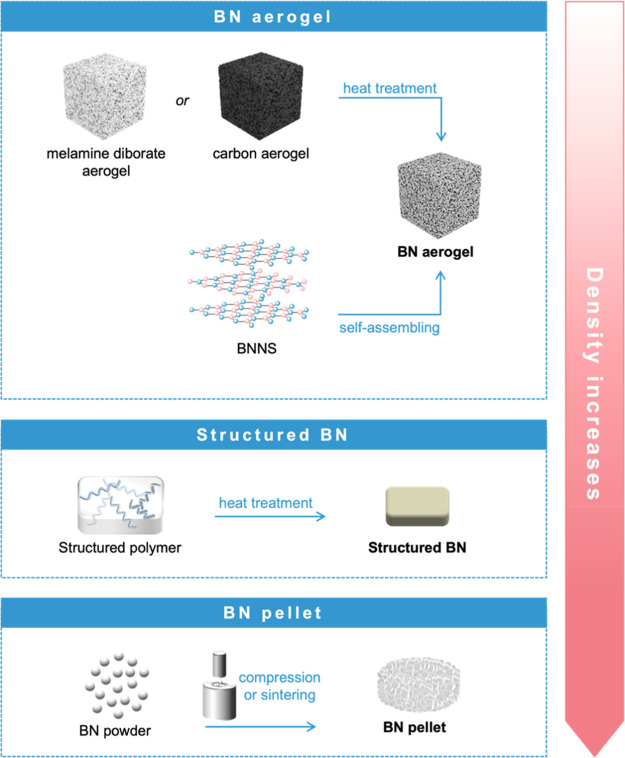
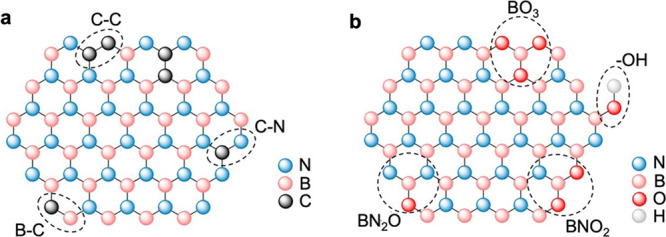
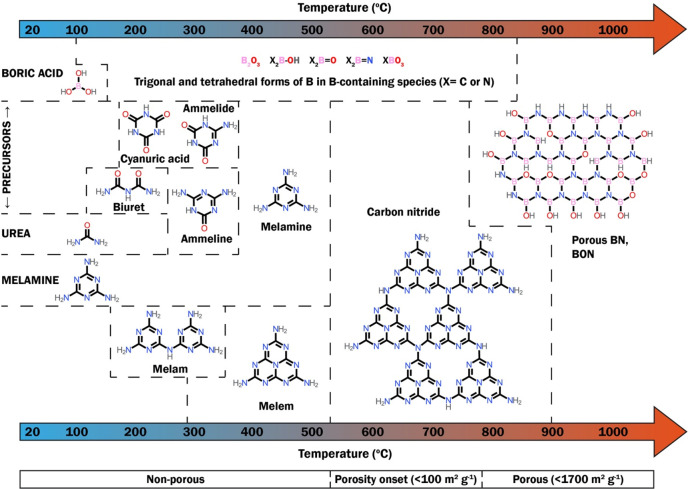
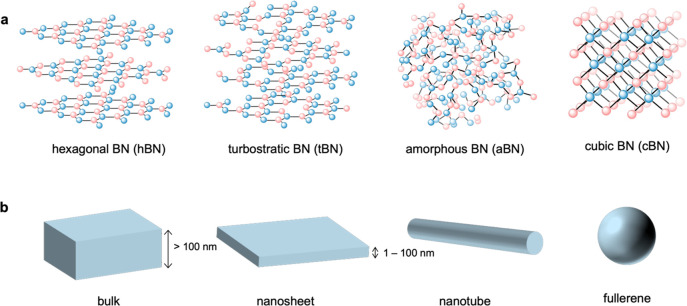
The research of new porous materials for applications in interfacial processes is key to addressing global energy and sustainability challenges. For example, porous materials can be used to store fuels such as hydrogen or methane or to separate chemical mixtures reducing the energy currently required by thermal separation processes. Their catalytic properties can be exploited to convert adsorbed molecules into valuable or less hazardous chemicals, thereby reducing energy consumption or pollutants emissions. Porous boron nitride (BN) has appeared as a promising material for applications in molecular separations, gas storage, and catalysis owing to its high surface area and thermal stability, as well as its tunable physical properties and chemistry. However, the production of porous BN is still limited to the laboratory scale, and its formation mechanism, as well as ways to control porosity and chemistry, are yet to be fully understood. In addition, studies have pointed toward the instability of porous BN materials when exposed to humidity, which could significantly impact performance in industrial applications. Studies on porous BN performance and recyclability when employed in adsorption, gas storage, and catalysis remain limited, despite encouraging preliminary studies. Moreover, porous BN powder must be shaped into macrostructures (e.g., pellets) to be used commercially. However, common methods to shape porous materials into macrostructures often cause a reduction in the surface area and/or mechanical strength. In recent years, research groups, including ours, have started addressing the challenges discussed above. Herein, we summarize our collective findings through a selection of key studies. First, we discuss the chemistry and structure of BN, clarifying confusion around terminology and discussing the hydrolytic instability of the material in relation to its structure and chemistry. We demonstrate a way to reduce the instability in water while still maintaining high specific surface area. We propose a mechanism for the formation of porous BN and discuss the effects of different synthesis parameters on the structure and chemistry of porous BN, therefore providing a way to tune its properties for selected applications. While the syntheses covered often lead to a powder product, we also present ways to shape porous BN powders into macrostructures while still maintaining high accessible surface area for interfacial processes. Finally, we evaluate porous BN performance for chemical separations, gas storage, and catalysis. While the above highlights key advances in the field, further work is needed to allow deployment of porous BN. Specifically, we suggest evaluating its hydrolytic stability, refining the ways to shape the material into stable and reproducible macrostructures, establishing clear design rules to produce BN with specific chemistry and porosity, and, finally, providing standardized test procedures to evaluate porous BN catalytic and sorptive properties to facilitate comparison.
研究用于界面过程的新型多孔材料是应对全球能源和可持续发展挑战的关键。例如,多孔材料可用于储存氢气或甲烷等燃料,或分离化学混合物,从而降低热分离过程目前所需的能量。可以利用它们的催化特性将吸附的分子转化为有价值或危害较小的化学品,从而降低能源消耗或污染物排放。多孔氮化硼(BN)由于其高比表面积和热稳定性,以及可调节的物理性质和化学性质,已成为分子分离、气体储存和催化应用中有前景的材料。然而,多孔BN的生产仍局限于实验室规模,其形成机制以及控制孔隙率和化学性质的方法尚未完全了解。此外,研究表明多孔BN材料在暴露于湿度时不稳定,这可能会显著影响其在工业应用中的性能。尽管有令人鼓舞的初步研究,但关于多孔BN在吸附、气体储存和催化中的性能及可回收性的研究仍然有限。此外,多孔BN粉末必须成型为宏观结构(如颗粒)才能用于商业用途。然而,将多孔材料成型为宏观结构的常用方法往往会导致表面积和/或机械强度降低。近年来,包括我们在内的研究团队已开始应对上述挑战。在此,我们通过一系列关键研究总结了我们的共同发现。首先,我们讨论了BN的化学和结构,澄清了术语方面的混淆,并讨论了材料的水解不稳定性与其结构和化学性质的关系。我们展示了一种在保持高比表面积的同时降低其在水中不稳定性的方法。我们提出了多孔BN形成的机制,并讨论了不同合成参数对多孔BN结构和化学性质的影响,从而提供了一种针对特定应用调整其性能的方法。虽然所涵盖的合成方法通常会得到粉末产品,但我们也介绍了将多孔BN粉末成型为宏观结构的方法,同时仍保持用于界面过程的高可及表面积。最后,我们评估了多孔BN在化学分离、气体储存和催化方面的性能。虽然上述内容突出了该领域的关键进展,但仍需要进一步的工作才能实现多孔BN的应用。具体而言,我们建议评估其水解稳定性,完善将材料成型为稳定且可重复的宏观结构的方法,建立明确的设计规则以生产具有特定化学性质和孔隙率的BN,最后,提供标准化的测试程序来评估多孔BN的催化和吸附性能,以方便进行比较。