Global Initiative for Neuropsychiatric Genetics Education in Research (GINGER), Harvard T.H. Chan School of Public Health, Department of Epidemiology, Boston, MA, USA.
MRC Human Genetics Research Unit, Division of Human Genetics, Institute of Infectious Disease and Molecular Medicine, Faculty of Health Sciences, University of Cape Town, Observatory 7925, South Africa.
HGG Adv. 2023 Feb 13;4(2):100184. doi: 10.1016/j.xhgg.2023.100184. eCollection 2023 Apr 13.
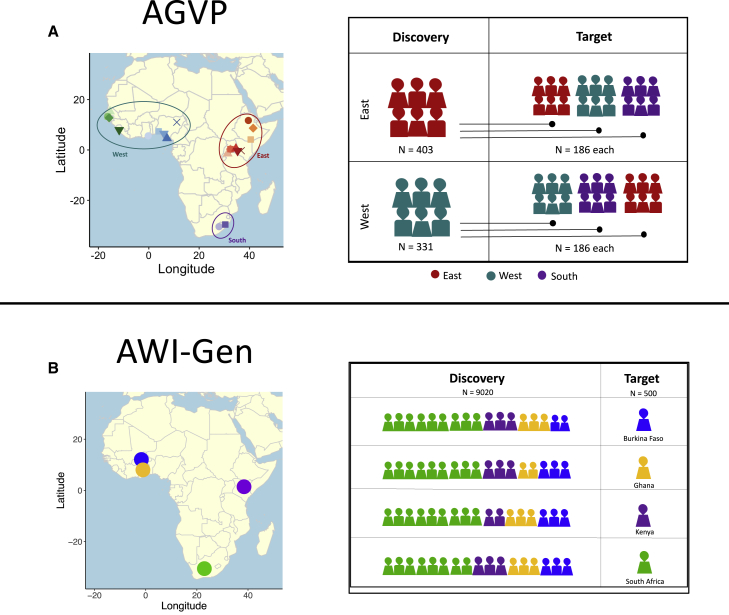
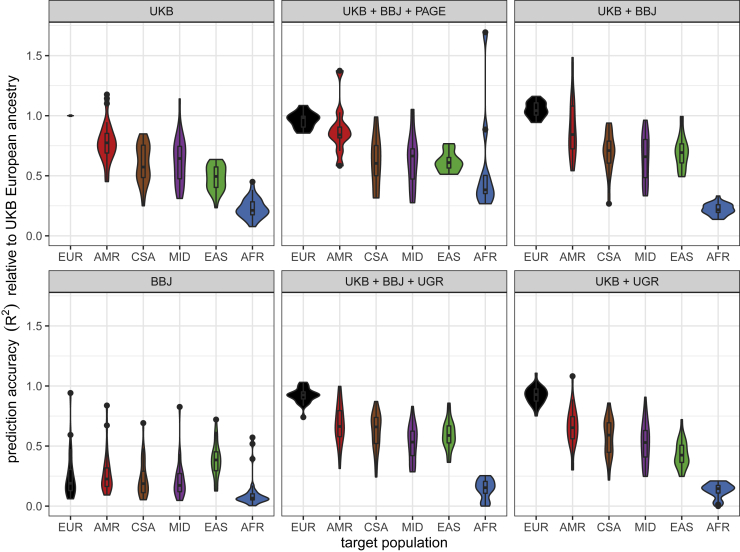
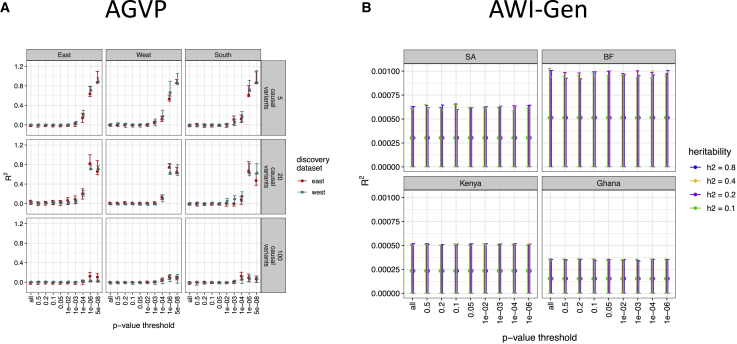
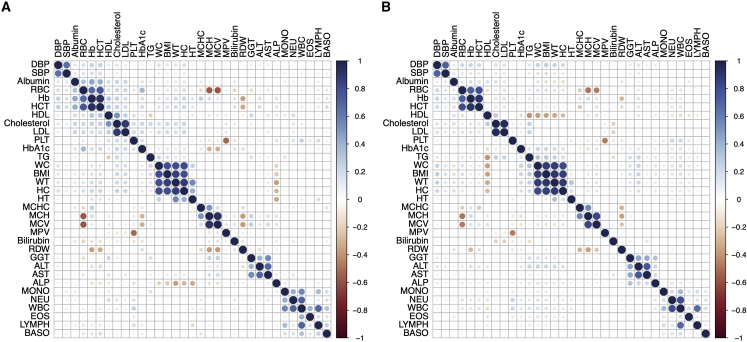
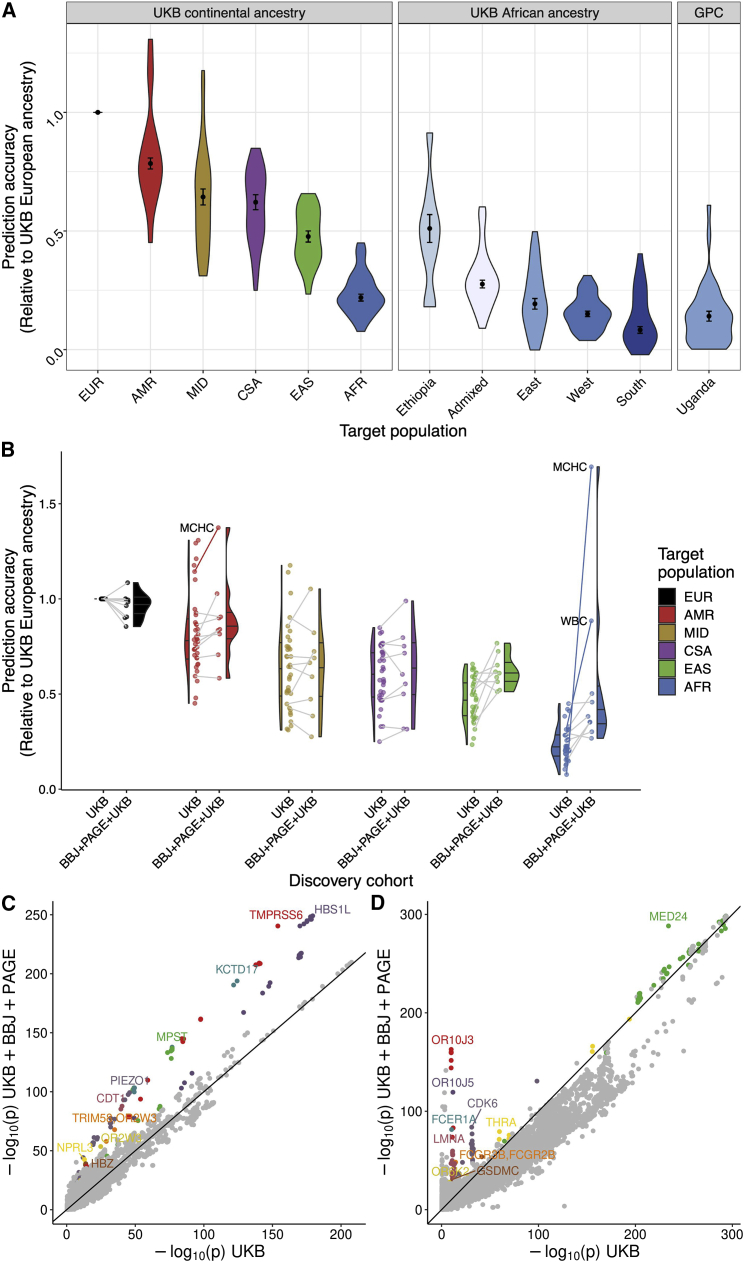
African populations are vastly underrepresented in genetic studies but have the most genetic variation and face wide-ranging environmental exposures globally. Because systematic evaluations of genetic prediction had not yet been conducted in ancestries that span African diversity, we calculated polygenic risk scores (PRSs) in simulations across Africa and in empirical data from South Africa, Uganda, and the United Kingdom to better understand the generalizability of genetic studies. PRS accuracy improves with ancestry-matched discovery cohorts more than from ancestry-mismatched studies. Within ancestrally and ethnically diverse South African individuals, we find that PRS accuracy is low for all traits but varies across groups. Differences in African ancestries contribute more to variability in PRS accuracy than other large cohort differences considered between individuals in the United Kingdom versus Uganda. We computed PRS in African ancestry populations using existing European-only versus ancestrally diverse genetic studies; the increased diversity produced the largest accuracy gains for hemoglobin concentration and white blood cell count, reflecting large-effect ancestry-enriched variants in genes known to influence sickle cell anemia and the allergic response, respectively. Differences in PRS accuracy across African ancestries originating from diverse regions are as large as across out-of-Africa continental ancestries, requiring commensurate nuance.
非洲人群在遗传研究中代表性严重不足,但他们拥有最多的基因变异,并面临着全球范围的广泛环境暴露。由于在跨越非洲多样性的血统中尚未进行系统的遗传预测评估,我们在模拟中计算了多基因风险评分(PRS),并在南非、乌干达和英国的实证数据中进行了计算,以更好地理解遗传研究的普遍性。与血统匹配的发现队列相比,PRS 准确性随着血统不匹配的研究而提高。在具有遗传和种族多样性的南非个体中,我们发现所有特征的 PRS 准确性都很低,但在不同群体之间存在差异。与英国和乌干达个体之间考虑的其他个体差异相比,非洲血统的差异对 PRS 准确性的变异性的贡献更大。我们使用现有的仅欧洲血统或血统多样化的遗传研究在非洲血统人群中计算了 PRS;增加的多样性使血红蛋白浓度和白细胞计数的 PRS 准确性提高最大,这反映了已知影响镰状细胞贫血和过敏反应的基因中具有较大效应的血统丰富变体。来自不同地区的非洲血统之间的 PRS 准确性差异与非洲以外的大陆血统之间的差异一样大,需要相应的细微差别。