Calis Dila, Hess Morgan, Marchetta Philine, Singer Wibke, Modro Julian, Nelissen Ellis, Prickaerts Jos, Sandner Peter, Lukowski Robert, Ruth Peter, Knipper Marlies, Rüttiger Lukas
Department of Otolaryngology, Head and Neck Surgery, Tübingen Hearing Research Centre, Molecular Physiology of Hearing, University of Tübingen, Tübingen, Germany.
Department of Psychiatry and Neuropsychology, School for Mental Health and Neuroscience (MHeNS), Maastricht University, Maastricht, Netherlands.
Front Mol Neurosci. 2023 Feb 17;16:1017761. doi: 10.3389/fnmol.2023.1017761. eCollection 2023.
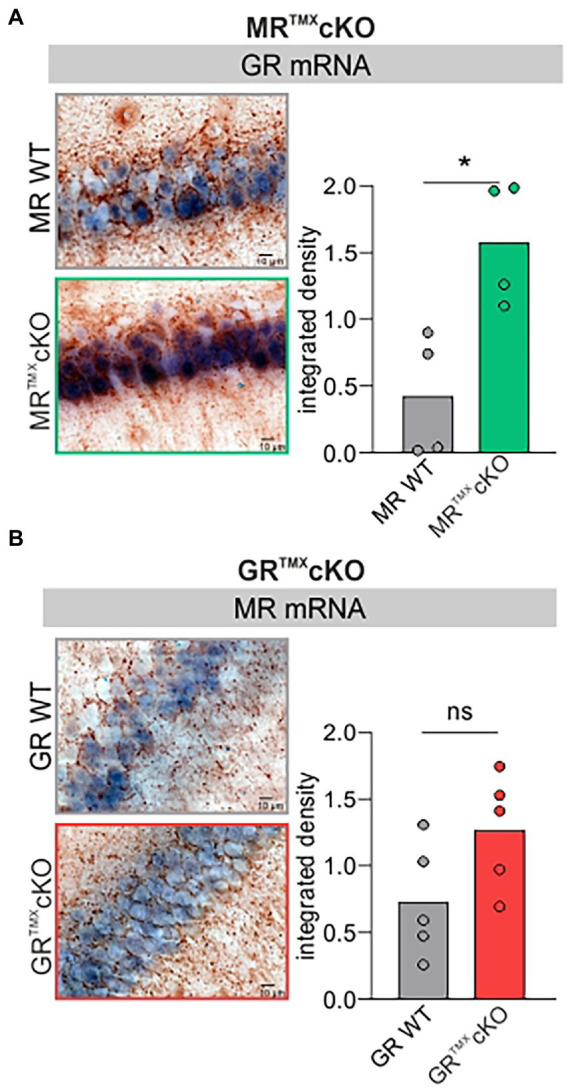
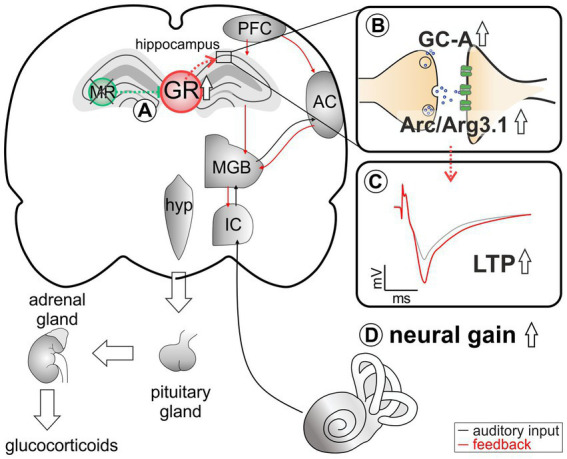
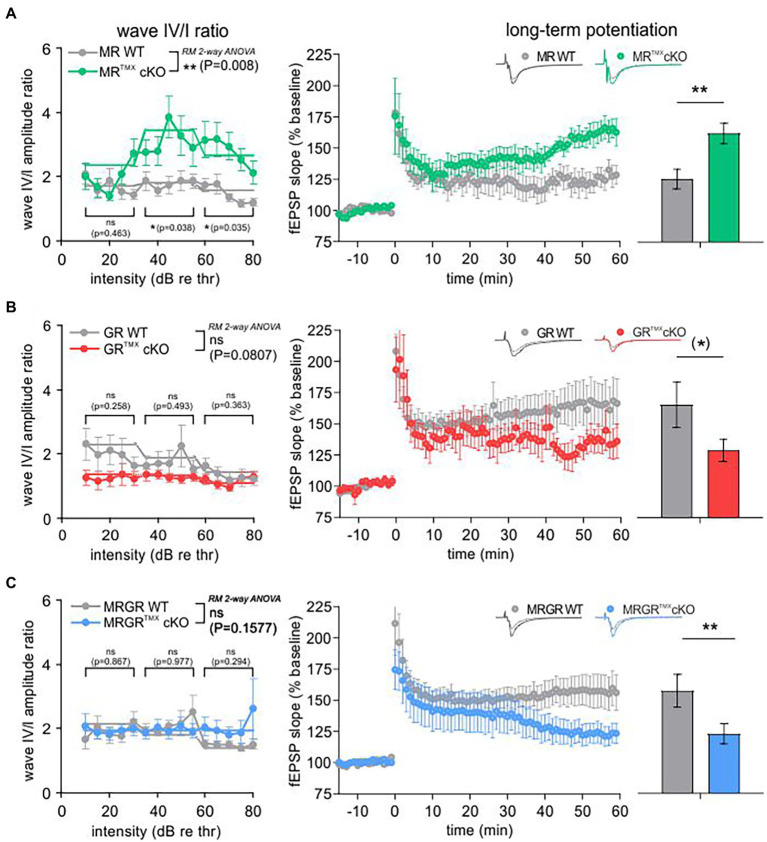
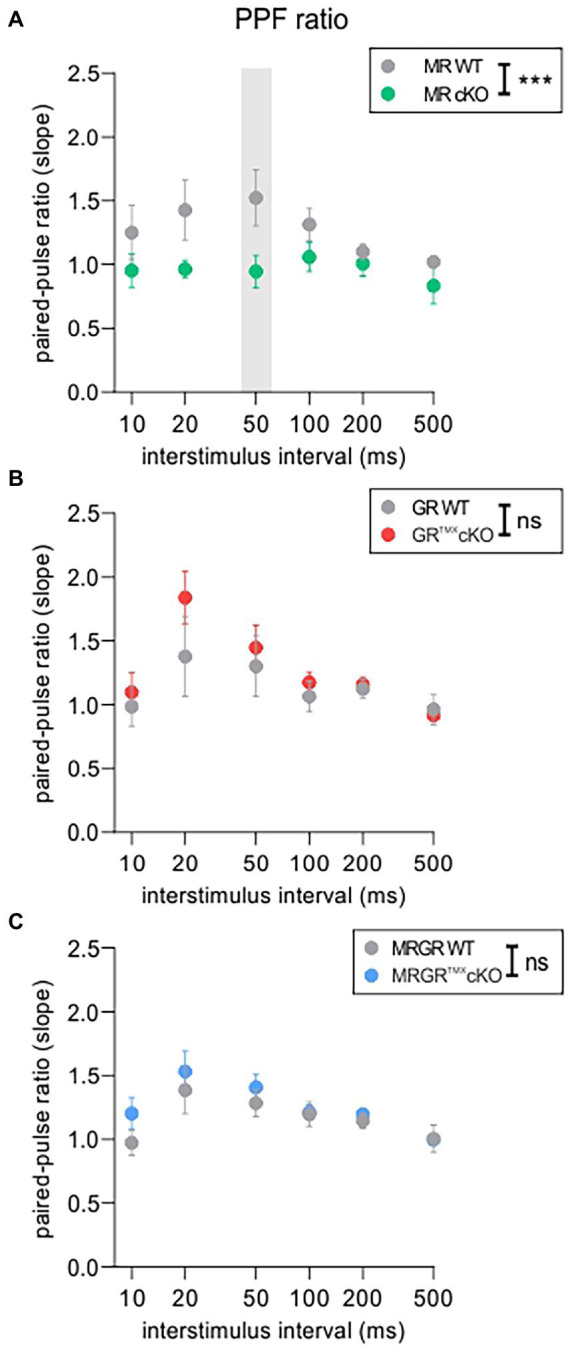
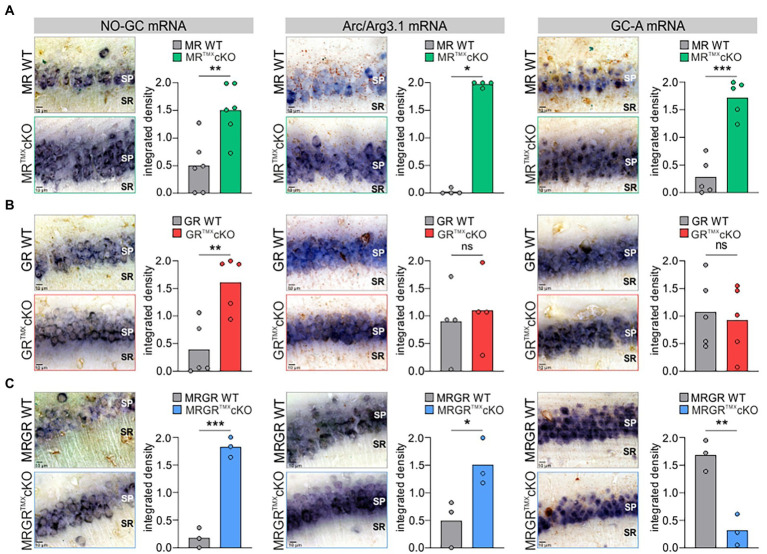
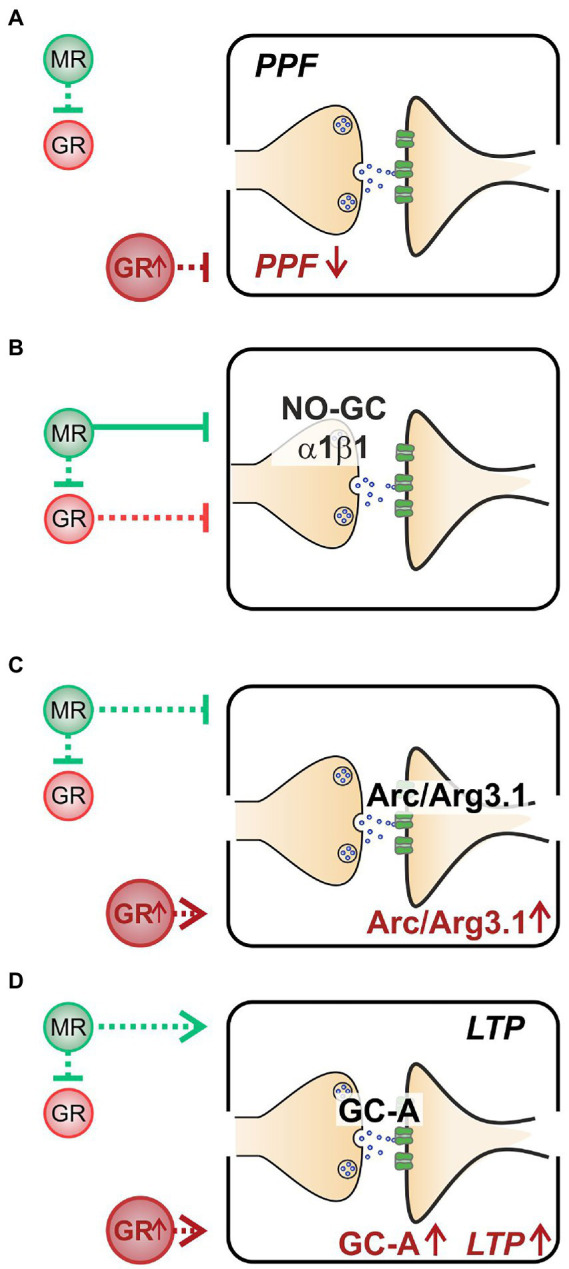
The complex mechanism by which stress can affect sensory processes such as hearing is still poorly understood. In a previous study, the mineralocorticoid (MR) and/or glucocorticoid receptor (GR) were deleted in frontal brain regions but not cochlear regions using a CaMKIIα-based tamoxifen-inducible /loxP approach. These mice exhibit either a diminished (MRcKO) or disinhibited (GRcKO) auditory nerve activity. In the present study, we observed that mice differentially were (MRcKO) or were not (GRcKO) able to compensate for altered auditory nerve activity in the central auditory pathway. As previous findings demonstrated a link between central auditory compensation and memory-dependent adaptation processes, we analyzed hippocampal paired-pulse facilitation (PPF) and long-term potentiation (LTP). To determine which molecular mechanisms may impact differences in synaptic plasticity, we analyzed Arc/Arg3.1, known to control AMPA receptor trafficking, as well as regulators of tissue perfusion and energy consumption (NO-GC and GC-A). We observed that the changes in PPF of MRcKOs mirrored the changes in their auditory nerve activity, whereas changes in the LTP of MRcKOs and GRcKOs mirrored instead the changes in their central compensation capacity. Enhanced GR expression levels in MRcKOs suggest that MRs typically suppress GR expression. We observed that hippocampal LTP, GC-A mRNA expression levels, and ABR wave IV/I ratio were all enhanced in animals with elevated GR (MRcKOs) but were all lower or not mobilized in animals with impaired GR expression levels (GRcKOs and MRGRcKOs). This suggests that GC-A may link LTP and auditory neural gain through GR-dependent processes. In addition, enhanced NO-GC expression levels in MR, GR, and MRGRcKOs suggest that both receptors suppress NO-GC; on the other hand, elevated Arc/Arg3.1 levels in MRcKOs and MRGRcKOs but not GRcKOs suggest that MR suppresses Arc/Arg3.1 expression levels. Conclusively, MR through GR inhibition may define the threshold for hemodynamic responses for LTP and auditory neural gain associated with GC-A.
压力影响诸如听力等感觉过程的复杂机制仍未得到充分理解。在先前的一项研究中,使用基于CaMKIIα的他莫昔芬诱导型/loxP方法,在额叶脑区而非耳蜗区域删除了盐皮质激素(MR)和/或糖皮质激素受体(GR)。这些小鼠表现出听觉神经活动减弱(MR基因敲除小鼠)或去抑制(GR基因敲除小鼠)。在本研究中,我们观察到小鼠在补偿中枢听觉通路中改变的听觉神经活动方面存在差异(MR基因敲除小鼠能够补偿,而GR基因敲除小鼠不能)。由于先前的研究结果表明中枢听觉补偿与记忆依赖的适应过程之间存在联系,我们分析了海马体的双脉冲易化(PPF)和长时程增强(LTP)。为了确定哪些分子机制可能影响突触可塑性的差异,我们分析了已知控制AMPA受体转运的Arc/Arg3.1,以及组织灌注和能量消耗的调节因子(NO-GC和GC-A)。我们观察到,MR基因敲除小鼠的PPF变化反映了其听觉神经活动的变化,而MR基因敲除小鼠和GR基因敲除小鼠的LTP变化则反映了它们的中枢补偿能力的变化。MR基因敲除小鼠中GR表达水平的增强表明,MR通常会抑制GR的表达。我们观察到,GR升高的动物(MR基因敲除小鼠)海马体LTP、GC-A mRNA表达水平和ABR波IV/I比值均升高,但GR表达水平受损的动物(GR基因敲除小鼠和MRGR基因敲除小鼠)均较低或未被调动。这表明GC-A可能通过GR依赖的过程将LTP与听觉神经增益联系起来。此外,MR、GR和MRGR基因敲除小鼠中NO-GC表达水平的增强表明,两种受体均抑制NO-GC;另一方面,MR基因敲除小鼠和MRGR基因敲除小鼠而非GR基因敲除小鼠中Arc/Arg3.1水平升高表明,MR抑制Arc/Arg3.1表达水平。总之,MR通过抑制GR可能定义了与GC-A相关的LTP和听觉神经增益的血流动力学反应阈值。