Manohar Senthilvelan, Chen Guang-Di, Ding Dalian, Liu Lijie, Wang Jian, Chen Yu-Chen, Chen Lin, Salvi Richard
Center for Hearing and Deafness, University at Buffalo, Buffalo, NY, United States.
Department of Physiology, Medical College, Southeast University, Nanjing, China.
Front Integr Neurosci. 2022 May 10;16:871223. doi: 10.3389/fnint.2022.871223. eCollection 2022.
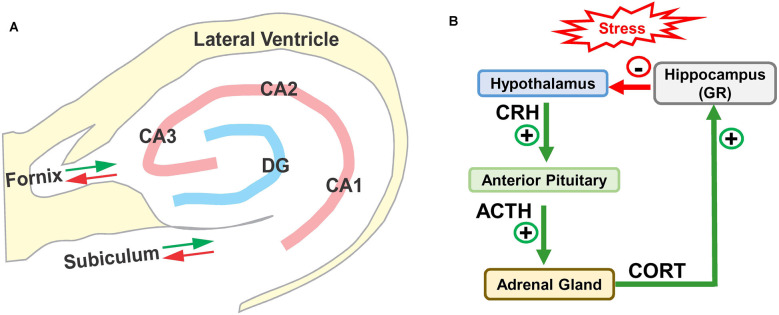
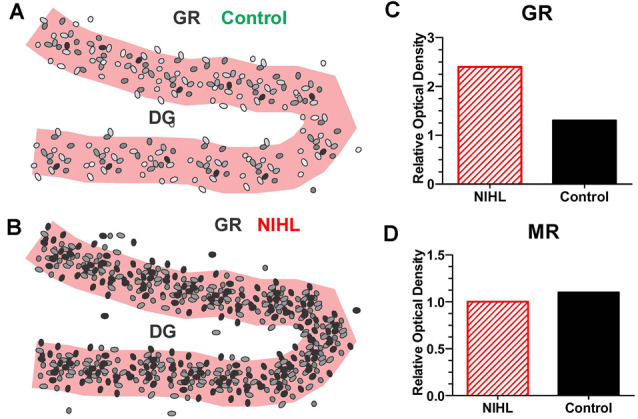
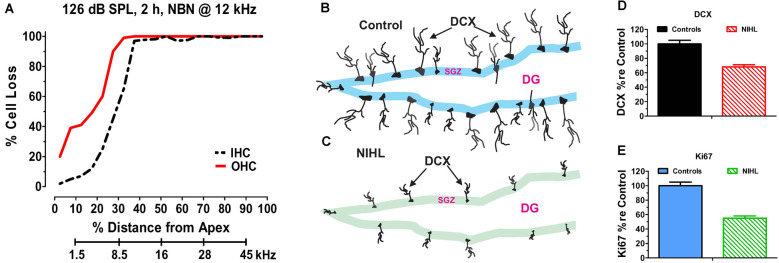
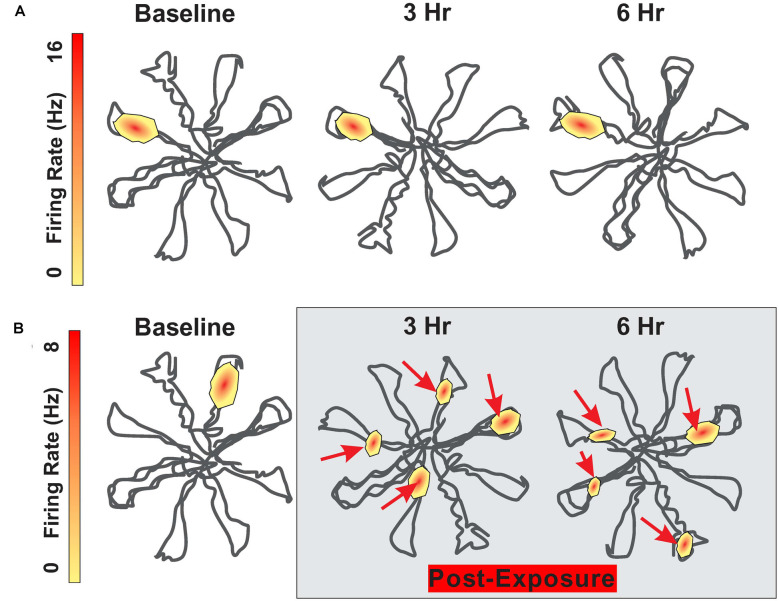
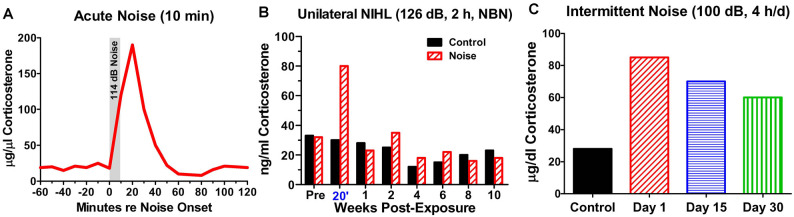
Noise-induced hearing loss (NIHL), caused by direct damage to the cochlea, reduces the flow of auditory information to the central nervous system, depriving higher order structures, such as the hippocampus with vital sensory information needed to carry out complex, higher order functions. Although the hippocampus lies outside the classical auditory pathway, it nevertheless receives acoustic information that influence its activity. Here we review recent results that illustrate how NIHL and other types of cochlear hearing loss disrupt hippocampal function. The hippocampus, which continues to generate new neurons (neurogenesis) in adulthood, plays an important role in spatial navigation, memory, and emotion. The hippocampus, which contains place cells that respond when a subject enters a specific location in the environment, integrates information from multiple sensory systems, including the auditory system, to develop cognitive spatial maps to aid in navigation. Acute exposure to intense noise disrupts the place-specific firing patterns of hippocampal neurons, "spatially disorienting" the cells for days. More traumatic sound exposures that result in permanent NIHL chronically suppresses cell proliferation and neurogenesis in the hippocampus; these structural changes are associated with long-term spatial memory deficits. Hippocampal neurons, which contain numerous glucocorticoid hormone receptors, are part of a complex feedback network connected to the hypothalamic-pituitary (HPA) axis. Chronic exposure to intense intermittent noise results in prolonged stress which can cause a persistent increase in corticosterone, a rodent stress hormone known to suppress neurogenesis. In contrast, a single intense noise exposure sufficient to cause permanent hearing loss produces only a transient increase in corticosterone hormone. Although basal corticosterone levels return to normal after the noise exposure, glucocorticoid receptors (GRs) in the hippocampus remain chronically elevated. Thus, NIHL disrupts negative feedback from the hippocampus to the HPA axis which regulates the release of corticosterone. Preclinical studies suggest that the noise-induced changes in hippocampal place cells, neurogenesis, spatial memory, and glucocorticoid receptors may be ameliorated by therapeutic interventions that reduce oxidative stress and inflammation. These experimental results may provide new insights on why hearing loss is a risk factor for cognitive decline and suggest methods for preventing this decline.
噪声性听力损失(NIHL)由耳蜗直接受损引起,它减少了听觉信息向中枢神经系统的传递,使海马体等高级结构无法获得执行复杂高级功能所需的重要感觉信息。尽管海马体位于经典听觉通路之外,但它仍会接收影响其活动的声学信息。在此,我们回顾近期的研究结果,这些结果阐明了NIHL和其他类型的耳蜗性听力损失如何破坏海马体功能。海马体在成年期持续产生新神经元(神经发生),在空间导航、记忆和情绪方面发挥重要作用。海马体包含位置细胞,当个体进入环境中的特定位置时,这些细胞会做出反应,它整合来自包括听觉系统在内的多个感觉系统的信息,以形成认知空间地图来辅助导航。急性暴露于高强度噪声会破坏海马体神经元的位置特异性放电模式,使细胞在数天内出现“空间定向障碍”。更具创伤性的声音暴露导致永久性NIHL,会长期抑制海马体中的细胞增殖和神经发生;这些结构变化与长期空间记忆缺陷有关。海马体神经元含有大量糖皮质激素受体,是与下丘脑 - 垂体(HPA)轴相连的复杂反馈网络的一部分。长期暴露于强烈的间歇性噪声会导致长期应激,这可能会导致皮质酮持续增加,皮质酮是一种已知会抑制神经发生的啮齿动物应激激素。相比之下,足以导致永久性听力损失的单次高强度噪声暴露只会使皮质酮激素出现短暂增加。尽管噪声暴露后基础皮质酮水平恢复正常,但海马体中的糖皮质激素受体(GRs)仍长期升高。因此,NIHL破坏了海马体对调节皮质酮释放的HPA轴的负反馈。临床前研究表明,减少氧化应激和炎症的治疗干预措施可能会改善噪声引起的海马体位置细胞、神经发生、空间记忆和糖皮质激素受体的变化。这些实验结果可能为听力损失为何是认知衰退的危险因素提供新的见解,并提出预防这种衰退的方法。