Zhang Jing, Gu Yan, Chen Baoan
Department of Hematology, Zhongda Hospital, School of Medicine, Southeast University, Nanjing, 210009, People's Republic of China.
Cancer Manag Res. 2023 Feb 25;15:245-255. doi: 10.2147/CMAR.S400013. eCollection 2023.
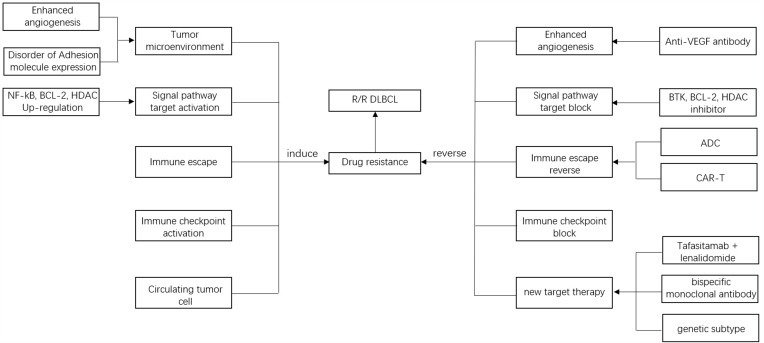
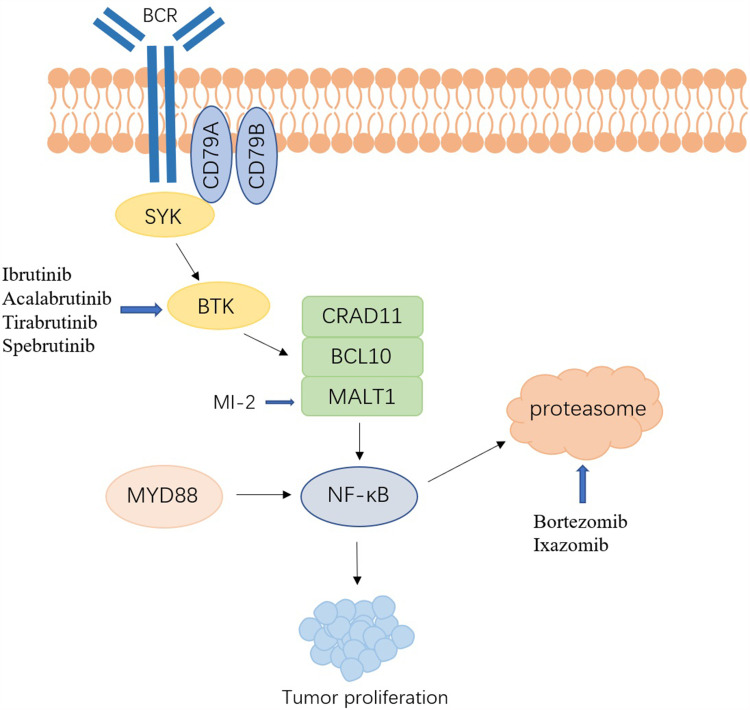
Diffuse large B-cell lymphoma (DLBCL) is the most common aggressive non-Hodgkin's lymphoma (NHL). 30 ~ 40% of DLBCL patients were resistant to the standard R-CHOP regimen or recurrence after remission. It is currently believed that drug resistance is the main cause of the recurrence and refractory of DLBCL (R/R DLBCL). With the increased understanding of DLBCL biology, tumor microenvironment and epigenetics, some new therapies and drugs like molecular and signal pathway target therapy, chimeric antigen receptor (CAR) T-cell therapy, immune checkpoint inhibitors, antibody drug-conjugate and tafasitamab have been used for R/R DLBCL. This article will review the drug resistance mechanism and novel targeted drugs and therapies of DLBCL.
弥漫性大B细胞淋巴瘤(DLBCL)是最常见的侵袭性非霍奇金淋巴瘤(NHL)。30%至40%的DLBCL患者对标准R-CHOP方案耐药或缓解后复发。目前认为耐药是DLBCL(R/R DLBCL)复发和难治的主要原因。随着对DLBCL生物学、肿瘤微环境和表观遗传学的认识不断增加,一些新的治疗方法和药物,如分子和信号通路靶向治疗、嵌合抗原受体(CAR)T细胞治疗、免疫检查点抑制剂、抗体药物偶联物和tafasitamab已被用于R/R DLBCL。本文将综述DLBCL的耐药机制以及新型靶向药物和治疗方法。