Wu Bing, Liu Fang, Sun Guiyan, Wang Shuang
Department of Neurology, Army 78th Military Group Hospital, Mudanjiang, China.
Front Neurol. 2023 Feb 16;14:1118563. doi: 10.3389/fneur.2023.1118563. eCollection 2023.
The prognostic role of the neutrophil-to-lymphocyte ratio (NLR), an inflammatory marker, in acute ischemic stroke (AIS) after reperfusion therapy remains controversial. Therefore, this meta-analysis sought to assess the correlation between the dynamic NLR and the clinical outcomes of patients with AIS after reperfusion therapy.
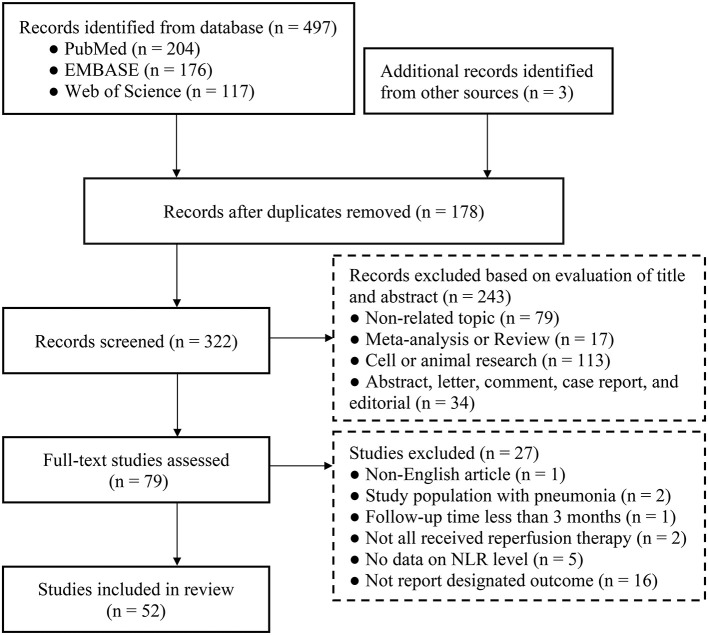
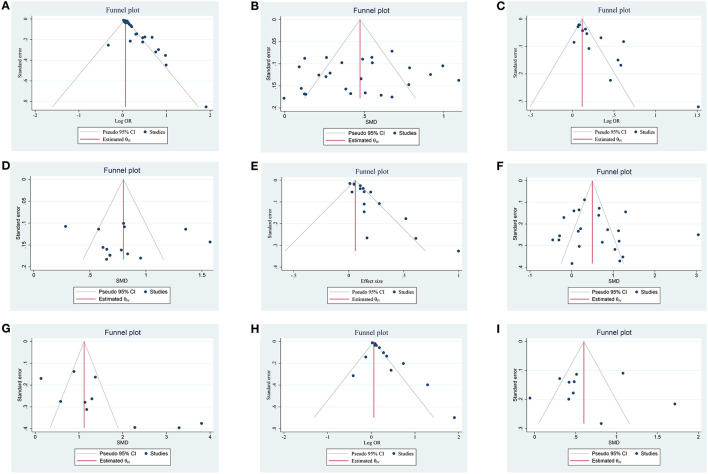
PubMed, Web of Science, and Embase databases were searched to identify relevant literature from their inception to 27 October 2022. The clinical outcomes of interest included poor functional outcome (PFO) at 3 months, symptomatic intracerebral hemorrhage (sICH), and 3-month mortality. The NLR on admission (pre-treatment) and post-treatment was collected. The PFO was defined as a modified Rankin scale (mRS) of >2.
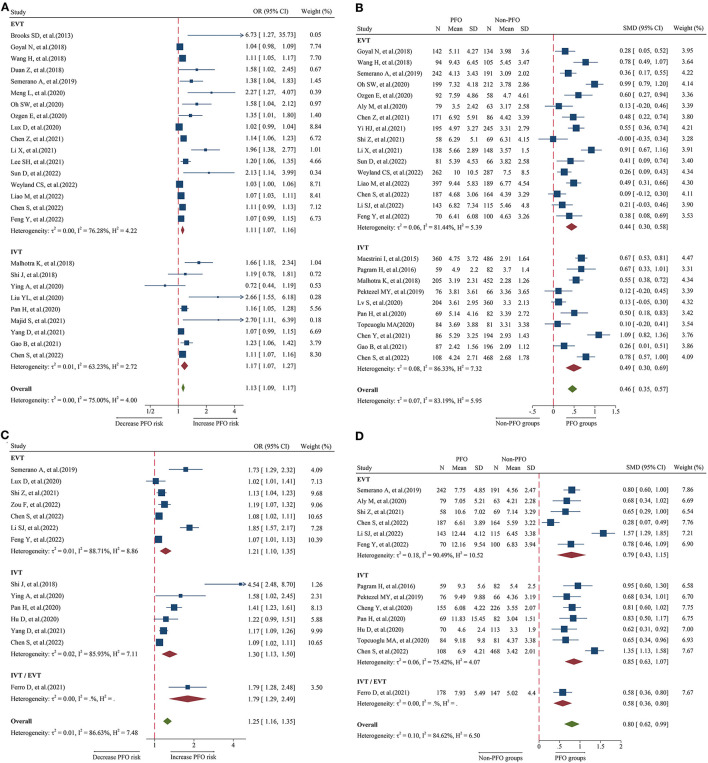
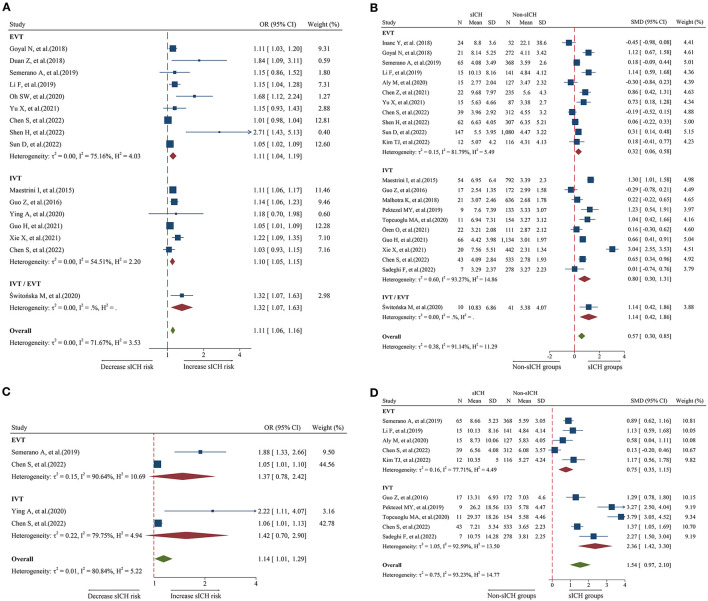
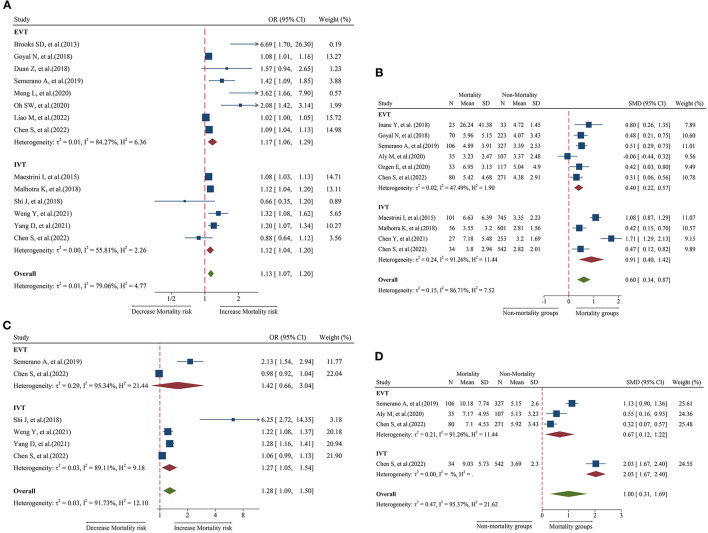
A total of 17,232 patients in 52 studies were included in the meta-analysis. The admission NLR was higher in the 3-month PFO (standardized mean difference [SMD] = 0.46, 95% confidence interval [CI] = 0.35-0.57), sICH (SMD = 0.57, 95% CI = 0.30-0.85), and mortality at 3 months (SMD = 0.60, 95% CI = 0.34-0.87). An elevated admission NLR was associated with an increased risk of 3-month PFO (odds ratio [OR] = 1.13, 95% CI = 1.09-1.17), sICH (OR = 1.11, 95% CI = 1.06-1.16), and mortality at 3 months (OR = 1.13, 95% CI = 1.07-1.20). The post-treatment NLR was significantly higher in the 3-month PFO (SMD = 0.80, 95% CI = 0.62-0.99), sICH (SMD = 1.54, 95% CI = 0.97-2.10), and mortality at 3 months (SMD = 1.00, 95% CI = 0.31-1.69). An elevated post-treatment NLR was significantly associated with an increased risk of 3-month PFO (OR = 1.25, 95% CI = 1.16-1.35), sICH (OR = 1.14, 95% CI = 1.01-1.29), and mortality at 3 months (OR = 1.28, 95% CI = 1.09-1.50).
The admission and post-treatment NLR can be used as cost-effective and easily available biomarkers to predict the 3-month PFO, sICH, and mortality at 3 months in patients with AIS treated with reperfusion therapy. The post-treatment NLR provides better predictive power than the admission NLR.
https://www.crd.york.ac.uk/PROSPERO/, identifier: CRD42022366394.
中性粒细胞与淋巴细胞比值(NLR)作为一种炎症标志物,在急性缺血性卒中(AIS)再灌注治疗后的预后作用仍存在争议。因此,本荟萃分析旨在评估动态NLR与AIS患者再灌注治疗后临床结局之间的相关性。
检索PubMed、Web of Science和Embase数据库,以识别从数据库建立至2022年10月27日的相关文献。感兴趣的临床结局包括3个月时的功能预后不良(PFO)、症状性脑出血(sICH)和3个月死亡率。收集入院时(治疗前)和治疗后的NLR。PFO定义为改良Rankin量表(mRS)>2。
共有52项研究中的17232例患者纳入荟萃分析。3个月PFO组、sICH组和3个月死亡率组的入院NLR更高(标准化均数差[SMD]=0.46,95%置信区间[CI]=0.35 - 0.57)、(SMD = 0.57,95% CI = 0.30 - 0.85)、(SMD = 0.60,95% CI = 0.34 - 0.87)。入院NLR升高与3个月PFO风险增加相关(比值比[OR]=1.13,95% CI = 1.09 - 1.17)、sICH(OR = 1.11,95% CI = 1.06 - 1.16)和3个月死亡率(OR = 1.13,95% CI = 1.07 - 1.20)。治疗后NLR在3个月PFO组、sICH组和3个月死亡率组显著更高(SMD = 0.80,95% CI = 0.62 - 0.99)、(SMD = 1.54,95% CI = 0.97 - 2.10)、(SMD = 1.00,95% CI = 0.31 - 1.69)。治疗后NLR升高与3个月PFO风险增加显著相关(OR = 1.25,95% CI = 1.16 - 1.35)、sICH(OR = 1.14,95% CI = 1.01 - 1.29)和3个月死亡率(OR = 1.28,95% CI = 1.09 - 1.50)。
入院时和治疗后的NLR可作为经济有效且易于获取的生物标志物,用于预测接受再灌注治疗的AIS患者3个月时的PFO、sICH和3个月死亡率。治疗后的NLR比入院时的NLR具有更好的预测能力。