Yang Siying, He Yonghua, Zhou Jianhua, Yuan Huiqing, Qiu Liru
The Nephrology Division of Department of Pediatrics, Tongji Hospital, Tongji Medical College, Huazhong University of Science and Technology, Wuhan, China.
Front Pediatr. 2023 Feb 16;11:1079758. doi: 10.3389/fped.2023.1079758. eCollection 2023.
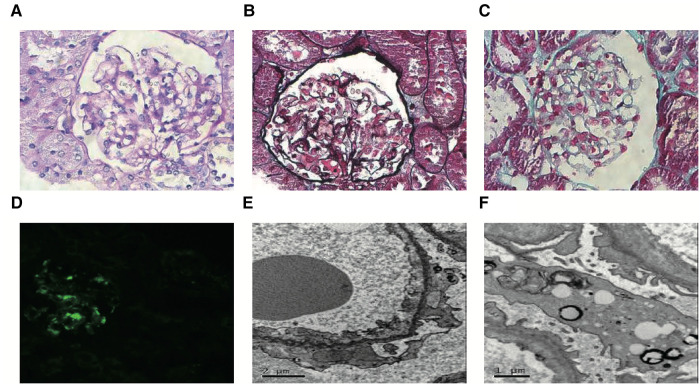
Steroid-resistant nephrotic syndrome (SRNS) is a clinical syndrome characterized by the lack of response to standard steroid therapy, usually progressing to end-stage renal disease. We reported two cases of female identical twins with SRNS caused by variants in one family, reviewed the relevant literature, and summarized their clinical phenotypes, pathological types, and genotypic characteristics.
Two cases of nephrotic syndrome caused by variants were admitted to Tongji Hospital, affiliated with Tongji Medical College of Huazhong University of Science and Technology. Their clinical data were retrospectively collected, and the peripheral blood genomic DNA was captured and sequenced by whole exome sequencing. Related literature published in PubMed, CNKI, and Wan fang databases was reviewed.
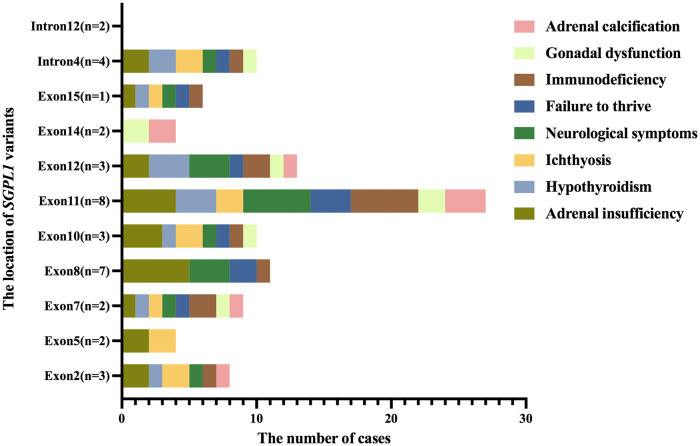
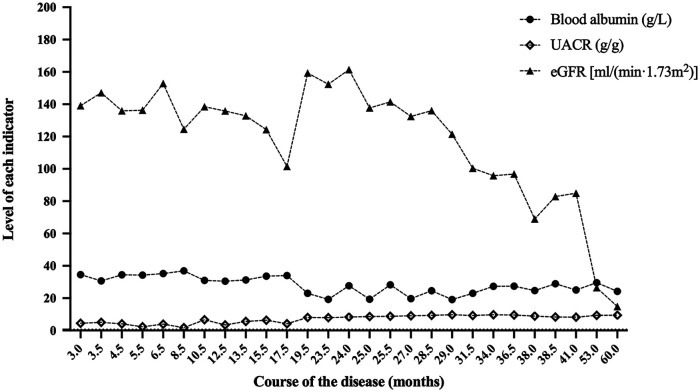
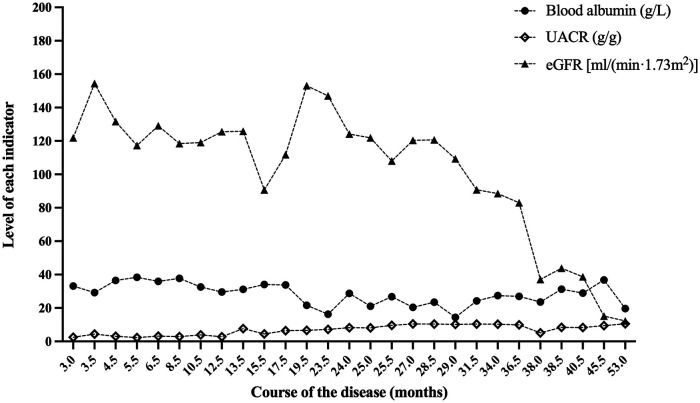
We described two Chinese identical twin girls with isolated SRNS due to compound heterozygous variants in the (intron4 c.261 + 1G > A and intron12 c.1298 + 6T > C). The patients were followed up for 60.0 months and 53.0 months, respectively, having no extra-renal manifestations. They all died due to renal failure. A total of 31 children with variants causing nephrotic syndrome (including the reported two cases) were identified through a literature review.
These two female identical twins were the first reported cases of isolated SRNS caused by variants. Almost all homozygous and compound heterozygous variants of had extra-renal manifestations, but compound heterozygous variants in the intron of may have no obvious extra-renal manifestations. Additionally, a negative genetic testing result does not completely rule out genetic SRNS because the Human Gene Mutation Database or ClinVar is constantly being updated.
激素抵抗型肾病综合征(SRNS)是一种临床综合征,其特征为对标准激素治疗无反应,通常会进展至终末期肾病。我们报告了一对同卵双胞胎女性因一个家族中的变异导致SRNS的两例病例,回顾了相关文献,并总结了其临床表型、病理类型和基因型特征。
两例由变异导致的肾病综合征患者入住华中科技大学同济医学院附属同济医院。回顾性收集其临床资料,并通过全外显子组测序捕获外周血基因组DNA并进行测序。查阅了在PubMed、中国知网和万方数据库中发表的相关文献。
我们描述了两名中国同卵双胞胎女孩,她们因(内含子4 c.261+1G>A和内含子12 c.1298+6T>C)的复合杂合变异而患有孤立性SRNS。患者分别随访了60.0个月和53.0个月,无肾外表现。她们均因肾衰竭死亡。通过文献回顾共鉴定出31例由变异导致肾病综合征的儿童(包括报道的两例)。
这两名同卵双胞胎女性是首次报道的因变异导致孤立性SRNS的病例。几乎所有的纯合和复合杂合变异都有肾外表现,但内含子中的复合杂合变异可能没有明显的肾外表现。此外,基因检测结果为阴性并不能完全排除遗传性SRNS,因为人类基因突变数据库或ClinVar一直在更新。