Comprehensive Cancer Center, Faculty of Life Sciences and Medicine, King's College London, London, United Kingdom.
King's College Hospital NHS Foundation Trust, London, United Kingdom.
Cancer Res Commun. 2022 Mar 23;2(3):158-171. doi: 10.1158/2767-9764.CRC-21-0157. eCollection 2022 Mar.
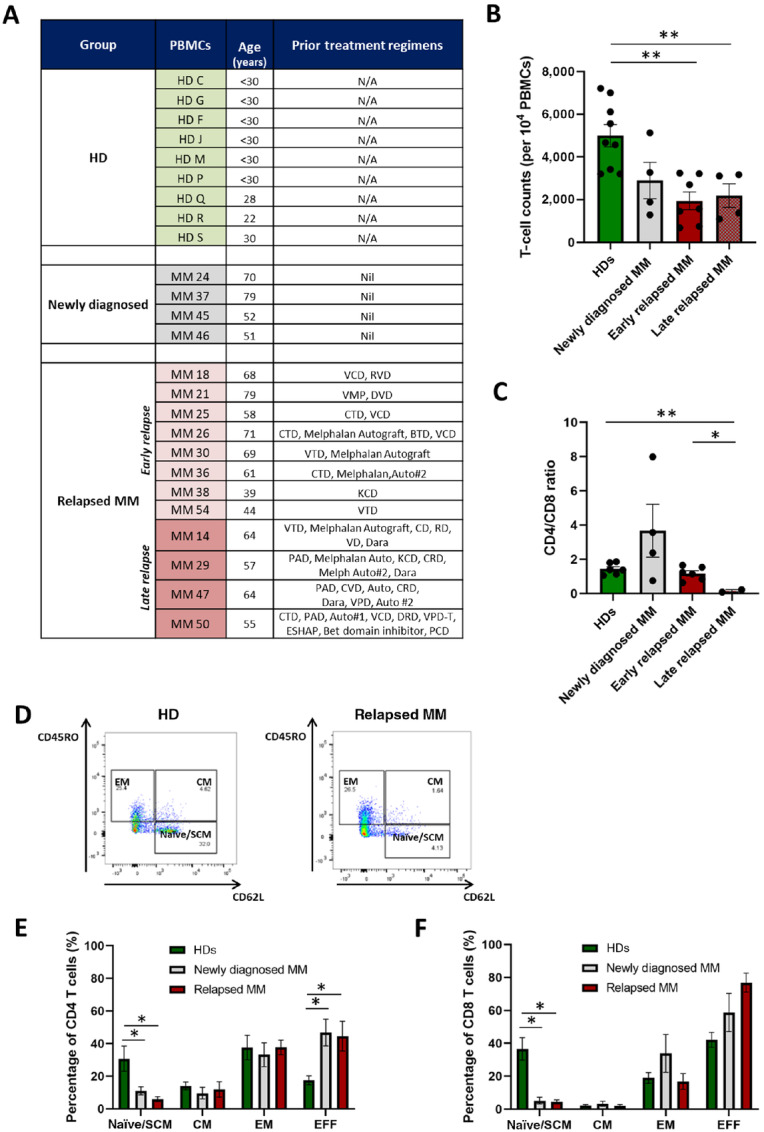
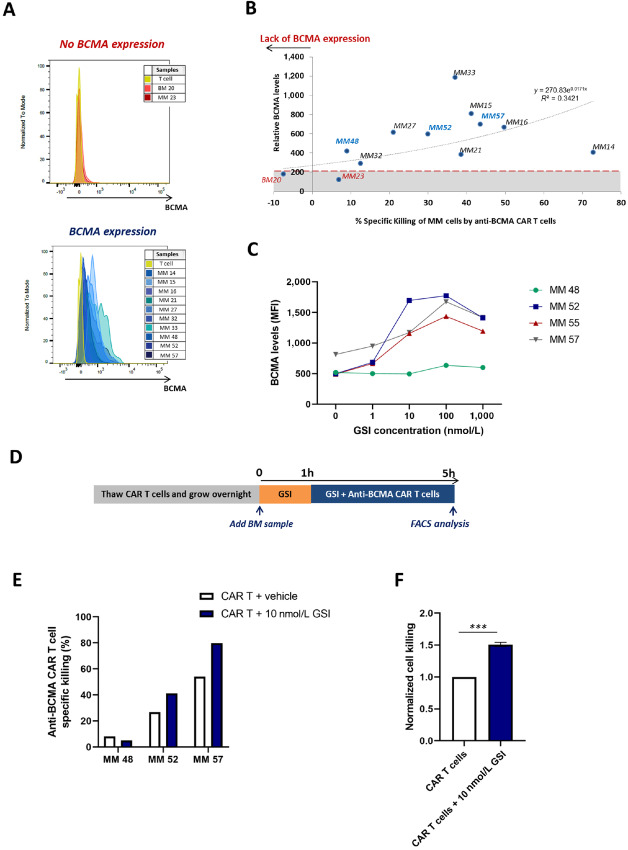
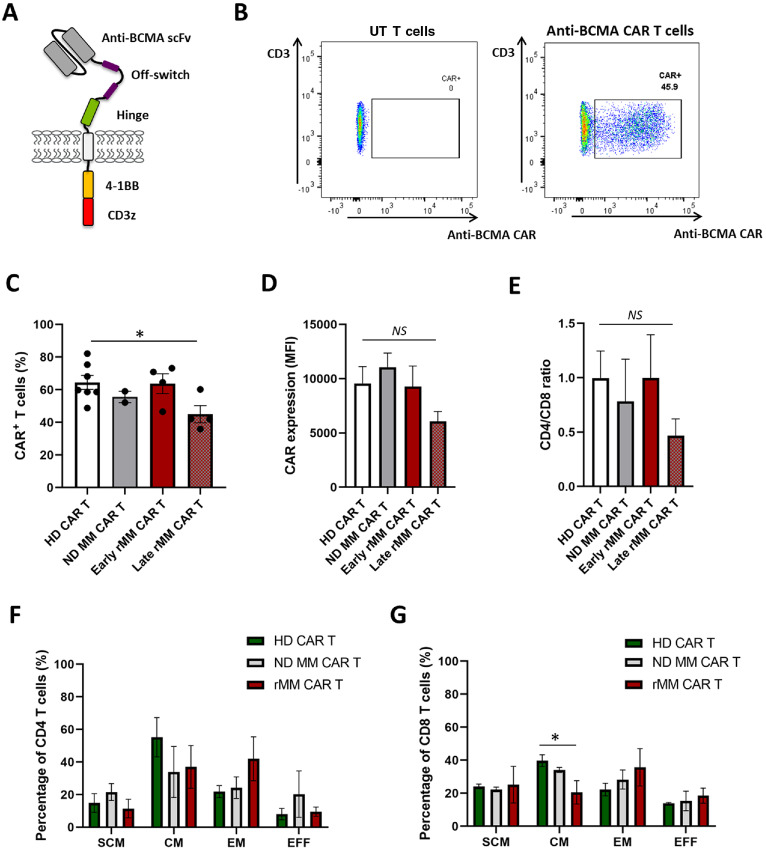
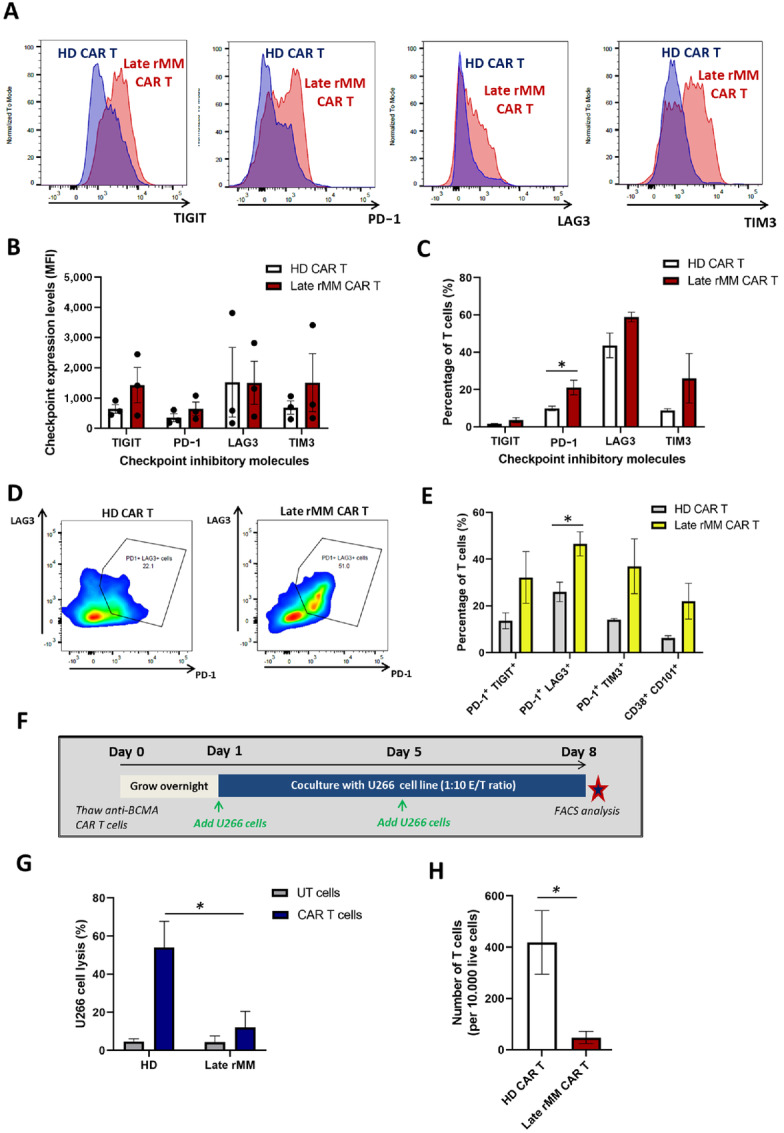
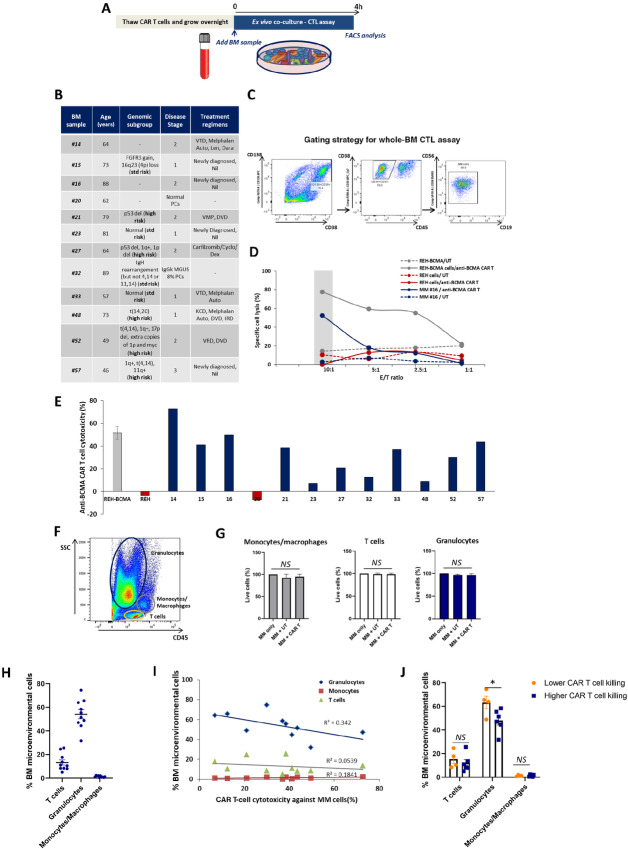
Multiple myeloma remains an incurable plasma cell malignancy despite the rapidly evolving treatment landscape. Chimeric antigen receptor T cells targeted against BCMA have recently shown great promise in relapsed refractory multiple myeloma; however, all patients ultimately still progress from their disease. Lack of CAR T-cell persistence, impaired T-cell fitness in autologous CAR T-cell products and the presence of an immunosuppressive bone marrow (BM) microenvironment are contributory factors to treatment failure. We generated anti-BCMA CAR T cells from healthy donors (HD) and patients with multiple myeloma at different stages of disease to compare their T-cell profile, fitness, and cytotoxic activity in preclinical studies. We also used an assay with multiple myeloma BM biopsies from distinct genomic subgroups to test the efficacy of HD-derived CAR T cells in a clinically relevant model. HD volunteers showed increased T-cell counts, higher CD4/CD8 ratio, and expanded naïve T-cell population compared with patients with multiple myeloma. After anti-BCMA CAR T-cell production, patients with relapsed multiple myeloma had lower frequencies of CAR T cells, decreased central memory phenotype, and increased checkpoint inhibitory markers compared with HD-derived products, which compromised their expansion and cytotoxicity against multiple myeloma cells . Importantly, HD-derived CAR T cells efficiently killed primary multiple myeloma cells within the BM microenvironment of different multiple myeloma genomic subgroups and their cytotoxic activity could be boosted with gamma secretase inhibitors. In conclusion, allogeneic anti-BCMA CAR T cells are a potential therapeutic strategy for patients with relapsed multiple myeloma and should be further developed in the clinic.
Multiple myeloma is an incurable cancer of the plasma cells. A new therapy with anti-BCMA CAR T cells - the patient's own T cells genetically engineered to find and kill myeloma cancer cells - has shown encouraging results. Unfortunately, patients still relapse. In this study, we propose to use T cells from HD volunteers, which have a stronger T-cell fitness, higher cancer killing capacity, and are ready to be administered when needed.
尽管治疗领域迅速发展,但多发性骨髓瘤仍然是一种无法治愈的浆细胞恶性肿瘤。针对 BCMA 的嵌合抗原受体 T 细胞最近在复发性难治性多发性骨髓瘤中显示出巨大的希望;然而,所有患者最终仍会因疾病而进展。CAR T 细胞持续存在、自体 CAR T 细胞产品中 T 细胞功能受损以及存在免疫抑制骨髓(BM)微环境是导致治疗失败的因素。我们从健康供体(HD)和处于不同疾病阶段的多发性骨髓瘤患者中生成了针对 BCMA 的 CAR T 细胞,以比较它们在临床前研究中的 T 细胞特征、适应性和细胞毒性。我们还使用了一种多发性骨髓瘤 BM 活检的测定方法,以测试来自不同基因组亚组的 HD 衍生的 CAR T 细胞在临床相关模型中的疗效。HD 志愿者的 T 细胞计数增加,CD4/CD8 比值较高,幼稚 T 细胞群体扩大,而多发性骨髓瘤患者则相反。在产生抗-BCMA CAR T 细胞后,复发多发性骨髓瘤患者的 CAR T 细胞频率较低,中央记忆表型减少,检查点抑制标志物增加,与 HD 衍生产品相比,这会影响其对多发性骨髓瘤细胞的扩增和细胞毒性。重要的是,HD 衍生的 CAR T 细胞可以有效地杀死不同多发性骨髓瘤基因组亚组的 BM 微环境中的原发性多发性骨髓瘤细胞,并且可以用γ分泌酶抑制剂增强其细胞毒性。总之,同种异体抗-BCMA CAR T 细胞是治疗复发性多发性骨髓瘤患者的一种潜在治疗策略,应在临床上进一步开发。
多发性骨髓瘤是一种无法治愈的浆细胞癌。一种新的疗法,即抗-BCMA CAR T 细胞疗法——将患者自身的 T 细胞进行基因工程改造,使其能够找到并杀死骨髓瘤癌细胞——已显示出可喜的结果。不幸的是,患者仍会复发。在这项研究中,我们建议使用 HD 志愿者的 T 细胞,这些 T 细胞具有更强的 T 细胞适应性、更高的杀伤癌细胞能力,并且在需要时可以随时使用。