Cellectis Inc, New York, NY 10016, USA.
Cellectis, 75013 Paris, France.
Mol Ther. 2024 Nov 6;32(11):3915-3931. doi: 10.1016/j.ymthe.2024.08.018. Epub 2024 Aug 21.
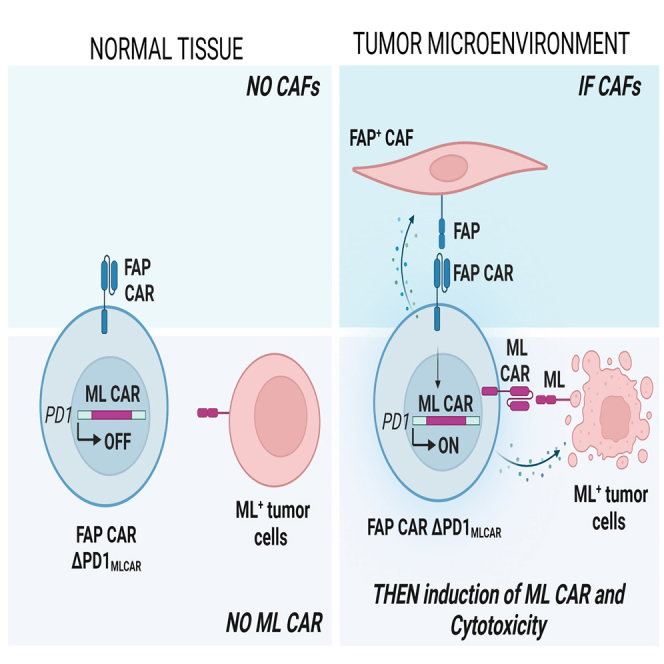
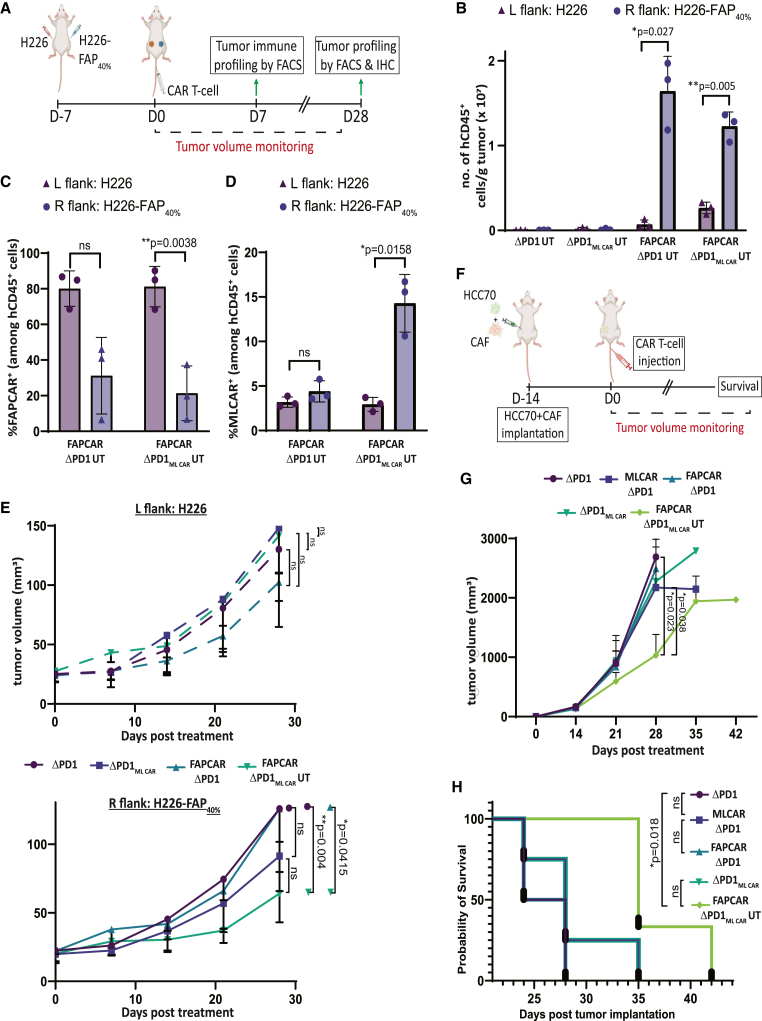
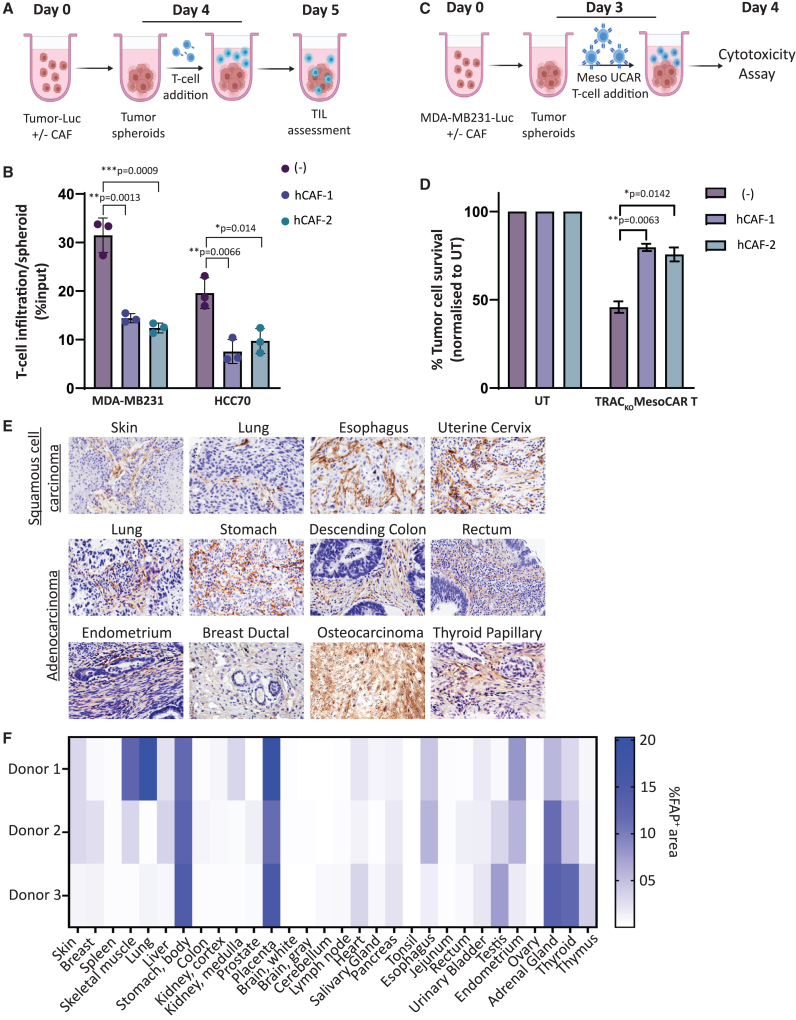
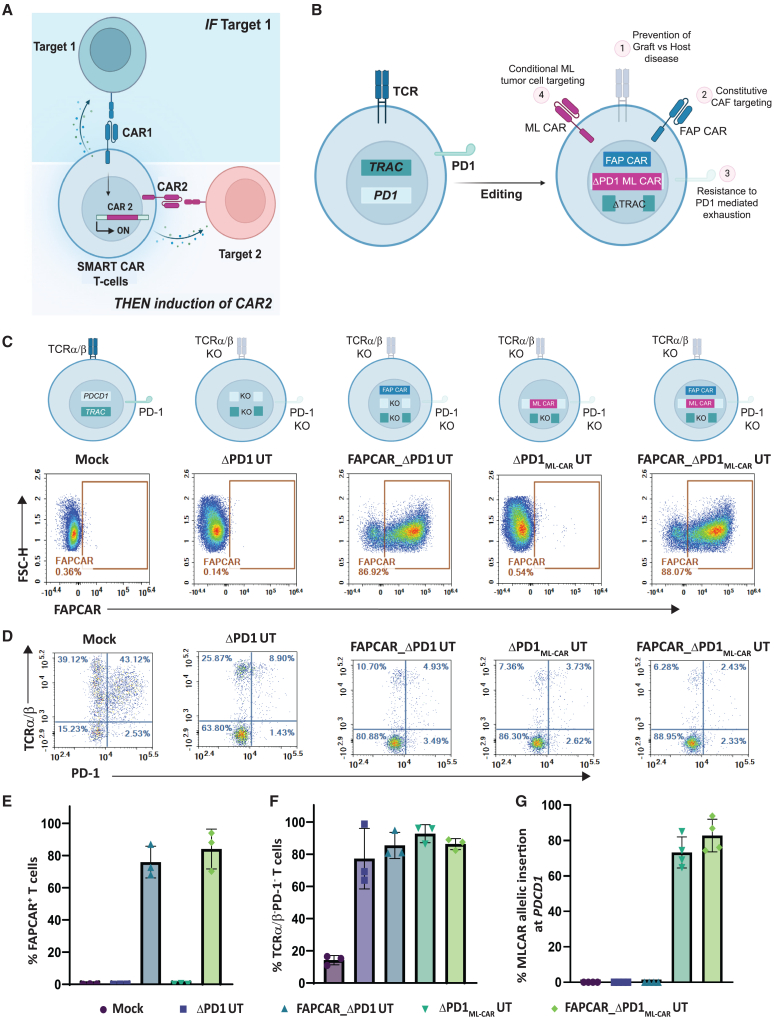
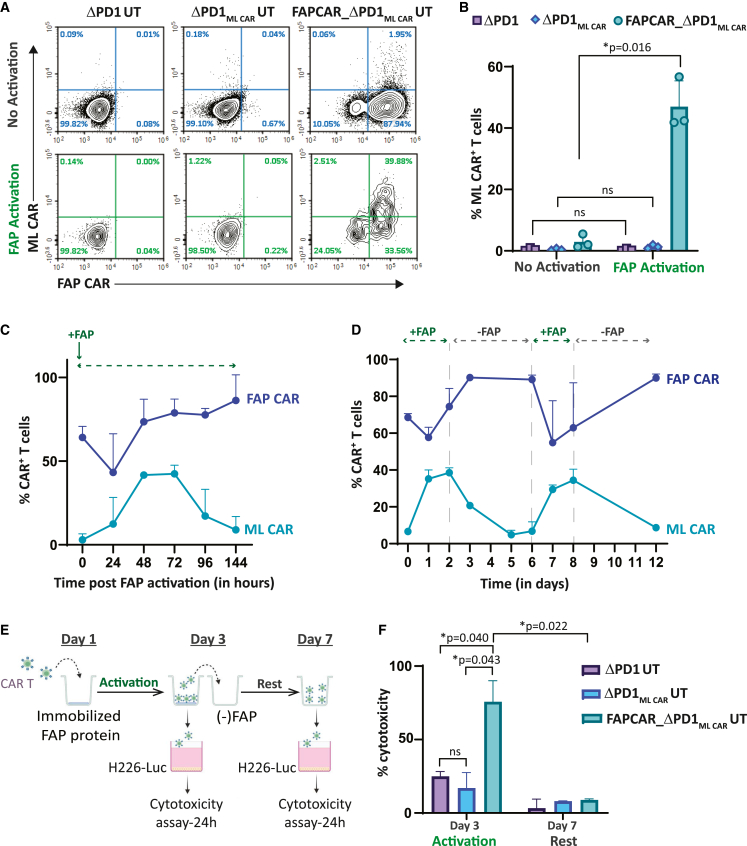
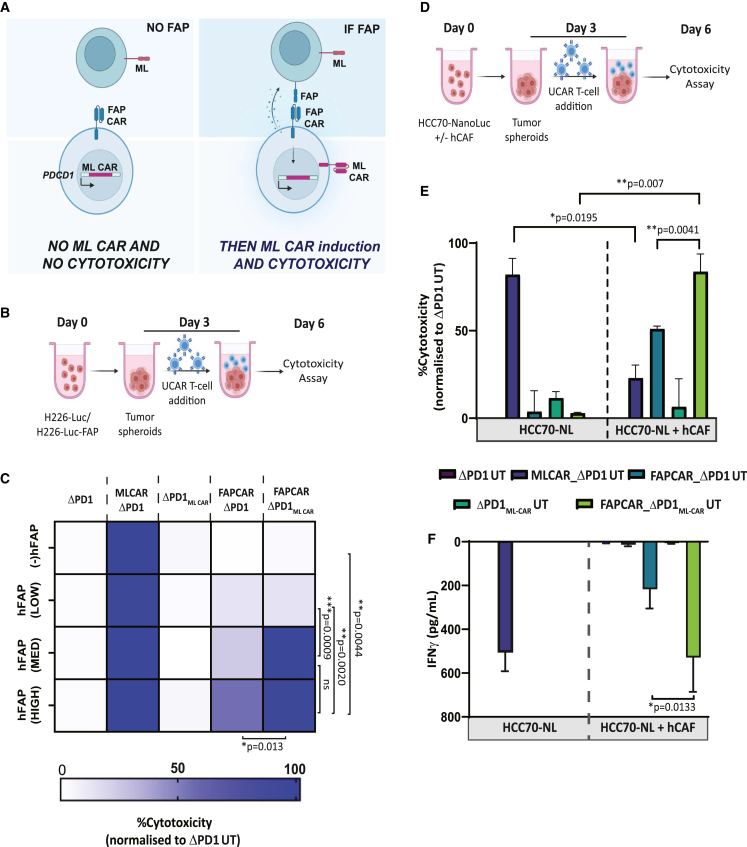
Adoptive cell therapy using chimeric antigen receptor (CAR) T cells has proven to be lifesaving for many cancer patients. However, its therapeutic efficacy has been limited in solid tumors. One key factor for this is cancer-associated fibroblasts (CAFs) that modulate the tumor microenvironment (TME) to inhibit T cell infiltration and induce "T cell dysfunction." Additionally, the sparsity of tumor-specific antigens (TSA) and expression of CAR-directed tumor-associated antigens (TAA) on normal tissues often results in "on-target off-tumor" cytotoxicity, raising safety concerns. Using TALEN-mediated gene editing, we present here an innovative CAR T cell engineering strategy to overcome these challenges. Our allogeneic "Smart CAR T cells" are designed to express a constitutive CAR, targeting FAP CAFs in solid tumors. Additionally, a second CAR targeting a TAA such as mesothelin is specifically integrated at a TCR signaling-inducible locus like PDCD1. FAPCAR-mediated CAF targeting induces expression of the mesothelin CAR, establishing an IF/THEN-gated circuit sensitive to dual antigen sensing. Using this approach, we observe enhanced anti-tumor cytotoxicity, while limiting "on-target off-tumor" toxicity. Our study thus demonstrates TALEN-mediated gene editing capabilities for design of allogeneic IF/THEN-gated dual CAR T cells that efficiently target immunotherapy-recalcitrant solid tumors while mitigating potential safety risks, encouraging clinical development of this strategy.
嵌合抗原受体 (CAR) T 细胞过继细胞疗法已被证明对许多癌症患者具有救生作用。然而,其治疗效果在实体瘤中受到限制。其中一个关键因素是癌症相关成纤维细胞 (CAF),它调节肿瘤微环境 (TME) 以抑制 T 细胞浸润并诱导“T 细胞功能障碍”。此外,肿瘤特异性抗原 (TSA) 的稀疏性和 CAR 靶向肿瘤相关抗原 (TAA) 在正常组织中的表达通常会导致“靶上脱靶”细胞毒性,引发安全性担忧。使用 TALEN 介导的基因编辑,我们在此提出了一种创新的 CAR T 细胞工程策略来克服这些挑战。我们的同种异体“智能 CAR T 细胞”被设计为表达组成型 CAR,靶向实体瘤中的 FAP CAF。此外,第二个靶向 TAA(如间皮素)的 CAR 被特异性整合到 TCR 信号诱导的基因座,如 PDCD1。FAPCAR 介导的 CAF 靶向诱导间皮素 CAR 的表达,建立了对双重抗原感应敏感的 IF/THEN 门控电路。通过这种方法,我们观察到增强的抗肿瘤细胞毒性,同时限制“靶上脱靶”毒性。因此,我们的研究表明 TALEN 介导的基因编辑能力可用于设计同种异体 IF/THEN 门控双 CAR T 细胞,这些细胞能够有效地靶向免疫治疗难治性实体瘤,同时减轻潜在的安全风险,鼓励该策略的临床开发。