Frank Benjamin S, Khailova Ludmila, Dekermanjian Jonathan, Mitchell Max B, Morgan Gareth J, Twite Mark, Christians Uwe, DiMaria Michael V, Klawitter Jelena, Davidson Jesse A
Section of Cardiology, Department of Pediatrics, University of Colorado, Aurora, Colorado, USA.
Center for Innovative Design and Analysis, University of Colorado, Aurora, Colorado, USA.
JACC Adv. 2023 Jan;2(1). doi: 10.1016/j.jacadv.2022.100169. Epub 2023 Jan 27.
Infants with SVHD experience morbidity related to pulmonary vascular inadequacy. Metabolomic analysis involves a systems biology approach to identifying novel biomarkers and pathways in complex diseases. The metabolome of infants with SVHD is not well understood and no prior study has evaluated the relationship between serum metabolite patterns and pulmonary vascular readiness for staged SVHD palliation.
The purpose of this study was to evaluate the circulating metabolome of interstage infants with single ventricle heart disease (SVHD) and determine whether metabolite levels were associated with pulmonary vascular inadequacy.
This was a prospective cohort study of 52 infants with SVHD undergoing Stage 2 palliation and 48 healthy infants. Targeted metabolomic phenotyping (175 metabolites) was performed by tandem mass spectrometry on SVHD pre-Stage 2, post-Stage 2, and control serum samples. Clinical variables were extracted from the medical record.
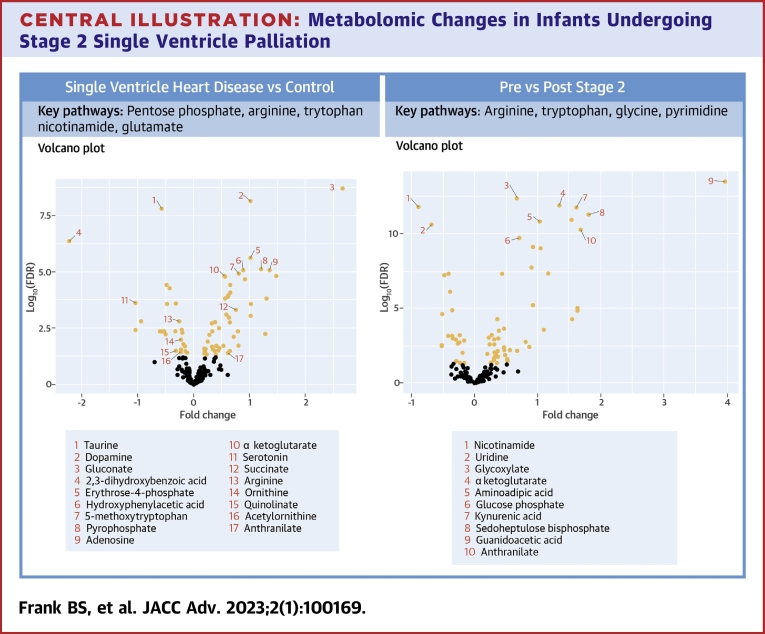
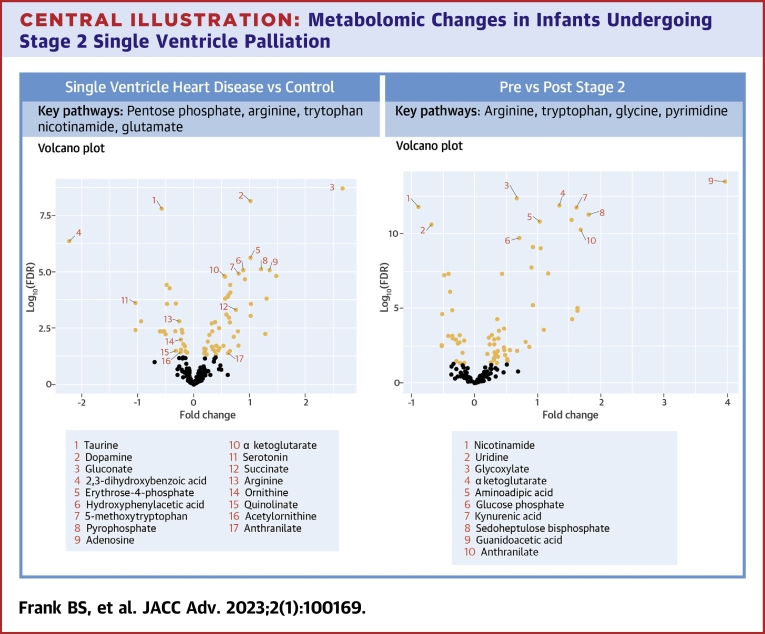
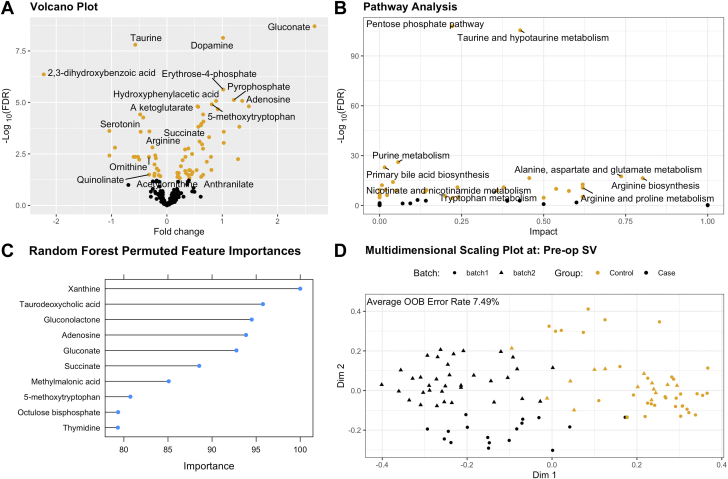
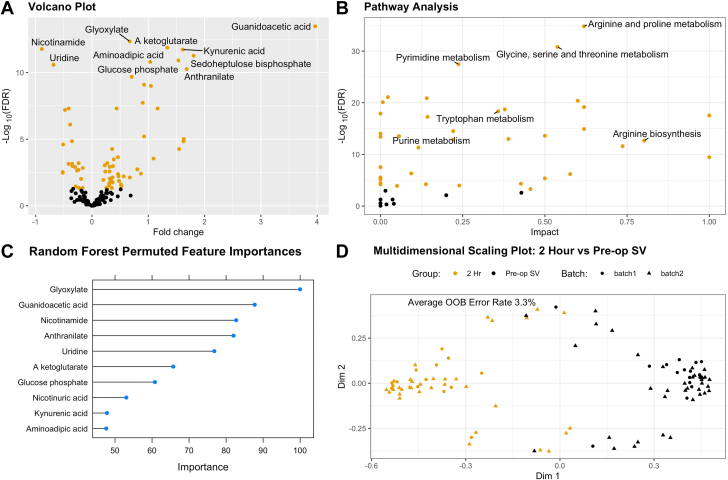
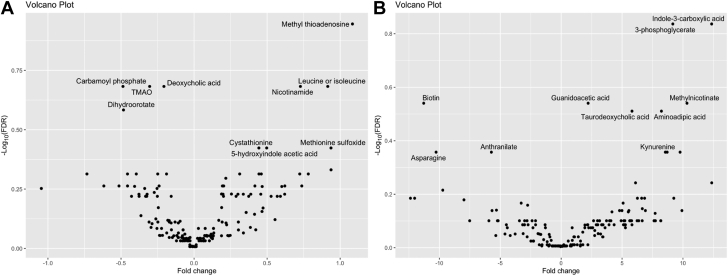
Random forest analysis readily distinguished between cases and controls and preoperative and postoperative samples. Seventy-four of 175 metabolites differed between SVHD and controls. Twenty-seven of 39 metabolic pathways were altered including pentose phosphate and arginine metabolism. Seventy-one metabolites differed in SVHD patients between timepoints. Thirty-three of 39 pathways were altered postoperatively including arginine and tryptophan metabolism. We found trends toward increased preoperative methionine metabolites in patients with higher pulmonary vascular resistance and higher postoperative tryptophan metabolites in patients with greater postoperative hypoxemia.
The circulating metabolome of interstage SVHD infants differs significantly from controls and is further disrupted after Stage 2. Several metabolites showed trends toward association with adverse outcomes. Metabolic dysregulation may be an important factor in early SVHD pathobiology.
患有单心室心脏病(SVHD)的婴儿会出现与肺血管功能不全相关的病症。代谢组学分析采用系统生物学方法来识别复杂疾病中的新型生物标志物和途径。SVHD婴儿的代谢组尚未得到充分了解,此前也没有研究评估血清代谢物模式与分期进行SVHD姑息治疗时肺血管准备情况之间的关系。
本研究旨在评估患有单心室心脏病(SVHD)的过渡期婴儿的循环代谢组,并确定代谢物水平是否与肺血管功能不全有关。
这是一项前瞻性队列研究,纳入了52名接受二期姑息治疗的SVHD婴儿和48名健康婴儿。通过串联质谱对SVHD二期术前、二期术后及对照血清样本进行靶向代谢组学表型分析(175种代谢物)。从病历中提取临床变量。
随机森林分析能够轻松区分病例与对照以及术前和术后样本。175种代谢物中有74种在SVHD患者和对照之间存在差异。39条代谢途径中有27条发生了改变,包括磷酸戊糖和精氨酸代谢。71种代谢物在SVHD患者的不同时间点存在差异。39条途径中有33条在术后发生了改变,包括精氨酸和色氨酸代谢。我们发现,肺血管阻力较高的患者术前甲硫氨酸代谢物有增加趋势,术后低氧血症较严重的患者术后色氨酸代谢物有增加趋势。
过渡期SVHD婴儿的循环代谢组与对照组有显著差异,且在二期治疗后进一步紊乱。几种代谢物显示出与不良预后相关的趋势。代谢失调可能是早期SVHD病理生物学中的一个重要因素。