Department of Dermatology, Xiangya Hospital, Central South University, Changsha, China.
National Engineering Research Center of Personalized Diagnostic and Therapeutic Technology, Changsha, China.
Front Immunol. 2023 Feb 15;14:1112181. doi: 10.3389/fimmu.2023.1112181. eCollection 2023.
Melanoma is among the most malignant immunologic tumor types and is associated with high mortality. However, a considerable number of melanoma patients cannot benefit from immunotherapy owing to individual differences. This study attempts to build a novel prediction model of melanoma that fully considers individual differences in the tumor microenvironment.
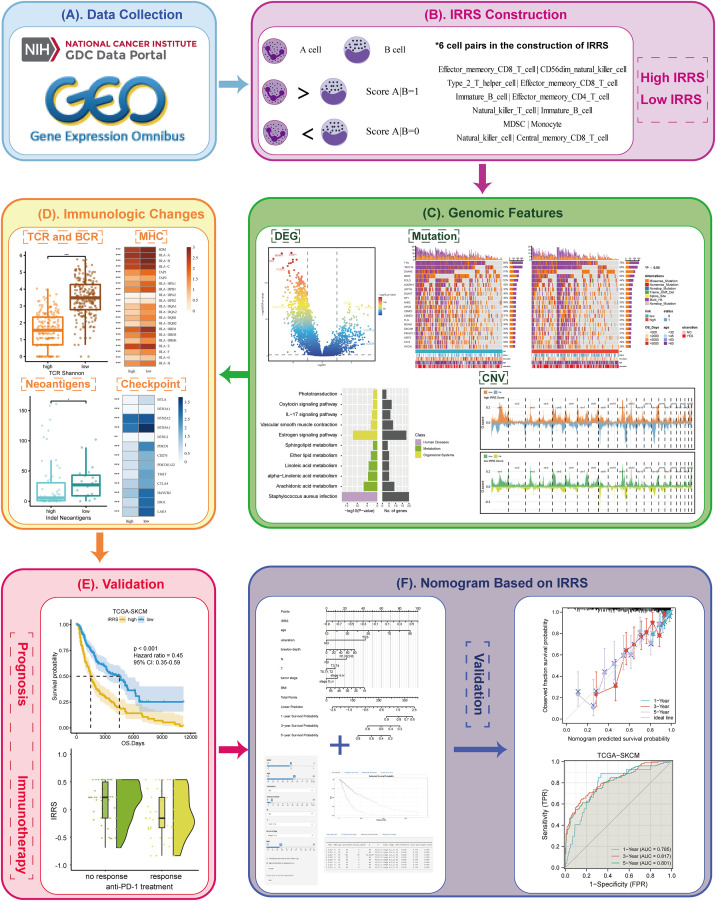
An immune-related risk score (IRRS) was constructed based on cutaneous melanoma data from The Cancer Genome Atlas (TCGA). Single-sample gene set enrichment analysis (ssGSEA) was used to calculate immune enrichment scores of 28 immune cell signatures. We performed pairwise comparisons to obtain scores for cell pairs based on the difference in the abundance of immune cells within each sample. The resulting cell pair scores, in the form of a matrix of relative values of immune cells, formed the core of the IRRS.
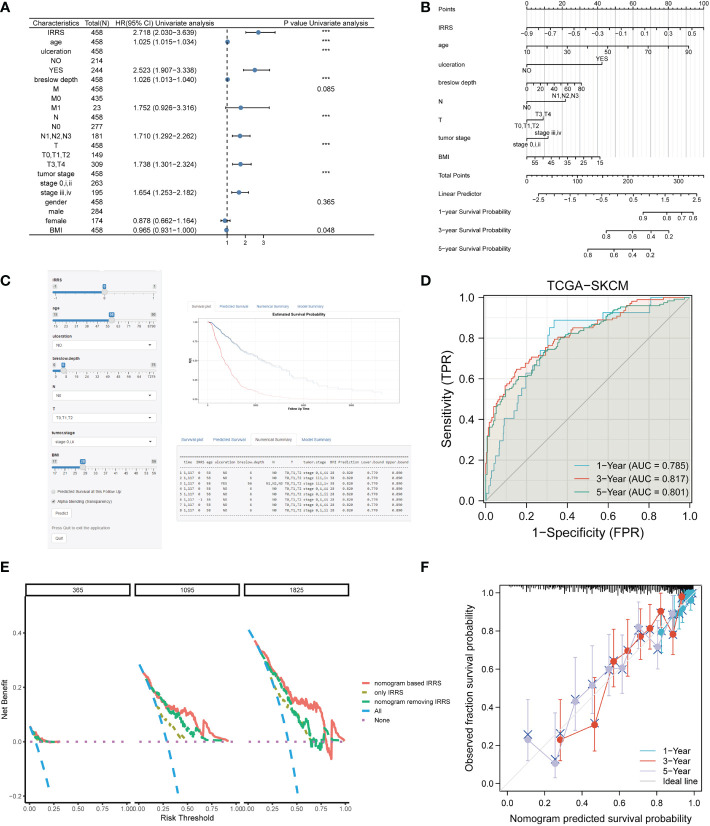
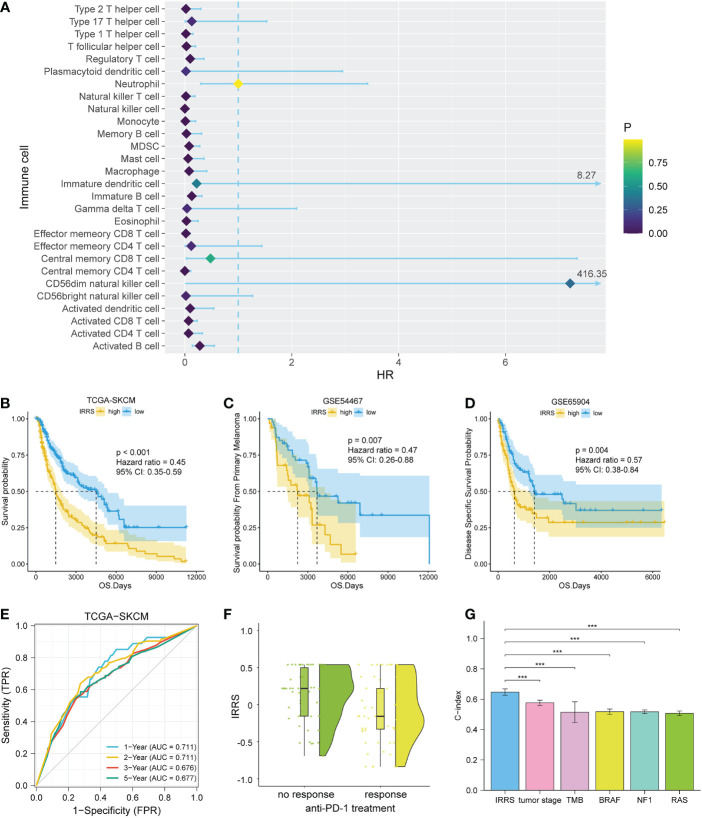
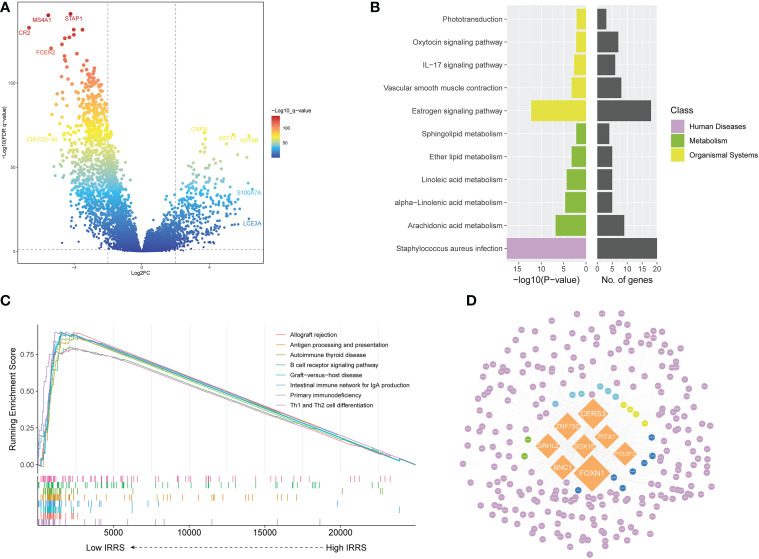
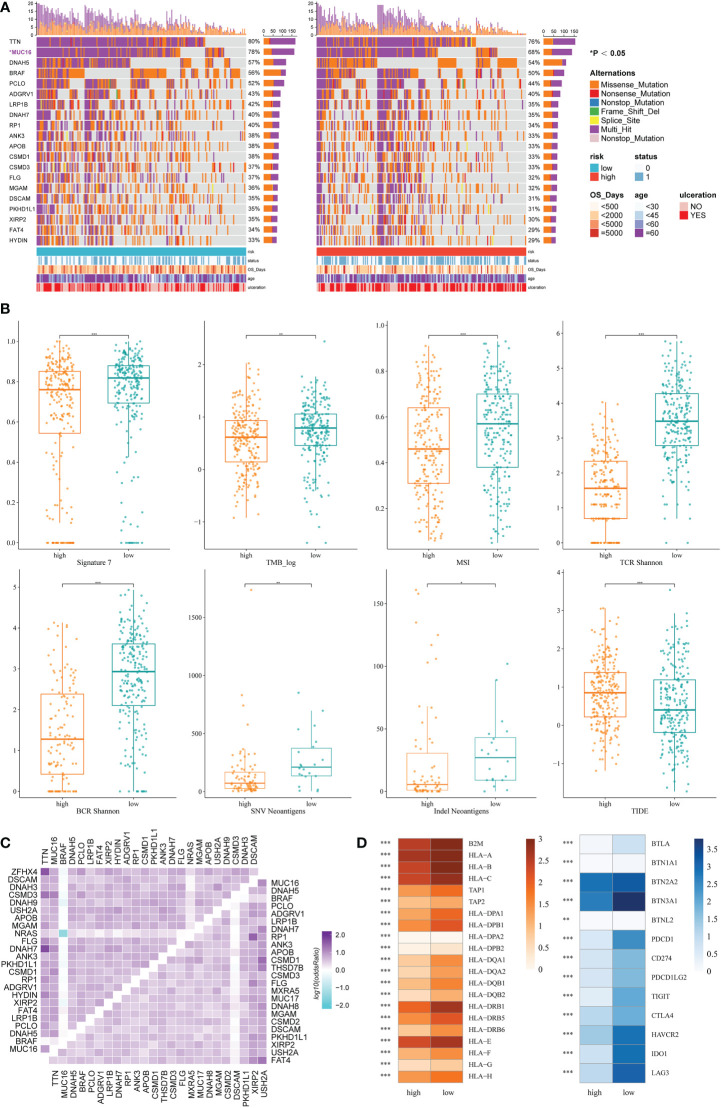
The area under the curve (AUC) for the IRRS was over 0.700, and when the IRRS was combined with clinical information, the AUC reached 0.785, 0.817, and 0.801 for the 1-, 3-, and 5-year survival, respectively. Differentially expressed genes between the two groups were enriched in staphylococcal infection and estrogen metabolism pathway. The low IRRS group showed a better immunotherapeutic response and exhibited more neoantigens, richer T-cell receptor and B-cell receptor diversity, and higher tumor mutation burden.
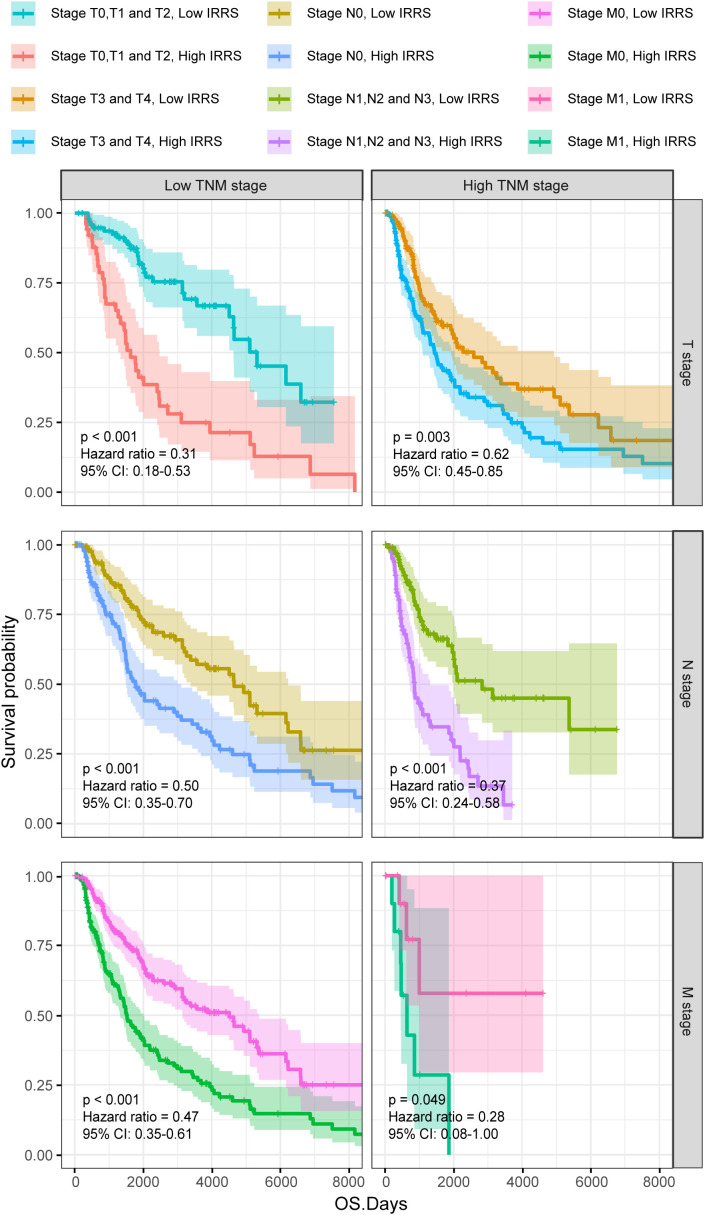
The IRRS enables a good prediction of prognosis and immunotherapy effect, based on the difference in the relative abundance of different types of infiltrating immune cells, and could provide support for further research in melanoma.
黑色素瘤是最恶性的免疫肿瘤类型之一,死亡率很高。然而,由于个体差异,相当数量的黑色素瘤患者无法从免疫疗法中获益。本研究试图建立一个充分考虑肿瘤微环境个体差异的黑色素瘤新预测模型。
基于来自癌症基因组图谱(TCGA)的皮肤黑色素瘤数据构建了一个免疫相关风险评分(IRRS)。使用单样本基因集富集分析(ssGSEA)计算 28 种免疫细胞特征的免疫富集分数。我们进行了两两比较,以获得基于每个样本中免疫细胞丰度差异的细胞对分数。所得的细胞对分数以免疫细胞相对值的矩阵形式构成 IRRS 的核心。
IRRS 的曲线下面积(AUC)超过 0.700,当 IRRS 与临床信息结合时,其 1 年、3 年和 5 年的生存率 AUC 分别达到 0.785、0.817 和 0.801。两组间差异表达基因富集于葡萄球菌感染和雌激素代谢途径。低 IRRS 组表现出更好的免疫治疗反应,表现出更多的新抗原,更丰富的 T 细胞受体和 B 细胞受体多样性,以及更高的肿瘤突变负担。
基于不同类型浸润免疫细胞相对丰度的差异,IRRS 能够很好地预测预后和免疫治疗效果,可为黑色素瘤的进一步研究提供支持。