Zhang Jun, Gao Shouwei, Zhou Kang, Cheng Yi, Mao Shujun
School of Mechanical and Electrical Engineering and Automation, Shanghai University, Shanghai, China.
Front Hum Neurosci. 2023 Feb 16;17:1103935. doi: 10.3389/fnhum.2023.1103935. eCollection 2023.
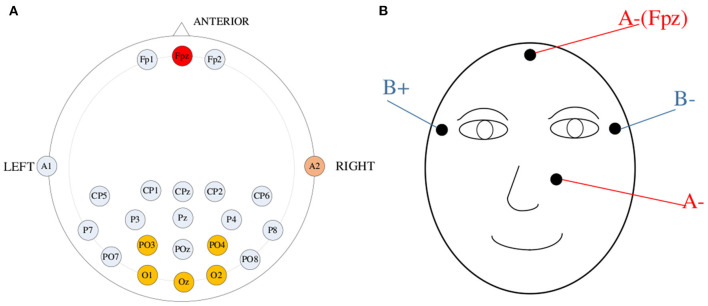
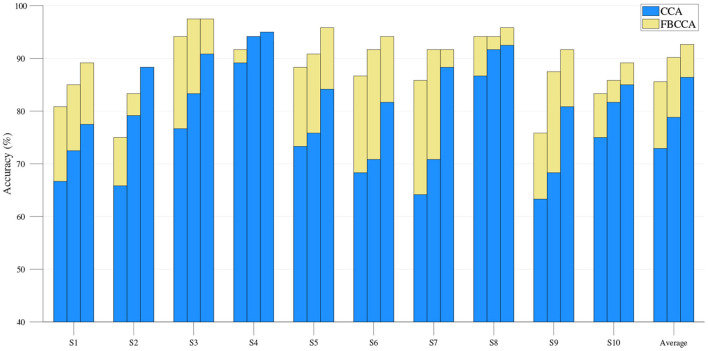
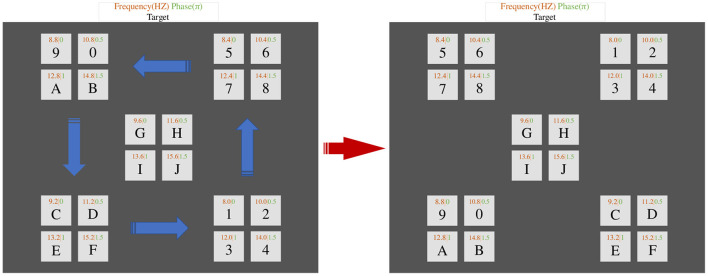
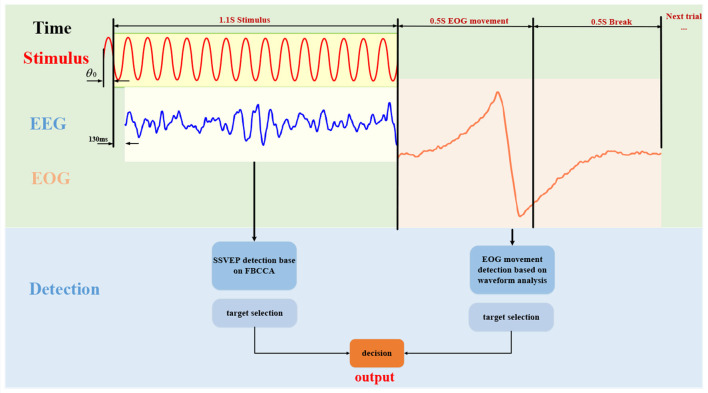
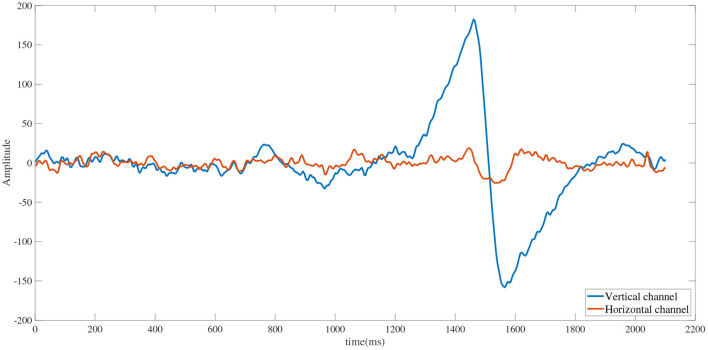
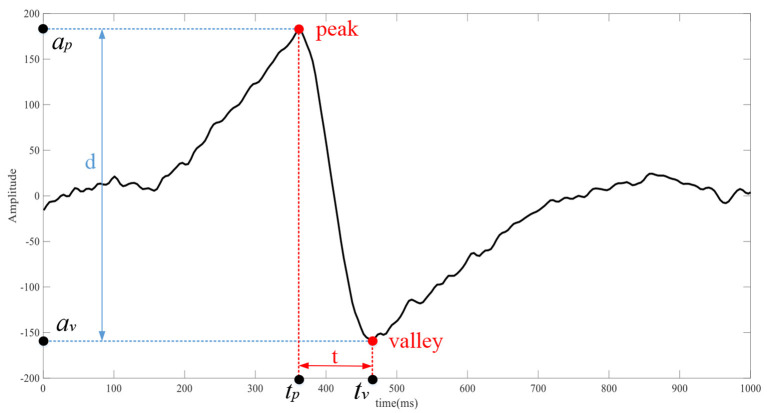
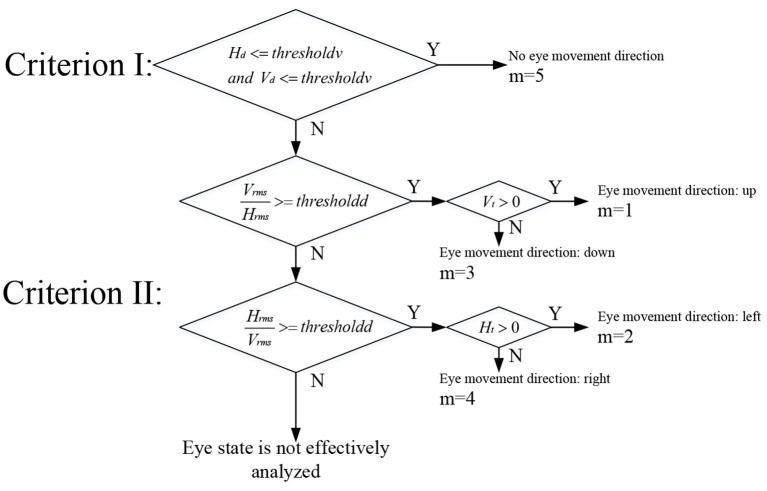
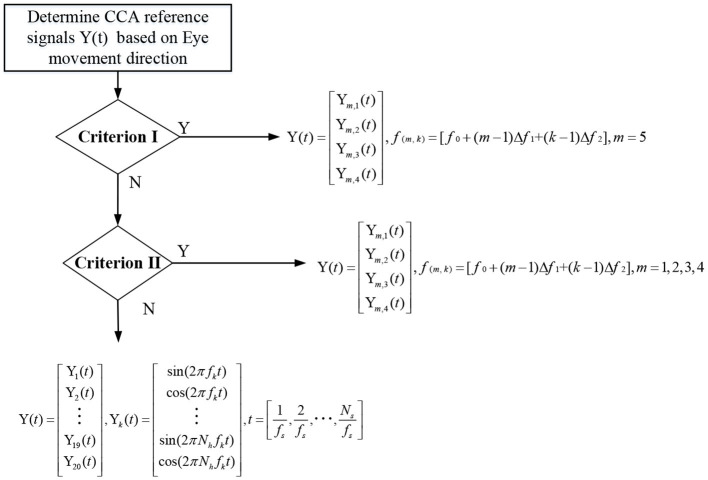
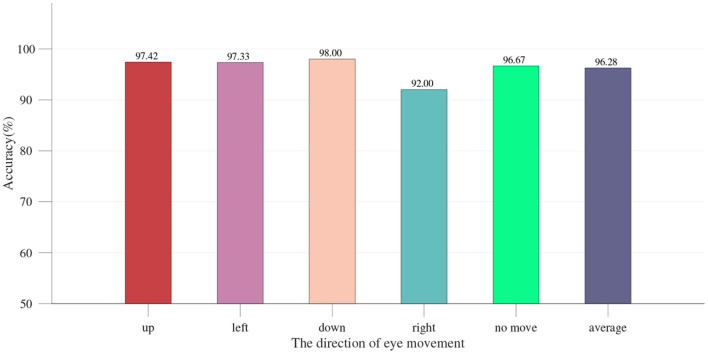
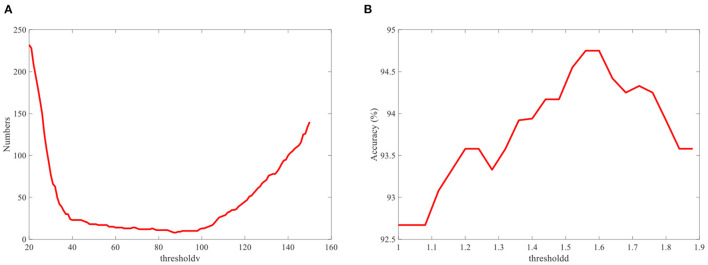
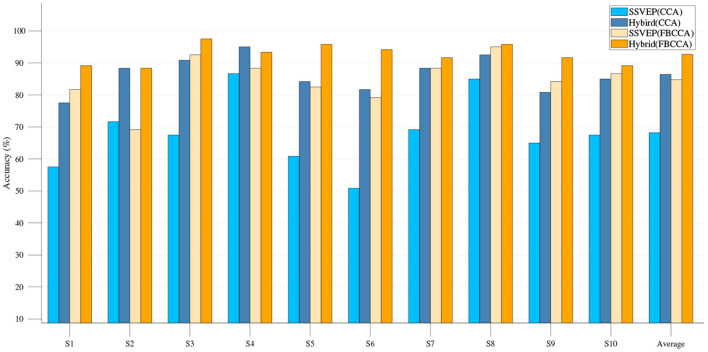
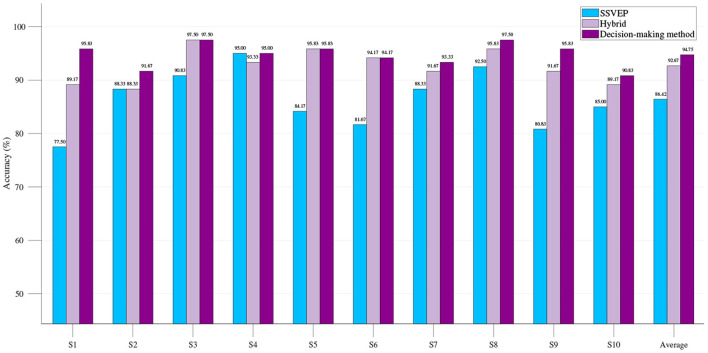
Hybrid brain-computer interface (hBCI) refers to a system composed of a single-modality BCI and another system. In this paper, we propose an online hybrid BCI combining steady-state visual evoked potential (SSVEP) and eye movements to improve the performance of BCI systems. Twenty buttons corresponding to 20 characters are evenly distributed in the five regions of the GUI and flash at the same time to arouse SSVEP. At the end of the flash, the buttons in the four regions move in different directions, and the subject continues to stare at the target with eyes to generate the corresponding eye movements. The CCA method and FBCCA method were used to detect SSVEP, and the electrooculography (EOG) waveform was used to detect eye movements. Based on the EOG features, this paper proposes a decision-making method based on SSVEP and EOG, which can further improve the performance of the hybrid BCI system. Ten healthy students took part in our experiment, and the average accuracy and information transfer rate of the system were 94.75% and 108.63 bits/min, respectively.
混合脑机接口(hBCI)是指由单模态脑机接口和另一个系统组成的系统。在本文中,我们提出了一种结合稳态视觉诱发电位(SSVEP)和眼动的在线混合脑机接口,以提高脑机接口系统的性能。与20个字符对应的20个按钮均匀分布在图形用户界面的五个区域中,并同时闪烁以诱发稳态视觉诱发电位。在闪烁结束时,四个区域中的按钮向不同方向移动,受试者继续用眼睛注视目标以产生相应的眼动。采用典型相关分析(CCA)方法和快速典型相关分析(FBCCA)方法检测稳态视觉诱发电位,并用电眼图(EOG)波形检测眼动。基于眼电特征,本文提出了一种基于稳态视觉诱发电位和眼电的决策方法,可进一步提高混合脑机接口系统的性能。十名健康学生参与了我们的实验,该系统的平均准确率和信息传输率分别为94.75%和108.63比特/分钟。