Meseguer Salvador, Rubio Mari-Paz, Lainez Begoña, Pérez-Benavente Beatriz, Pérez-Moraga Raúl, Romera-Giner Sergio, García-García Francisco, Martinez-Macias Olalla, Cremades Antonio, Iborra Francisco J, Candelas-Rivera Oscar, Almazan Fernando, Esplugues Enric
Molecular and Cellular Immunology Laboratory, Centro de Investigación Príncipe Felipe (CIPF), Valencia, Spain.
Bioinformatics and Biostatistics Unit, Centro de Investigación Príncipe Felipe (CIPF), Valencia, Spain.
Front Microbiol. 2023 Feb 16;14:1066493. doi: 10.3389/fmicb.2023.1066493. eCollection 2023.
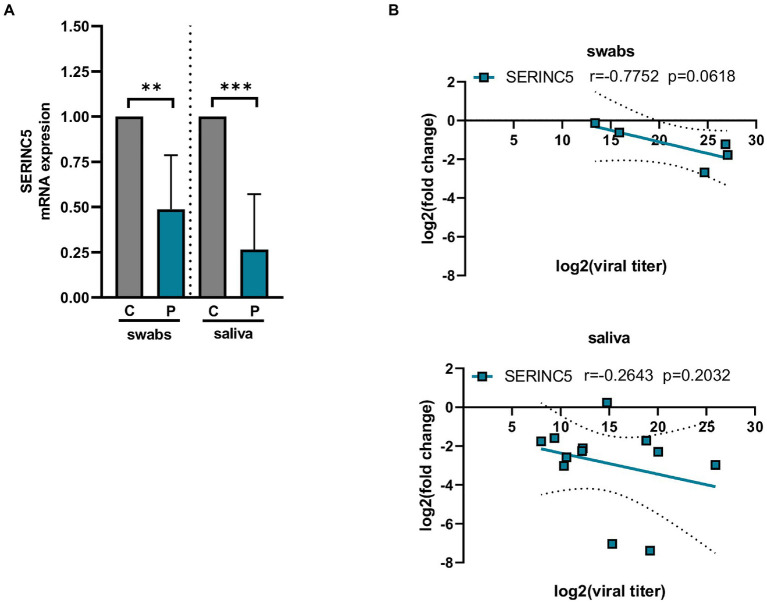
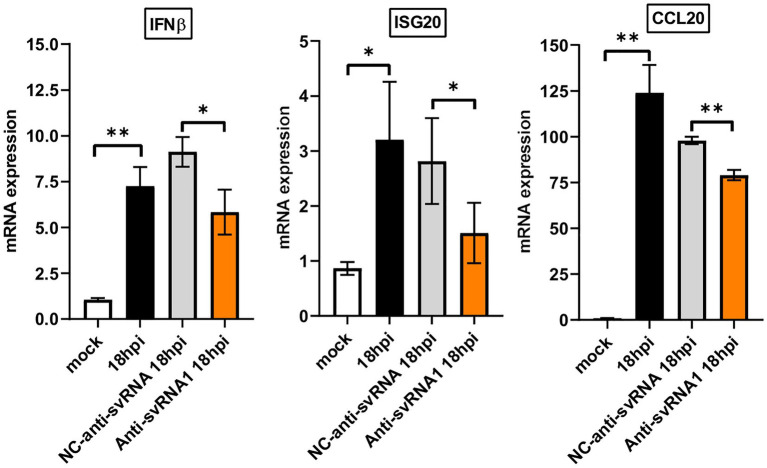
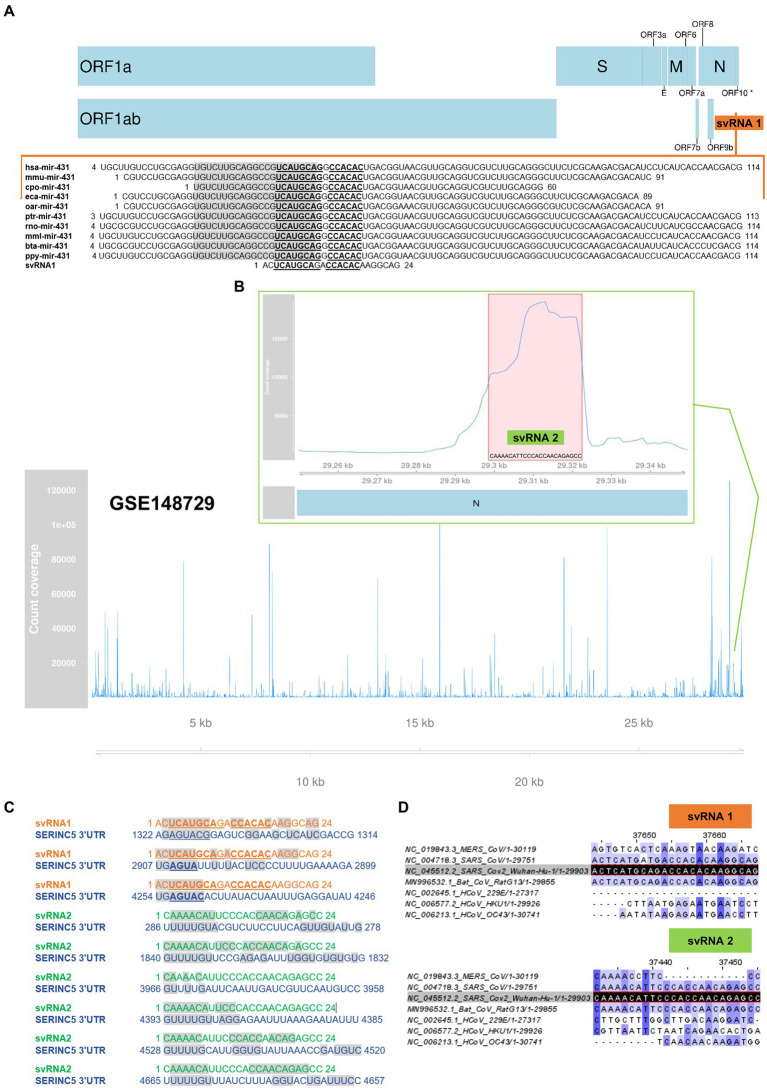
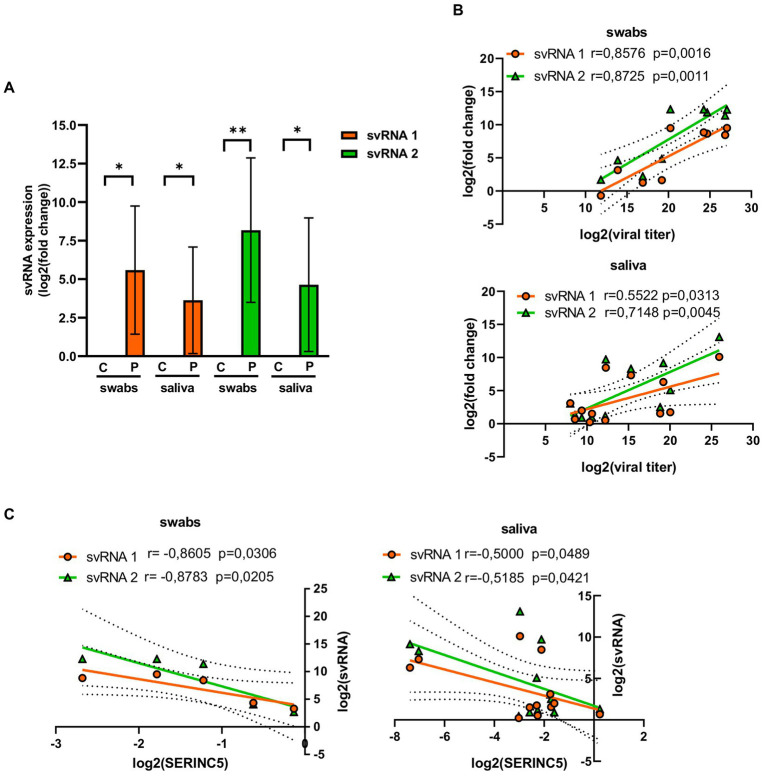
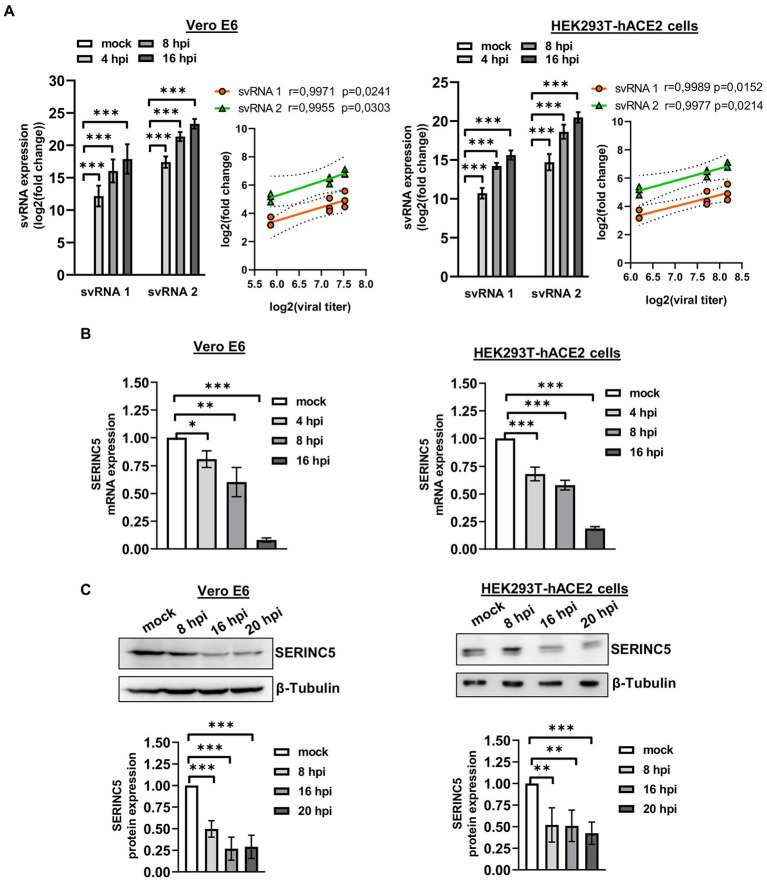
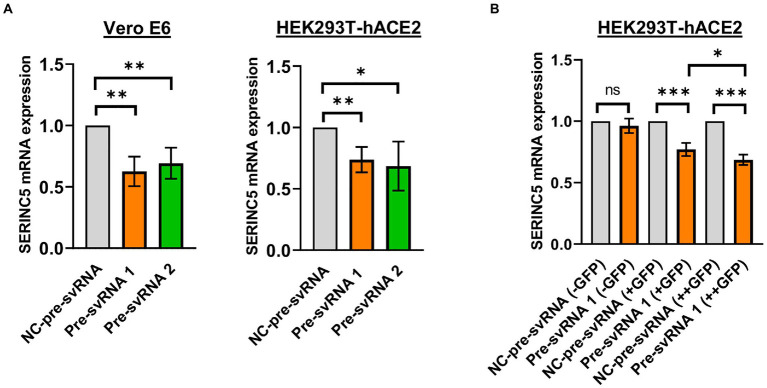
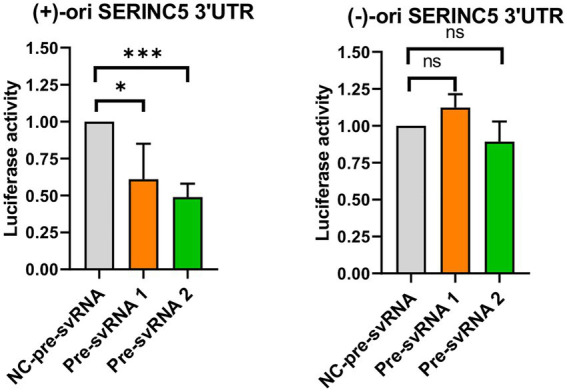
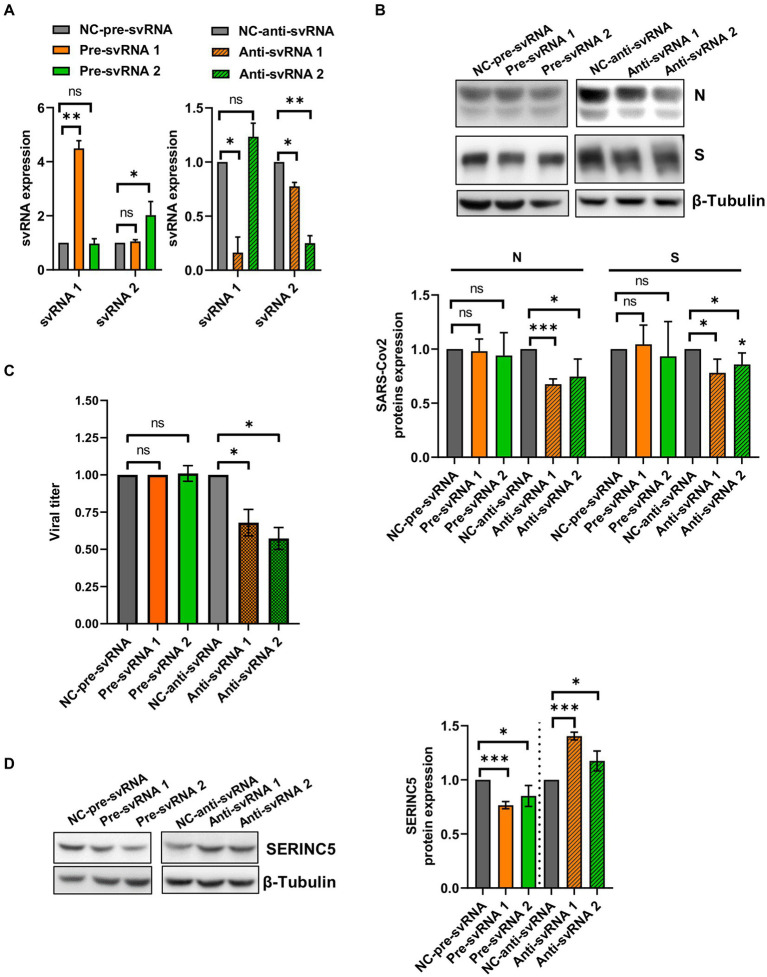
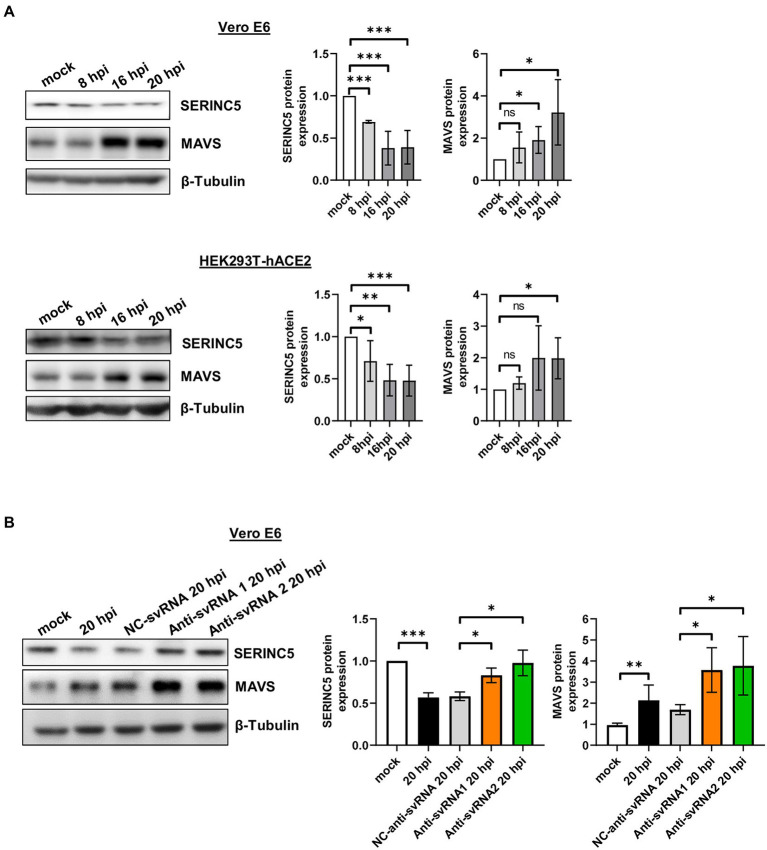
Serine incorporator protein 5 (SERINC5) is a key innate immunity factor that operates in the cell to restrict the infectivity of certain viruses. Different viruses have developed strategies to antagonize SERINC5 function but, how SERINC5 is controlled during viral infection is poorly understood. Here, we report that SERINC5 levels are reduced in COVID-19 patients during the infection by SARS-CoV-2 and, since no viral protein capable of repressing the expression of SERINC5 has been identified, we hypothesized that SARS-CoV-2 non-coding small viral RNAs (svRNAs) could be responsible for this repression. Two newly identified svRNAs with predicted binding sites in the 3'-untranslated region (3'-UTR) of the SERINC5 gene were characterized and we found that the expression of both svRNAs during the infection was not dependent on the miRNA pathway proteins Dicer and Argonaute-2. By using svRNAs mimic oligonucleotides, we demonstrated that both viral svRNAs can bind the 3'UTR of SERINC5 mRNA, reducing SERINC5 expression . Moreover, we found that an anti-svRNA treatment to Vero E6 cells before SARS-CoV-2 infection recovered the levels of SERINC5 and reduced the levels of N and S viral proteins. Finally, we showed that SERINC5 positively controls the levels of Mitochondrial Antiviral Signalling (MAVS) protein in Vero E6. These results highlight the therapeutic potential of targeting svRNAs based on their action on key proteins of the innate immune response during SARS-CoV-2 viral infection.
丝氨酸整合蛋白5(SERINC5)是一种关键的固有免疫因子,在细胞内发挥作用以限制某些病毒的感染性。不同的病毒已经开发出对抗SERINC5功能的策略,但是在病毒感染期间SERINC5是如何被调控的却知之甚少。在这里,我们报告在SARS-CoV-2感染期间,COVID-19患者体内的SERINC5水平降低,并且由于尚未鉴定出能够抑制SERINC5表达的病毒蛋白,我们推测SARS-CoV-2非编码小病毒RNA(svRNAs)可能是这种抑制作用的原因。我们对在SERINC5基因的3'非翻译区(3'-UTR)具有预测结合位点的两个新鉴定的svRNAs进行了表征,并且我们发现这两种svRNAs在感染期间的表达不依赖于miRNA途径蛋白Dicer和Argonaute-2。通过使用svRNAs模拟寡核苷酸,我们证明这两种病毒svRNAs都可以结合SERINC5 mRNA的3'UTR,从而降低SERINC5的表达。此外,我们发现对SARS-CoV-2感染前的Vero E6细胞进行抗svRNA处理可以恢复SERINC5的水平并降低病毒N蛋白和S蛋白的水平。最后,我们表明SERINC5在Vero E6细胞中正向调控线粒体抗病毒信号(MAVS)蛋白的水平。这些结果突出了基于其在SARS-CoV-2病毒感染期间对固有免疫反应关键蛋白的作用来靶向svRNAs的治疗潜力。