Ononogbo C, Nwosu E C, Nwakuba N R, Nwaji G N, Nwufo O C, Chukwuezie O C, Chukwu M M, Anyanwu E E
Faculty of Engineering, University of Agriculture and Environmental Sciences, Umuagwo, Imo State, Nigeria.
School of Engineering and Engineering Technology, Federal University of Technology, Owerri, Nigeria.
Heliyon. 2023 Feb 8;9(2):e13590. doi: 10.1016/j.heliyon.2023.e13590. eCollection 2023 Feb.
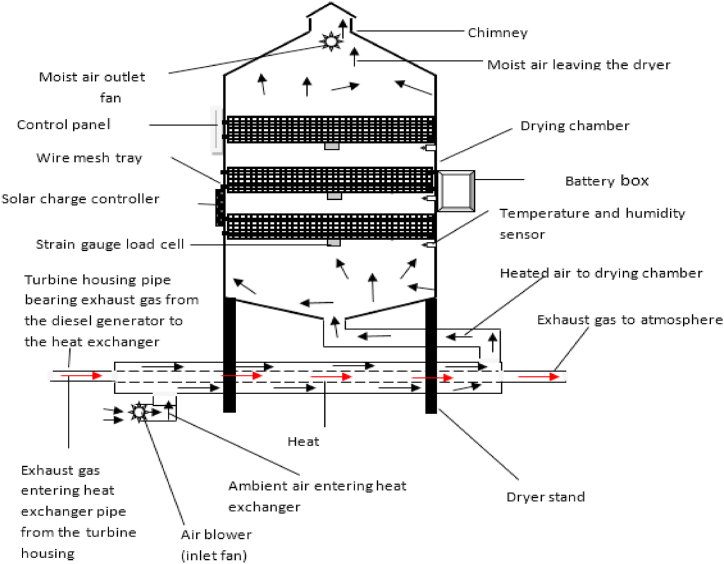
Waste heat recovery (WHR) using conventional technologies can provide appreciable amounts of useful energy from waste heat (WH) sources, thus reducing the overall energy consumption of systems for economic purposes, as well as ameliorating the impact of fossil fuel-based CO emissions on the environment. In the literature survey, WHR technologies and techniques, classifications and applications are considered and adequately discussed. The barriers affecting the development and utilization of systems of WHR, as well as possible solutions are presented. Available techniques of WHR are also discussed extensively, with a particular interest in their progressive improvements, prospects, and challenges. The economic viability of various WHR techniques is also taken into account considering their payback period (PBP), especially in the food industry. A novel research area wherein the recovered WH of flue gases from heavy-duty electric generators was utilized for agro-products drying has been identified, which may be useful in the agro-food processing industries. Furthermore, an in-depth discussion on the appropriateness and applicability of WHR technology in the maritime sector is given a prominent touch. In many review works involving WHR, different areas such as WHR sources, methods, technologies, or applications were discussed, albeit not in a comprehensive way touching on all-important aspects of this branch of knowledge. However, in this paper, a more holistic approach is followed. Furthermore, many recently published articles in different areas of WHR have been carefully examined and the recent findings provided are presented in this work. The recovery of waste energy and its utilization is capable of significantly dropping the level of production costs in the industrial sector and harmful emissions to the environment. Some of the benefits derivable from the application of WHR in the industries may include a reduction in energy, capital, and operating costs, which translate to reduced cost of finished products, and the mitigation of environmental degradation through the reduction of the emission of air pollutants and greenhouse gases. Future perspectives on the development and implementation of WHR technologies are presented in the conclusions section.
使用传统技术的废热回收(WHR)能够从废热(WH)源中获取可观的有用能量,从而出于经济目的降低系统的整体能源消耗,同时减轻基于化石燃料的一氧化碳排放对环境的影响。在文献调研中,对废热回收技术与工艺、分类及应用进行了考量并充分讨论。介绍了影响废热回收系统开发与利用的障碍以及可能的解决方案。还广泛讨论了现有的废热回收技术,尤其关注其逐步改进、前景及挑战。考虑到各种废热回收技术的投资回收期(PBP),还评估了它们的经济可行性,特别是在食品工业中。已确定了一个新的研究领域,即将重型发电机废气中的回收废热用于农产品干燥,这在农产品加工行业可能会有用。此外,还着重深入讨论了废热回收技术在海事部门的适用性。在许多涉及废热回收的综述工作中,讨论了不同领域,如废热回收源、方法、技术或应用,但并未全面涉及该知识分支的所有重要方面。然而,本文采用了更全面的方法。此外,仔细研究了近期在废热回收不同领域发表的许多文章,并在本工作中呈现了最新研究结果。废能回收及其利用能够显著降低工业部门的生产成本水平以及对环境的有害排放。在工业中应用废热回收可带来的一些益处可能包括降低能源、资本和运营成本,这转化为成品成本的降低,以及通过减少空气污染物和温室气体排放来减轻环境退化。结论部分介绍了废热回收技术发展与实施的未来展望。