Cancer Research Institute, Beth Israel Deaconess Medical Center, Boston, Massachusetts.
Sackler School of Graduate Studies, Tufts University School of Medicine, Boston, Massachusetts.
Cancer Immunol Res. 2023 May 3;11(5):629-645. doi: 10.1158/2326-6066.CIR-22-0655.
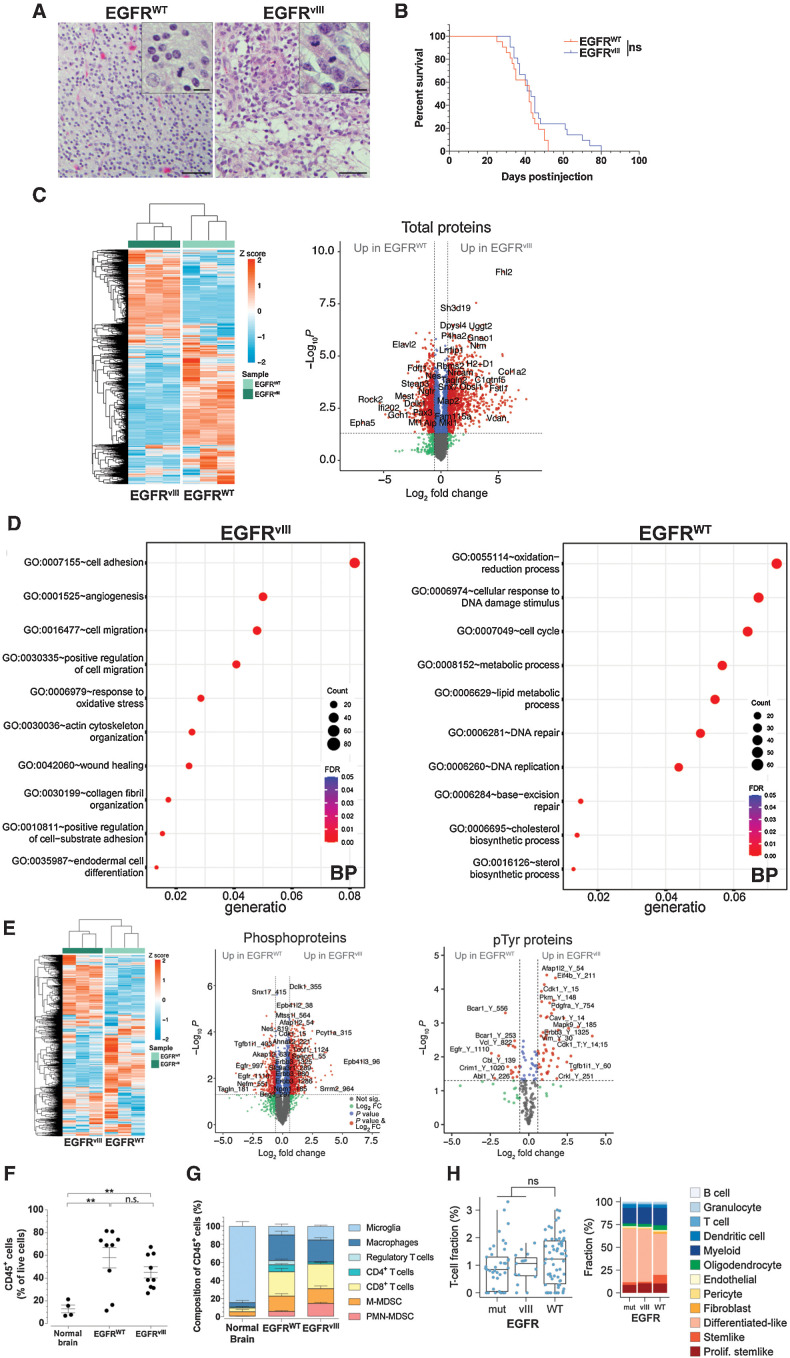
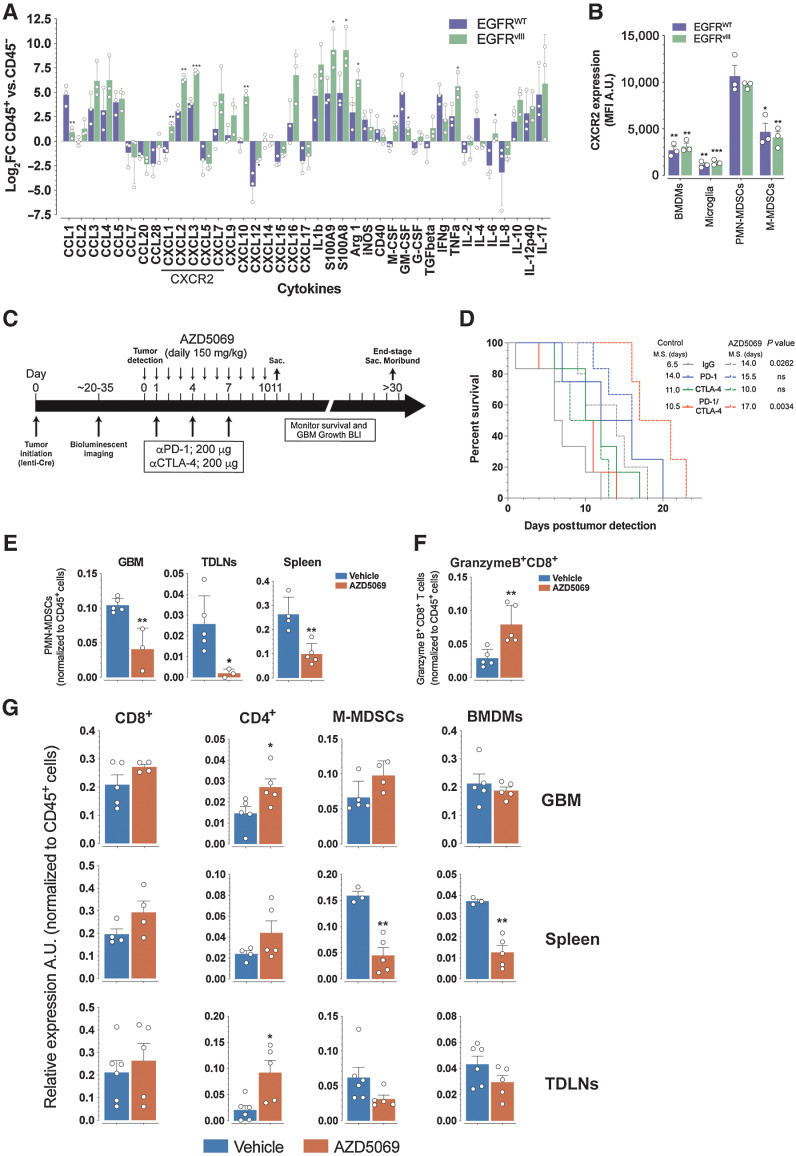
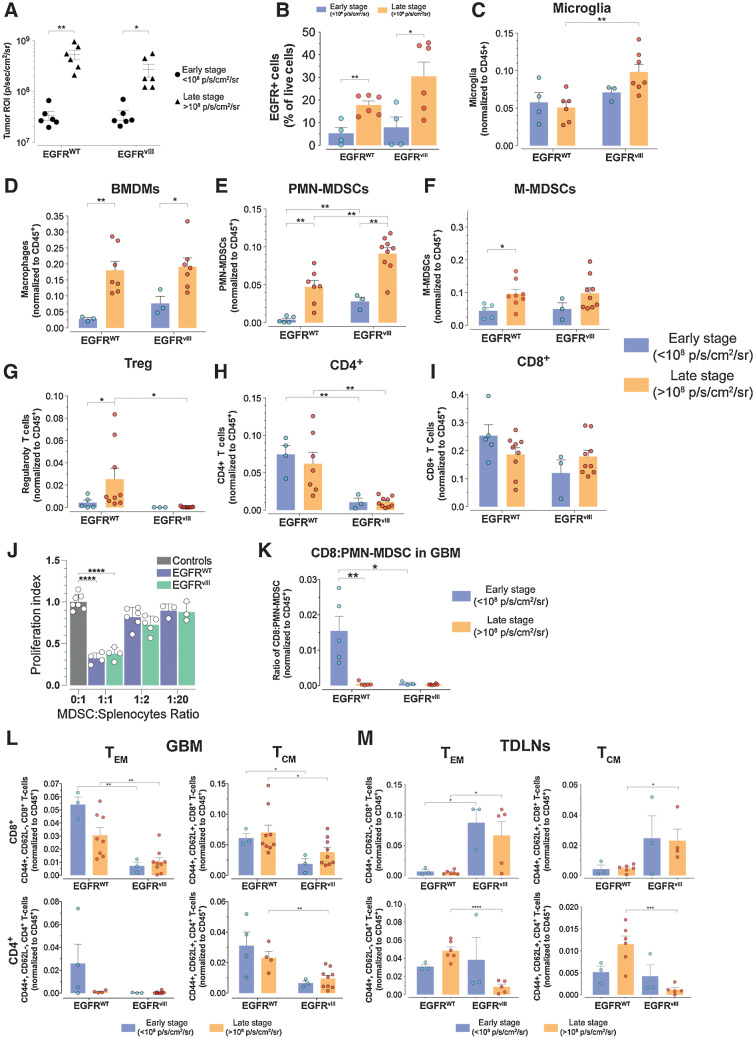
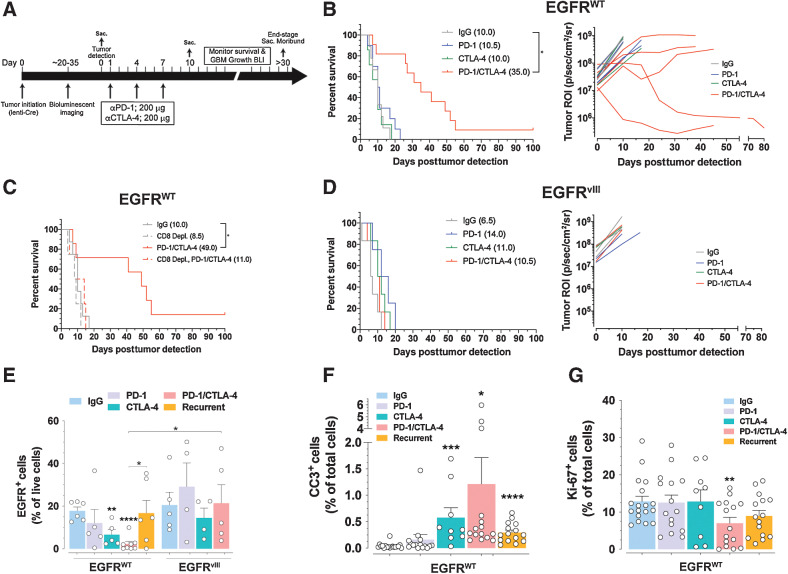
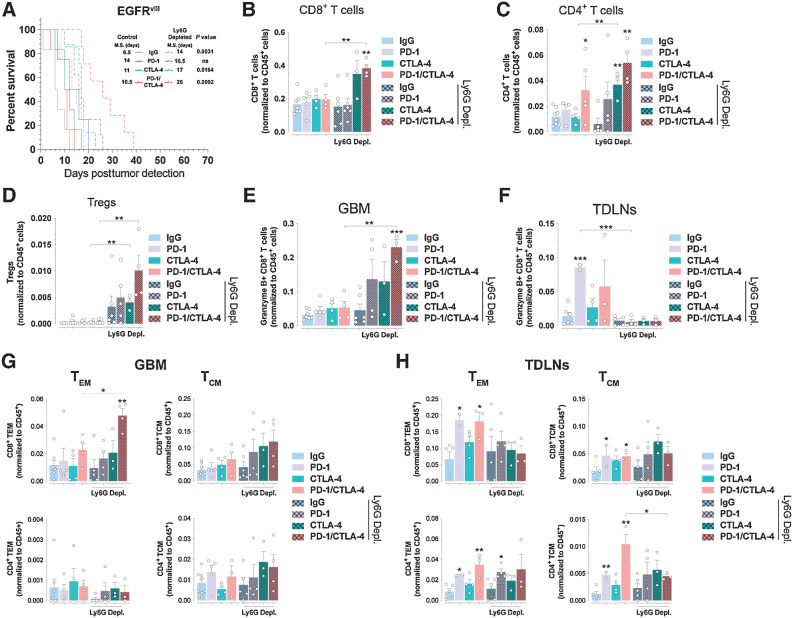
The composition of the tumor immune microenvironment (TIME) is considered a key determinant of patients' response to immunotherapy. The mechanisms underlying TIME formation and development over time are poorly understood. Glioblastoma (GBM) is a lethal primary brain cancer for which there are no curative treatments. GBMs are immunologically heterogeneous and impervious to checkpoint blockade immunotherapies. Utilizing clinically relevant genetic mouse models of GBM, we identified distinct immune landscapes associated with expression of EGFR wild-type and mutant EGFRvIII cancer driver mutations. Over time, accumulation of polymorphonuclear myeloid-derived suppressor cells (PMN-MDSC) was more pronounced in EGFRvIII-driven GBMs and was correlated with resistance to PD-1 and CTLA-4 combination checkpoint blockade immunotherapy. We determined that GBM-secreted CXCL1/2/3 and PMN-MDSC-expressed CXCR2 formed an axis regulating output of PMN-MDSCs from the bone marrow leading to systemic increase in these cells in the spleen and GBM tumor-draining lymph nodes. Pharmacologic targeting of this axis induced a systemic decrease in the numbers of PMN-MDSC, facilitated responses to PD-1 and CTLA-4 combination checkpoint blocking immunotherapy, and prolonged survival in mice bearing EGFRvIII-driven GBM. Our results uncover a relationship between cancer driver mutations, TIME composition, and sensitivity to checkpoint blockade in GBM and support the stratification of patients with GBM for checkpoint blockade therapy based on integrated genotypic and immunologic profiles.
肿瘤免疫微环境(TIME)的组成被认为是患者对免疫疗法反应的关键决定因素。TIME 的形成和随时间发展的机制尚未被充分理解。胶质母细胞瘤(GBM)是一种致命的原发性脑癌,目前尚无治愈方法。GBM 在免疫上具有异质性,对检查点阻断免疫疗法有抵抗力。我们利用临床上相关的 GBM 遗传小鼠模型,确定了与 EGFR 野生型和突变型 EGFRvIII 致癌驱动突变表达相关的不同免疫景观。随着时间的推移,EGFRvIII 驱动的 GBM 中多形核髓系来源的抑制细胞(PMN-MDSC)的积累更为明显,并且与对 PD-1 和 CTLA-4 联合检查点阻断免疫疗法的耐药性相关。我们确定 GBM 分泌的 CXCL1/2/3 和 PMN-MDSC 表达的 CXCR2 形成了一个调节 PMN-MDSC 从骨髓中输出的轴,导致这些细胞在脾脏和 GBM 肿瘤引流淋巴结中的系统性增加。该轴的药理学靶向诱导 PMN-MDSC 的数量系统性减少,促进了对 PD-1 和 CTLA-4 联合检查点阻断免疫疗法的反应,并延长了携带 EGFRvIII 驱动的 GBM 小鼠的存活时间。我们的研究结果揭示了癌症驱动突变、TIME 组成与 GBM 对检查点阻断的敏感性之间的关系,并支持根据综合基因型和免疫谱对 GBM 患者进行检查点阻断治疗的分层。