Department of Family, Community and Health Systems Science, School of Nursing, University at Buffalo, The State University of New York, Buffalo, New York, United States.
Appl Clin Inform. 2023 May;14(3):408-417. doi: 10.1055/a-2048-7343. Epub 2023 Mar 7.
Patient cohorts generated by machine learning can be enhanced with clinical knowledge to increase translational value and provide a practical approach to patient segmentation based on a mix of medical, behavioral, and social factors.
This study aimed to generate a pragmatic example of how machine learning could be used to quickly and meaningfully cohort patients using unsupervised classification methods. Additionally, to demonstrate increased translational value of machine learning models through the integration of nursing knowledge.
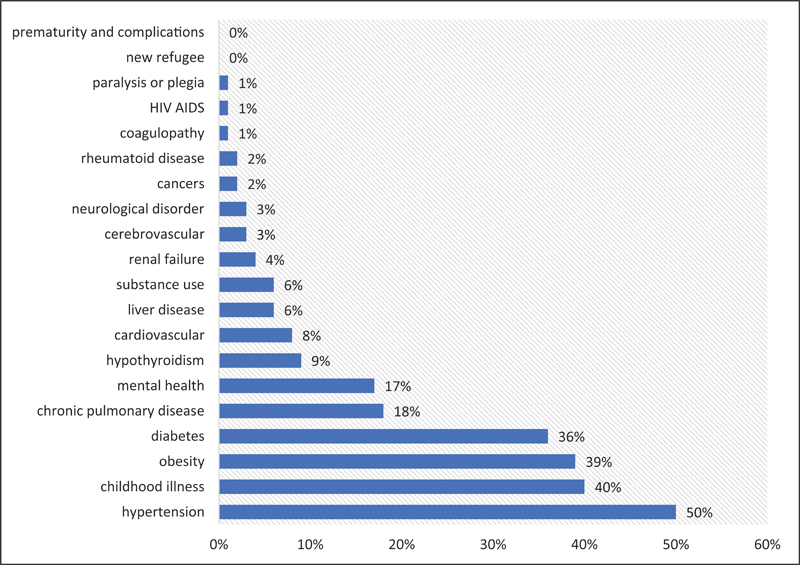
A primary care practice dataset ( = 3,438) of high-need patients defined by practice criteria was parsed to a subset population of patients with diabetes ( = 1233). Three expert nurses selected variables for k-means cluster analysis using knowledge of critical factors for care coordination. Nursing knowledge was again applied to describe the psychosocial phenotypes in four prominent clusters, aligned with social and medical care plans.
Four distinct clusters interpreted and mapped to psychosocial need profiles, allowing for immediate translation to clinical practice through the creation of actionable social and medical care plans. (1) A large cluster of racially diverse female, non-English speakers with low medical complexity, and history of childhood illness; (2) a large cluster of English speakers with significant comorbidities (obesity and respiratory disease); (3) a small cluster of males with substance use disorder and significant comorbidities (mental health, liver and cardiovascular disease) who frequently visit the hospital; and (4) a moderate cluster of older, racially diverse patients with renal failure.
This manuscript provides a practical method for analysis of primary care practice data using machine learning in tandem with expert clinical knowledge.
通过机器学习生成的患者队列可以通过临床知识进行增强,以提高转化价值,并提供一种基于医疗、行为和社会因素混合的实用患者细分方法。
本研究旨在提供一个实用的例子,说明如何使用无监督分类方法,通过机器学习快速而有意义地对患者进行分类。此外,通过整合护理知识来展示机器学习模型的更高转化价值。
对一个由实践标准定义的高需求患者的初级保健实践数据集(n=3438)进行解析,得到一个患有糖尿病的患者子集(n=1233)。三名专家护士使用护理协调关键因素的知识,选择 k-均值聚类分析的变量。护理知识再次被应用于描述四个主要聚类中的心理社会表型,与社会和医疗护理计划相匹配。
四个不同的聚类解释并映射到心理社会需求概况,通过创建可操作的社会和医疗护理计划,立即转化为临床实践。(1)一个由不同种族的女性、非英语使用者组成的大型聚类,具有低医疗复杂性和儿童疾病史;(2)一个由讲英语的人组成的大型聚类,具有显著的合并症(肥胖和呼吸系统疾病);(3)一个由有物质使用障碍和显著合并症(心理健康、肝脏和心血管疾病)的男性组成的小聚类,他们经常去医院;(4)一个由患有肾衰竭的年龄较大、种族多样化的患者组成的中等聚类。
本研究提供了一种实用的方法,通过机器学习与专家临床知识相结合,对初级保健实践数据进行分析。