Department of Neurology and Cerebrovascular Medicine, Saitama Medical University International Medical Center, Japan.
Intern Med. 2023 Oct 15;62(20):2959-2964. doi: 10.2169/internalmedicine.1209-22. Epub 2023 Mar 8.
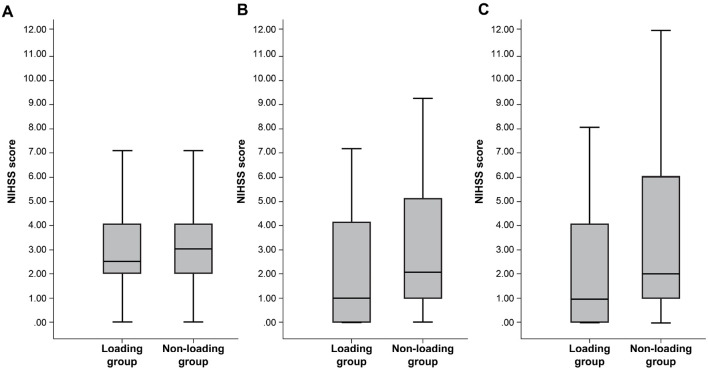
Objective Despite aggressive therapeutic interventions during the acute phase of branch atheromatous disease (BAD)-type cerebral infarction, many patients, even those with a mild condition at the onset, experience neurological deterioration after hospitalization and develop serious deficits. We compared the therapeutic efficacy of multiple antithrombotic therapies for BAD between patients who received a clopidogrel loading dose (loading group; LG) and those without loading (non-loading group; NLG). Patients Between January 2019 and May 2022, patients with BAD-type cerebral infarction in the lenticulostriate artery admitted within 24 h of the onset were recruited. This study included 95 consecutive patients who received combination argatroban and dual antiplatelet therapy (aspirin and clopidogrel). Methods Patients were classified into the LG and NLG according to whether or not a loading dose of clopidogrel (300 mg) had been administered on admission. Changes in neurological severity [National Institutes of Health Stroke Scale (NIHSS) score] during the acute phase were retrospectively evaluated. Results There were 34 (36%) and 61 (64%) patients in the LG and NLG, respectively. On admission, the median NIHSS score was similar between the groups [LG: 2.5 (2-4) vs. NLG: 3 (2-4), p=0.771]. At 48 h following admission, the median NIHSS scores were 1 (0.25-4), and 2 (1-5) in the LG and NLG, respectively (p=0.045). Early neurological deterioration (END; defined as worsening of the NIHSS score by ≥4 points at 48 h after admission) occurred in 3% of LG and 20% of NLG patients (p=0.028). Conclusion Administration of a clopidogrel loading dose with combination antithrombotic therapy for BAD reduced END.
尽管在分支粥样硬化性疾病(BAD)型脑梗死的急性期进行了积极的治疗干预,但许多患者,甚至是发病时病情较轻的患者,在住院后仍会出现神经功能恶化,并发展为严重的功能缺损。我们比较了接受氯吡格雷负荷剂量(负荷组;LG)和未接受负荷剂量(非负荷组;NLG)的 BAD 患者的多种抗血栓治疗的疗效。
于 2019 年 1 月至 2022 年 5 月发病 24 h 内入院的豆纹动脉区 BAD 型脑梗死患者。
既往有颅内出血、蛛网膜下腔出血、心房颤动、心源性脑栓塞、机械取栓或血管内治疗病史。
连续纳入 95 例接受阿加曲班联合双联抗血小板治疗(阿司匹林+氯吡格雷)的患者。
根据入院时是否给予氯吡格雷(300 mg)负荷剂量,将患者分为 LG 和 NLG。
回顾性评估急性期神经功能严重程度(美国国立卫生研究院卒中量表[NIHSS]评分)的变化。
LG 和 NLG 组各有 34 例(36%)和 61 例(64%)患者。
入院时,两组 NIHSS 评分中位数相似[LG:2.5(2-4)vs. NLG:3(2-4),p=0.771]。
入院后 48 h,LG 和 NLG 组的 NIHSS 评分中位数分别为 1(0.25-4)和 2(1-5)(p=0.045)。
LG 组有 3%(1/34)的患者和 NLG 组有 20%(12/61)的患者发生早期神经功能恶化(END;定义为入院后 48 h NIHSS 评分增加≥4 分)(p=0.028)。
BAD 型脑梗死患者在联合抗血栓治疗中给予氯吡格雷负荷剂量可减少 END。