Monis Mohammad Daniyal, Ali Sanja M, Bhutto Israr A, Mahar Pir S
Ophthalmology, Al Ibrahim Eye Hospital / Isra Postgraduate Institute of Ophthalmology, Karachi, PAK.
Ophthalmology and Visual Sciences, Aga Khan University Hospital, Karachi, PAK.
Cureus. 2023 Feb 3;15(2):e34611. doi: 10.7759/cureus.34611. eCollection 2023 Feb.
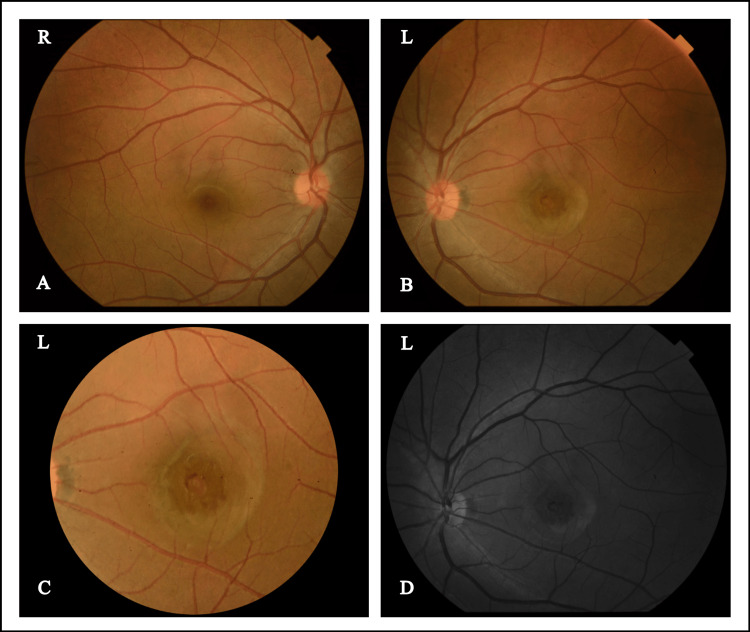
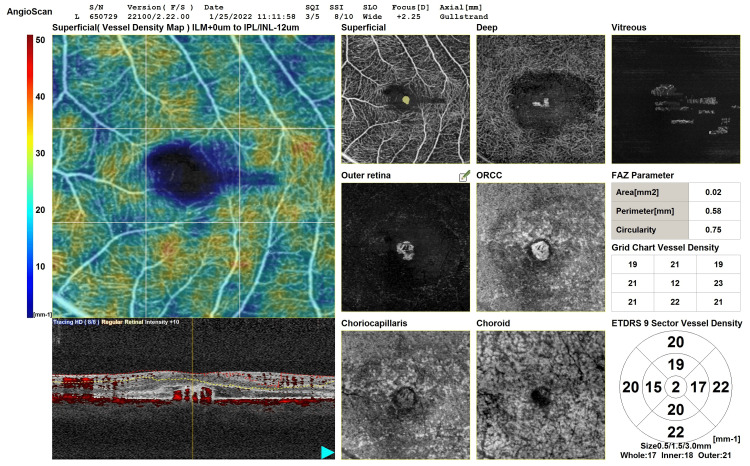
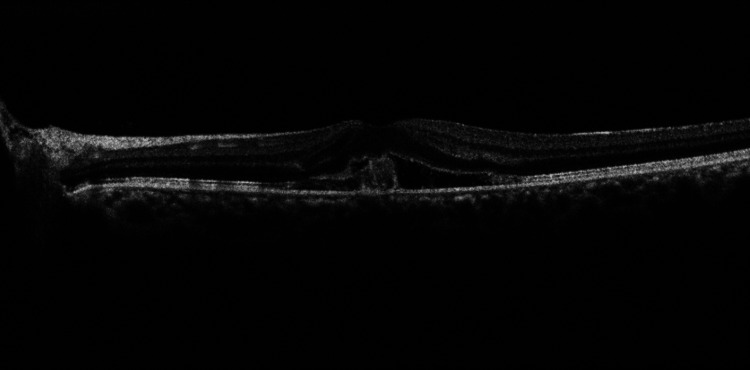
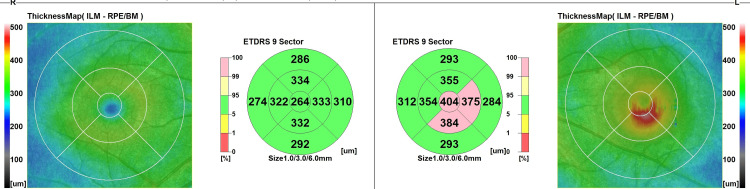
Choroidal neovascularization (CNV) is the abnormal growth of vessels from the choroidal vasculature to the neurosensory retina through the Bruch's membrane and is usually associated with "wet" age-related macular degeneration (AMD). Other causes include myopia, traumatic rupture of the choroid, multifocal choroiditis, and histoplasmosis. CNV is a major cause of visual loss and treatment is aimed at halting progression and stabilizing vision. Intravitreal anti-vascular endothelial growth factor (IVT anti-VEGF) injection is the treatment of choice for CNV regardless of etiology. However, its use in pregnancy is debatable, due to its mechanism of action and lack of evidence of safety in pregnancy. Herein, we report a 27-year-old pregnant female, who complained of blurred and decreased vision in her left eye for two weeks. On examination, her unaided vision was 6/6 in her right eye and 6/18 partial in her left eye with no further improvement. Based on history, examination, and investigations she was diagnosed as a case of idiopathic CNV in pregnancy, being only the sixth reported case worldwide. Citing the risk of possible fetal adverse effects, the patient did not consent to the treatment despite extensive counseling. She was advised to follow up regularly and to receive IVT anti-VEGF injections immediately after delivery. A literature review was therefore undertaken to broaden our understanding of the treatment protocols and outcomes of using IVT anti-VEGF in pregnancy. This helped us to develop an understanding of the possible relative safety of such a treatment when individually tailored with a multi-disciplinary approach.
脉络膜新生血管(CNV)是脉络膜血管通过布鲁赫膜向神经感觉视网膜异常生长,通常与“湿性”年龄相关性黄斑变性(AMD)相关。其他原因包括近视、脉络膜外伤性破裂、多灶性脉络膜炎和组织胞浆菌病。CNV是视力丧失的主要原因,治疗旨在阻止病情进展并稳定视力。无论病因如何,玻璃体内注射抗血管内皮生长因子(IVT抗VEGF)都是治疗CNV的首选方法。然而,由于其作用机制以及缺乏孕期安全性证据,其在孕期的使用存在争议。在此,我们报告一名27岁的孕妇,她主诉左眼视力模糊和下降两周。检查发现,她右眼裸眼视力为6/6,左眼为6/18部分视力,且无进一步改善。根据病史、检查和检查结果,她被诊断为孕期特发性CNV,这是全球仅报道的第六例。鉴于可能对胎儿产生不良影响的风险,尽管经过广泛咨询,患者仍不同意接受治疗。建议她定期随访,并在分娩后立即接受IVT抗VEGF注射。因此,我们进行了文献综述,以拓宽我们对孕期使用IVT抗VEGF的治疗方案和结果的理解。这有助于我们在采用多学科方法进行个体化定制时,了解这种治疗可能的相对安全性。