Bohr Yvonne, Litwin Leah, Hankey Jeffrey Ryan, McCague Hugh, Singoorie Chelsea, Lucassen Mathijs F G, Shepherd Matthew, Barnhardt Jenna
LaMarsh Centre for Child and Youth Research, York University, Toronto, ON, Canada.
Department of Psychology, Faculty of Health, York University, Toronto, ON, Canada.
JMIR Serious Games. 2023 Mar 9;11:e38493. doi: 10.2196/38493.
Inuit youth in Northern Canada show considerable resilience in the face of extreme adversities. However, they also experience significant mental health needs and some of the highest adolescent suicide rates in the world. Disproportionate rates of truancy, depression, and suicide among Inuit adolescents have captured the attention of all levels of government and the country. Inuit communities have expressed an urgent imperative to create, or adapt, and then evaluate prevention and intervention tools for mental health. These tools should build upon existing strengths, be culturally appropriate for Inuit communities, and be accessible and sustainable in Northern contexts, where mental health resources are often scarce.
This pilot study assesses the utility, for Inuit youth in Canada, of a psychoeducational e-intervention designed to teach cognitive behavioral therapy strategies and techniques. This serious game, SPARX, had previously demonstrated effectiveness in addressing depression with Māori youth in New Zealand.
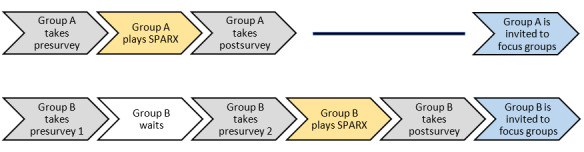
The Nunavut Territorial Department of Health sponsored this study, and a team of Nunavut-based community mental health staff facilitated youth's participation in an entirely remotely administered pilot trial using a modified randomized control approach with 24 youths aged 13-18 across 11 communities in Nunavut. These youth had been identified by the community facilitators as exhibiting low mood, negative affect, depressive presentations, or significant levels of stress. Entire communities, instead of individual youth, were randomly assigned to an intervention group or a waitlist control group.
Mixed models (multilevel regression) revealed that participating youth felt less hopeless (P=.02) and engaged in less self-blame (P=.03), rumination (P=.04), and catastrophizing (P=.03) following the SPARX intervention. However, participants did not show a decrease in depressive symptoms or an increase in formal resilience indicators.
Preliminary results suggest that SPARX may be a good first step for supporting Inuit youth with skill development to regulate their emotions, challenge maladaptive thoughts, and provide behavioral management techniques such as deep breathing. However, it will be imperative to work with youth and communities to design, develop, and test an Inuit version of the SPARX program, tailored to fit the interests of Inuit youth and Elders in Canada and to increase engagement and effectiveness of the program.
ClinicalTrials.gov NCT05702086; https://www.clinicaltrials.gov/ct2/show/NCT05702086.
加拿大北部的因纽特青年在面对极端逆境时展现出了相当强的适应能力。然而,他们也有显著的心理健康需求,且青少年自杀率位居世界前列。因纽特青少年中旷课、抑郁和自杀率过高的情况引起了各级政府和整个国家的关注。因纽特社区迫切需要创建或改编并评估心理健康预防和干预工具。这些工具应基于现有的优势,在文化上适合因纽特社区,并且在心理健康资源通常稀缺的北方环境中易于获取且可持续。
这项试点研究评估了一种旨在教授认知行为疗法策略和技巧的心理教育电子干预措施对加拿大因纽特青年的效用。这款名为SPARX的严肃游戏此前已证明在帮助新西兰毛利青年应对抑郁方面具有有效性。
努纳武特地区卫生部赞助了这项研究,一组来自努纳武特的社区心理健康工作人员协助青年参与了一项完全远程管理的试点试验,采用改良的随机对照方法,对努纳武特11个社区的24名13至18岁青年进行了研究。这些青年被社区协调员认定为情绪低落、有消极情绪、有抑郁表现或压力水平较高。整个社区而非个别青年被随机分配到干预组或等待名单对照组。
混合模型(多层回归)显示,参与SPARX干预后,青年感到绝望的程度降低(P = 0.02),自责(P = 0.03)、沉思(P = 0.04)和灾难化思维(P = 0.03)的情况减少。然而,参与者的抑郁症状并未减轻,正式的适应能力指标也未增加。
初步结果表明,SPARX可能是支持因纽特青年进行技能培养以调节情绪、挑战适应不良思维并提供如深呼吸等行为管理技巧的良好第一步。然而,必须与青年和社区合作,设计、开发并测试适合加拿大因纽特青年和长者兴趣的因纽特版SPARX项目,以提高该项目的参与度和有效性。
ClinicalTrials.gov NCT05702086;https://www.clinicaltrials.gov/ct2/show/NCT05702086 。