Immunology, Microenvironment and Metastasis Program, The Wistar Institute, Philadelphia, Pennsylvania, USA.
Department of Pathology, St. Jude Children's Research Hospital, Memphis, Tennessee, USA.
J Clin Invest. 2023 Apr 17;133(8):e164348. doi: 10.1172/JCI164348.
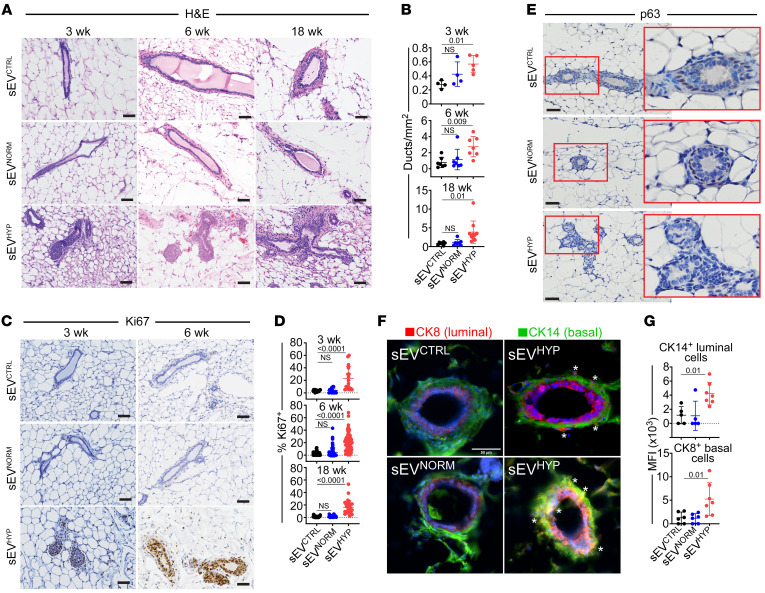
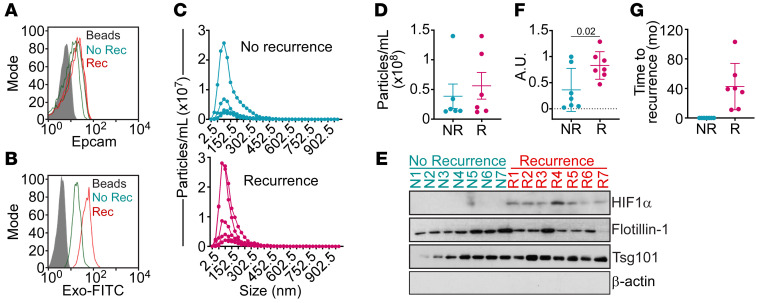
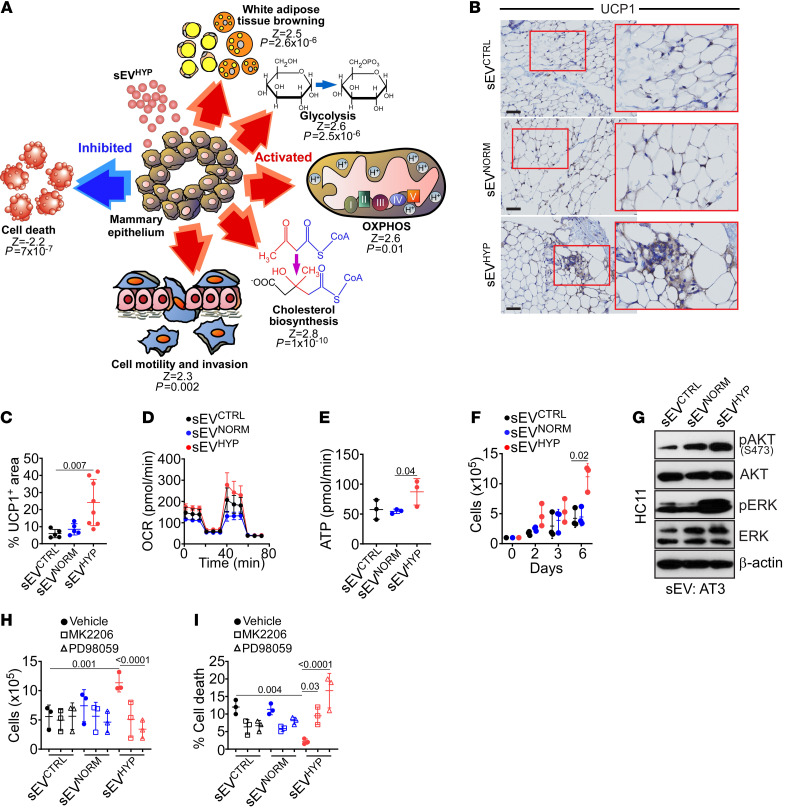
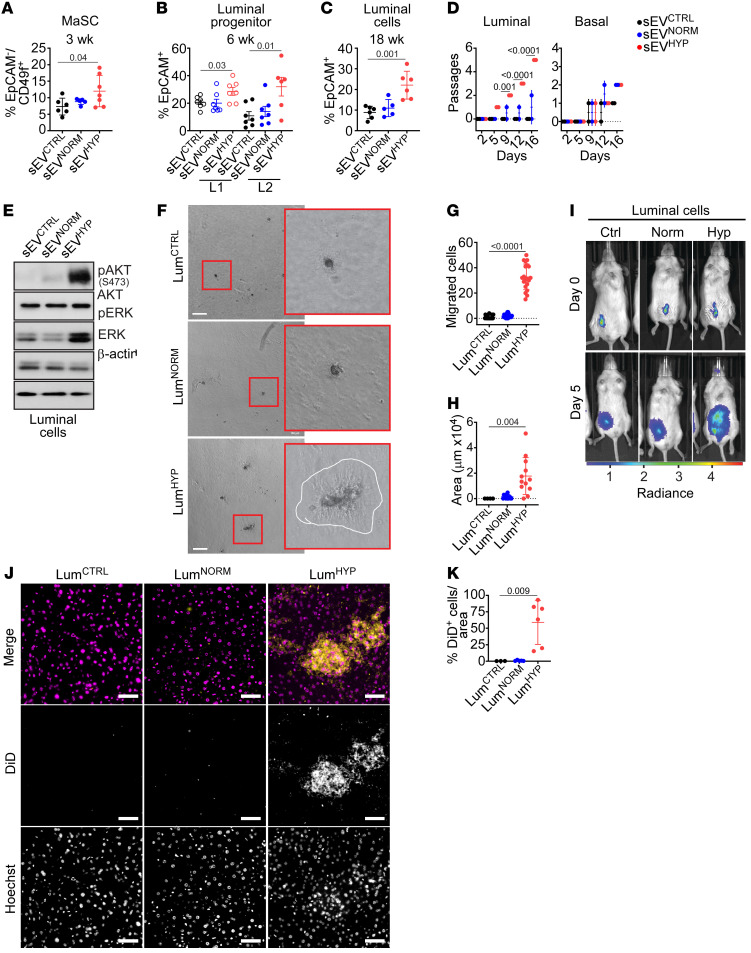
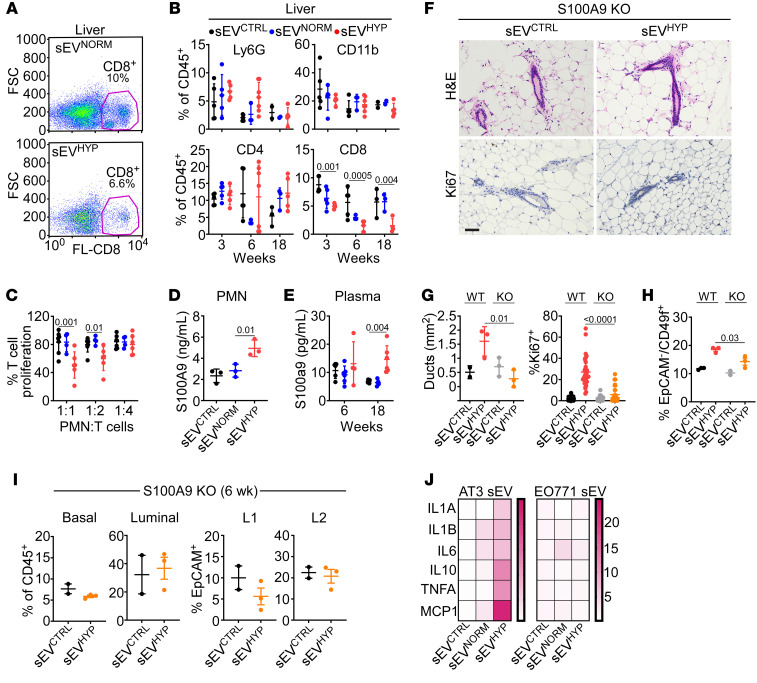
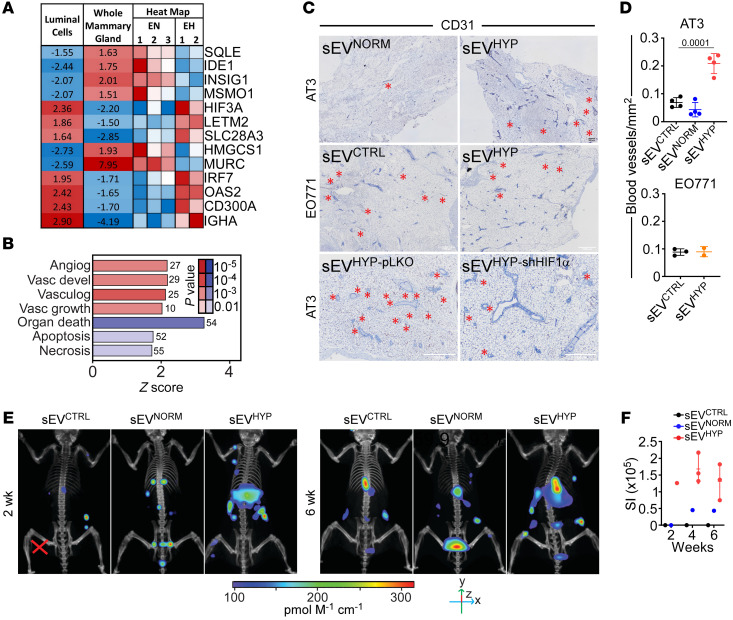
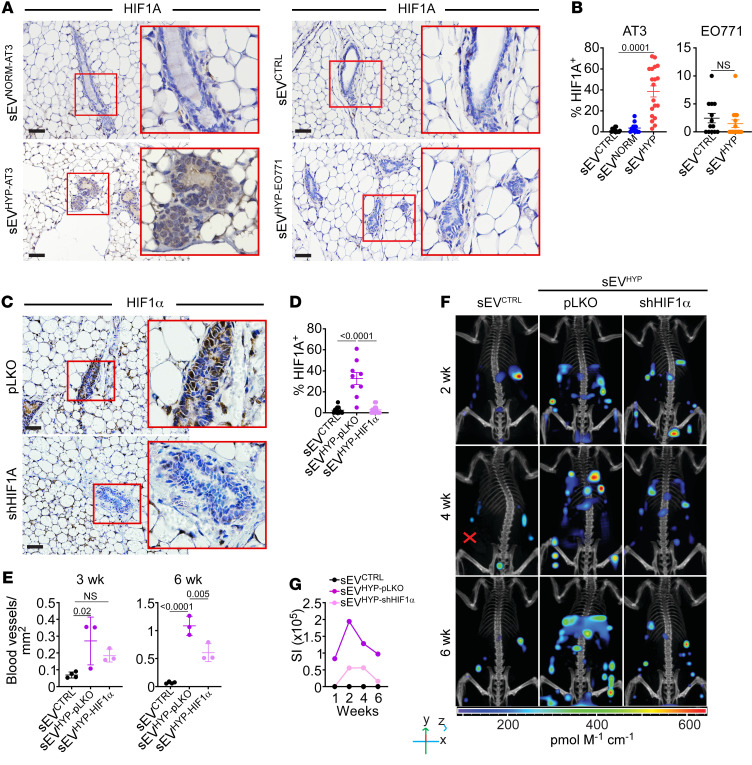
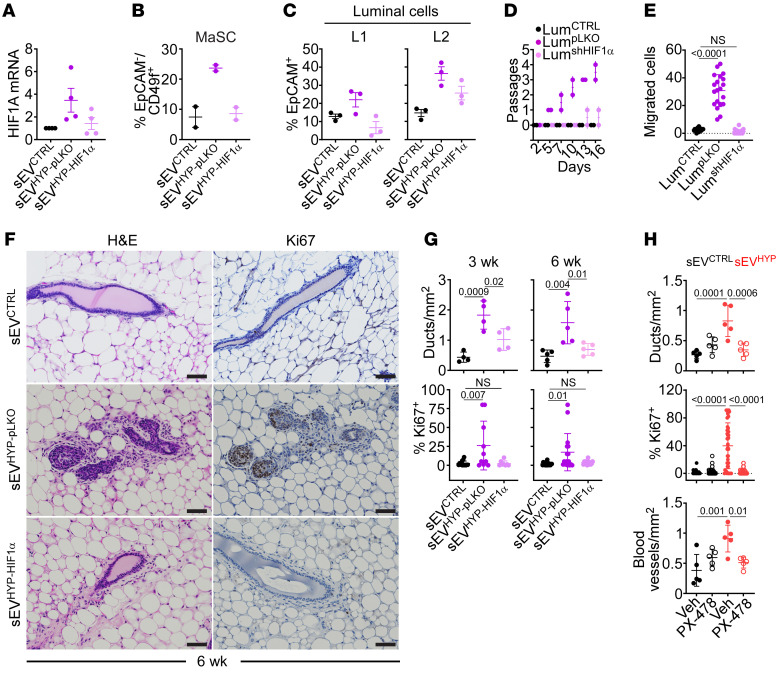
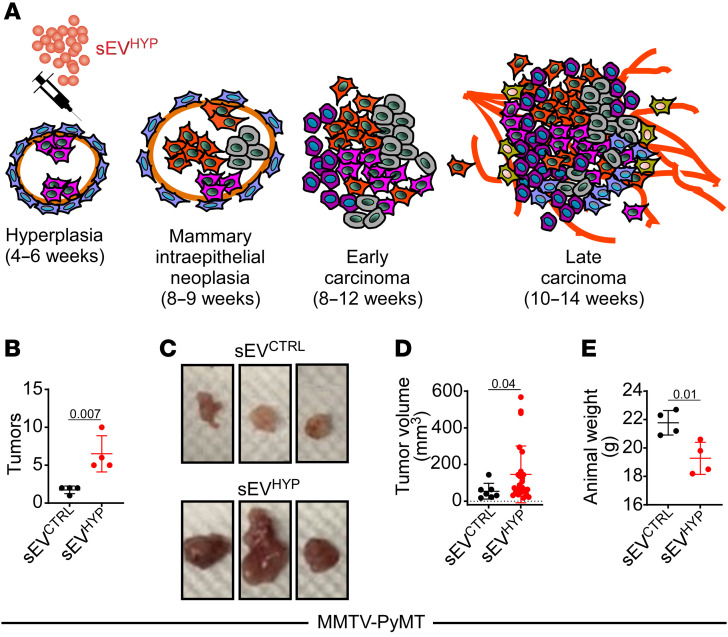
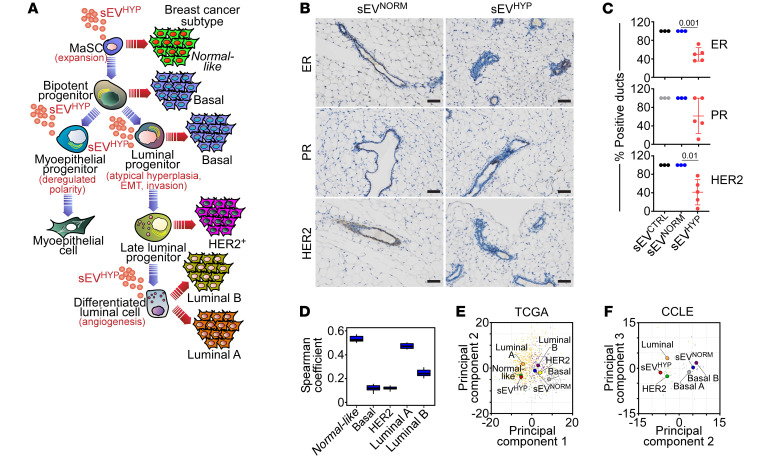
The origin of breast cancer, whether primary or recurrent, is unknown. Here, we show that invasive breast cancer cells exposed to hypoxia release small extracellular vesicles (sEVs) that disrupt the differentiation of normal mammary epithelia, expand stem and luminal progenitor cells, and induce atypical ductal hyperplasia and intraepithelial neoplasia. This was accompanied by systemic immunosuppression with increased myeloid cell release of the alarmin S100A9 and oncogenic traits of epithelial-mesenchymal transition, angiogenesis, and local and disseminated luminal cell invasion in vivo. In the presence of a mammary gland driver oncogene (MMTV-PyMT), hypoxic sEVs accelerated bilateral breast cancer onset and progression. Mechanistically, genetic or pharmacologic targeting of hypoxia-inducible factor-1α (HIF1α) packaged in hypoxic sEVs or homozygous deletion of S100A9 normalized mammary gland differentiation, restored T cell function, and prevented atypical hyperplasia. The transcriptome of sEV-induced mammary gland lesions resembled luminal breast cancer, and detection of HIF1α in plasma circulating sEVs from luminal breast cancer patients correlated with disease recurrence. Therefore, sEV-HIF1α signaling drives both local and systemic mechanisms of mammary gland transformation at high risk for evolution to multifocal breast cancer. This pathway may provide a readily accessible biomarker of luminal breast cancer progression.
乳腺癌的起源,无论是原发性还是复发性,目前尚不清楚。在这里,我们表明,缺氧的乳腺癌细胞会释放出小细胞外囊泡(sEVs),破坏正常乳腺上皮的分化,扩大干细胞和腔前体细胞,并诱导非典型导管增生和上皮内瘤变。这伴随着全身免疫抑制,骨髓细胞释放警报素 S100A9 增加,以及上皮-间充质转化、血管生成和体内局部和播散性腔细胞浸润的致癌特征。在存在乳腺驱动致癌基因(MMTV-PyMT)的情况下,缺氧 sEVs 加速了双侧乳腺癌的发生和进展。从机制上讲,缺氧 sEV 中包装的缺氧诱导因子-1α(HIF1α)的遗传或药物靶向治疗,或 S100A9 的纯合缺失,可使乳腺分化正常化,恢复 T 细胞功能,并防止非典型增生。sEV 诱导的乳腺病变的转录组与腔型乳腺癌相似,而从腔型乳腺癌患者血浆循环 sEV 中检测到的 HIF1α与疾病复发相关。因此,sEV-HIF1α 信号通路可驱动乳腺转化的局部和全身机制,使多灶性乳腺癌的演变风险增加。该途径可能为腔型乳腺癌进展提供一种易于获取的生物标志物。