Yunnan Provincial Key Laboratory of Vector-borne Diseases Control and Research, Institute of Medical Biology, Chinese Academy of Medical Sciences and Peking Union Medical College, Kunming, Yunnan, China.
Yunnan Provincial Key Laboratory of Vector-borne Diseases Control and Research, Institute of Medical Biology, Chinese Academy of Medical Sciences and Peking Union Medical College, Kunming, Yunnan, China; Kunming Medical University, Kunming, Yunnan, China.
Virus Res. 2023 Apr 15;328:199087. doi: 10.1016/j.virusres.2023.199087. Epub 2023 Mar 11.
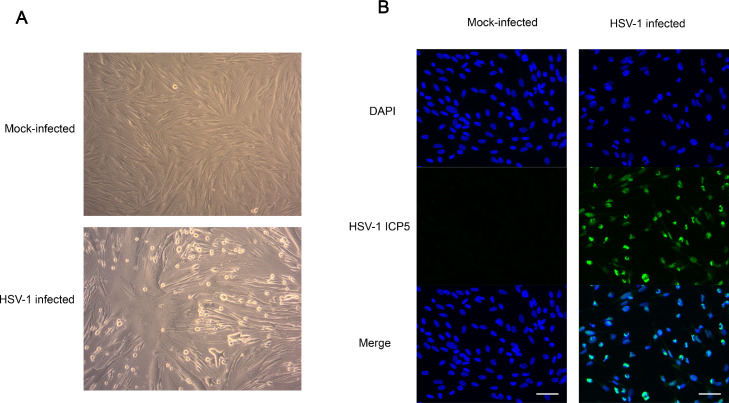
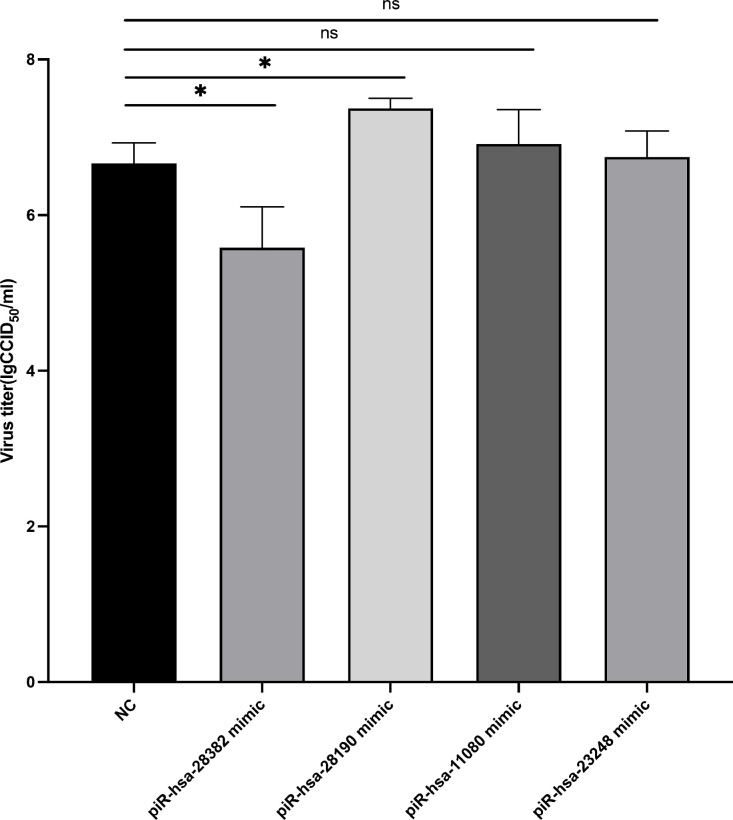
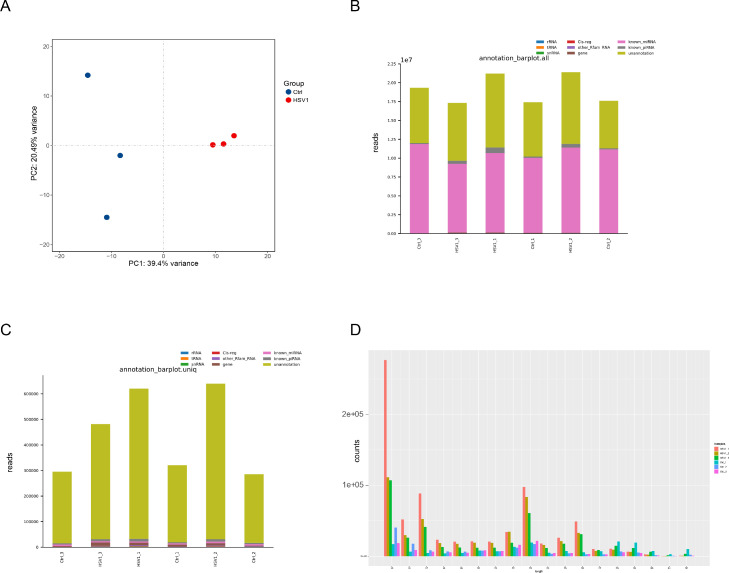
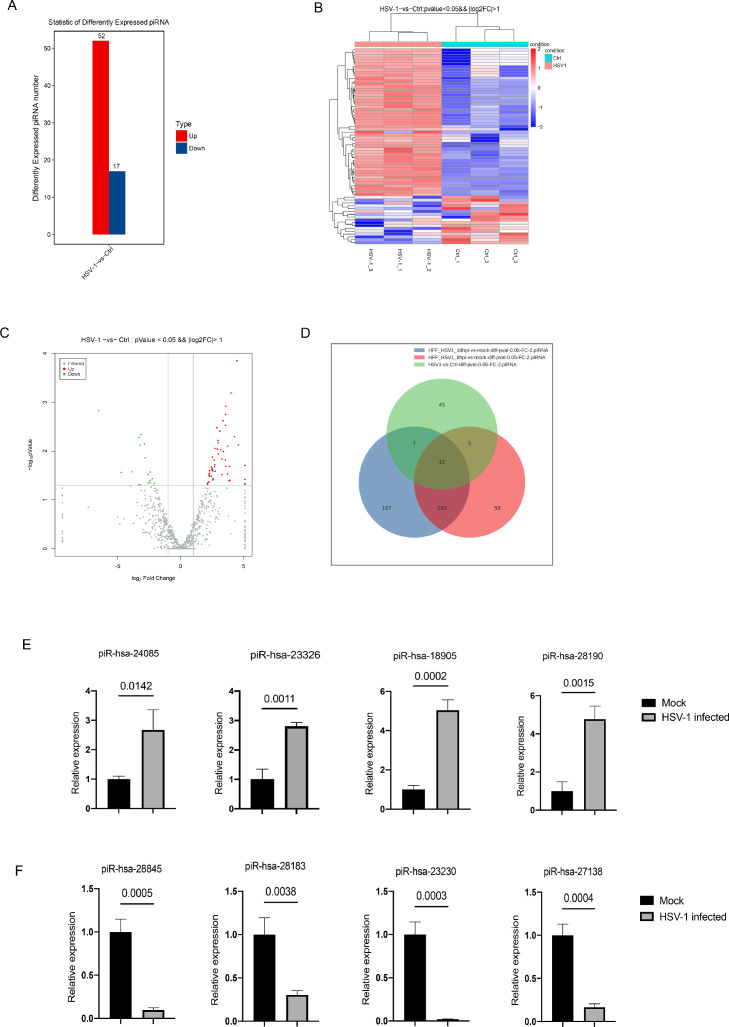
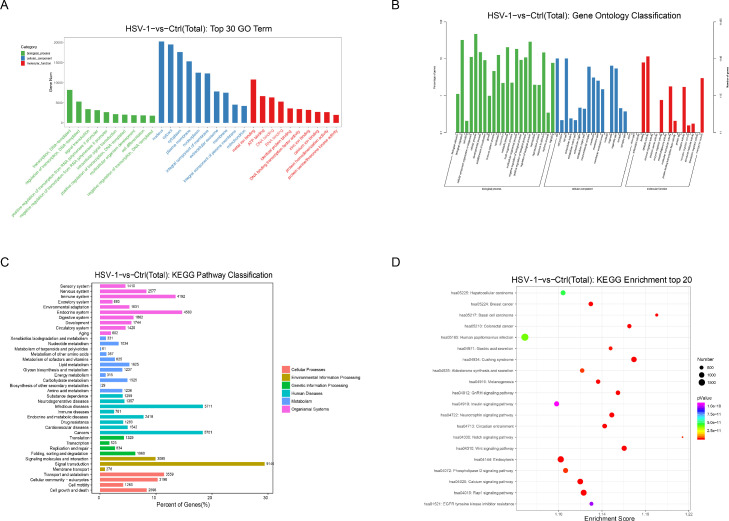
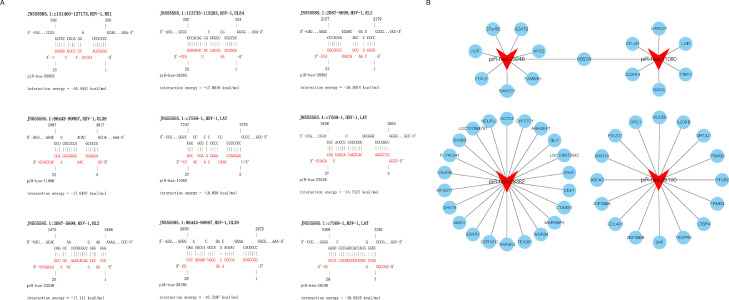
Piwi-interacting RNAs (piRNAs) are a class of non-coding RNAs that play a key role in spermatogenesis. However, little is known about their expression characterization and role in somatic cells infected with herpes simplex virus type 1 (HSV-1). In this study, we systematically investigated the cellular piRNA expression profiles of HSV-1-infected human lung fibroblasts. Compared with the control group, 69 differentially expressed piRNAs were identified in the infection group, among which 52 were up-regulated and 17 were down-regulated. The changes in the expression of 8 piRNAs were further verified by RT-qPCR with a similar expression trend. Gene ontology (GO) and Kyoto Encyclopedia of Genes and Genomes (KEGG) enrichment analysis showed that the target genes of piRNAs were mainly involved in antiviral immunity and various human disease-related signaling pathways. Furthermore, we tested the effects of four up-regulated piRNAs on viral replication by transfecting piRNA mimics. The results showed that the virus titers of the group transfected with piRNA-hsa-28,382 (alias piR-36,233) mimic decreased significantly, and that of the group transfected piRNA-hsa-28,190 (alias piR-36,041) mimic significantly increased. Overall, our results revealed the expression characteristics of piRNAs in HSV-1-infected cells. We also screened two piRNAs that potentially regulate HSV-1 replication. These results may promote a better understanding of the regulatory mechanism of pathophysiological changes induced by HSV-1 infection.
Piwi 相互作用 RNA(piRNAs)是一类非编码 RNA,在精子发生中发挥关键作用。然而,对于其在感染单纯疱疹病毒 1(HSV-1)的体细胞中的表达特征和作用知之甚少。在这项研究中,我们系统地研究了 HSV-1 感染的人肺成纤维细胞中的细胞 piRNA 表达谱。与对照组相比,在感染组中鉴定出 69 个差异表达的 piRNA,其中 52 个上调,17 个下调。8 个 piRNA 的表达变化通过 RT-qPCR 进一步验证,表达趋势相似。基因本体论(GO)和京都基因与基因组百科全书(KEGG)富集分析表明,piRNA 的靶基因主要参与抗病毒免疫和各种与人类疾病相关的信号通路。此外,我们通过转染 piRNA 模拟物测试了四种上调的 piRNA 对病毒复制的影响。结果表明,转染 piRNA-hsa-28,382(别名 piR-36,233)模拟物的组中的病毒滴度显著降低,而转染 piRNA-hsa-28,190(别名 piR-36,041)模拟物的组中的病毒滴度显著增加。总体而言,我们的结果揭示了 HSV-1 感染细胞中 piRNA 的表达特征。我们还筛选了两个可能调节 HSV-1 复制的 piRNA。这些结果可能有助于更好地理解 HSV-1 感染引起的病理生理变化的调节机制。