State Key Laboratory of Respiratory Disease, National Clinical Research Center for Respiratory Disease, Guangdong Key Laboratory of Vascular Disease, Guangzhou Institute of Respiratory Health, The First Affiliated Hospital of Guangzhou Medical University, Guangzhou, Guangdong, China.
College of Veterinary Medicine, Northwest A&F University, Yangling, Shaanxi, China.
Signal Transduct Target Ther. 2023 Mar 9;8(1):108. doi: 10.1038/s41392-023-01368-w.
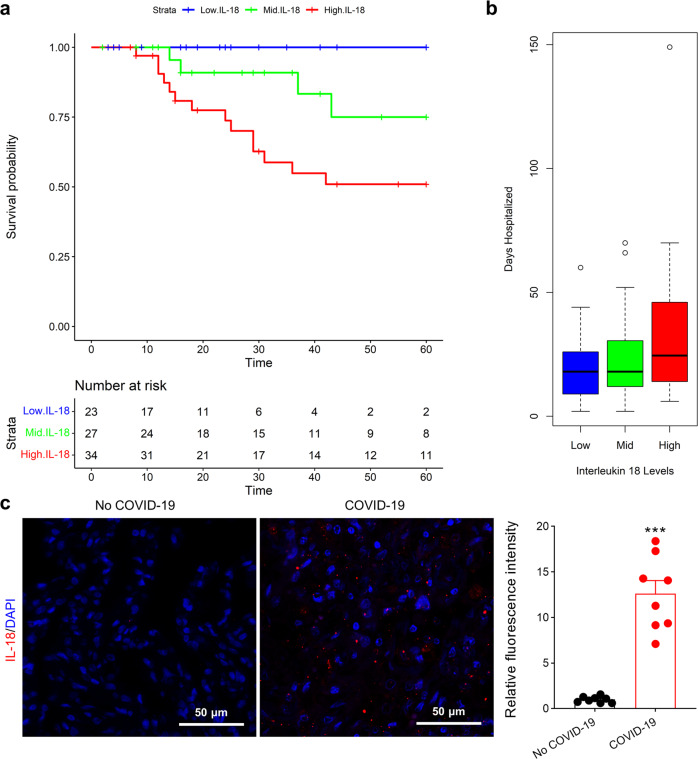
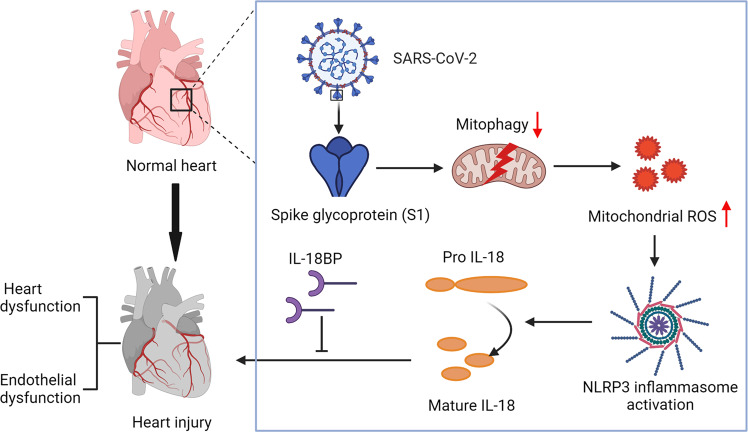
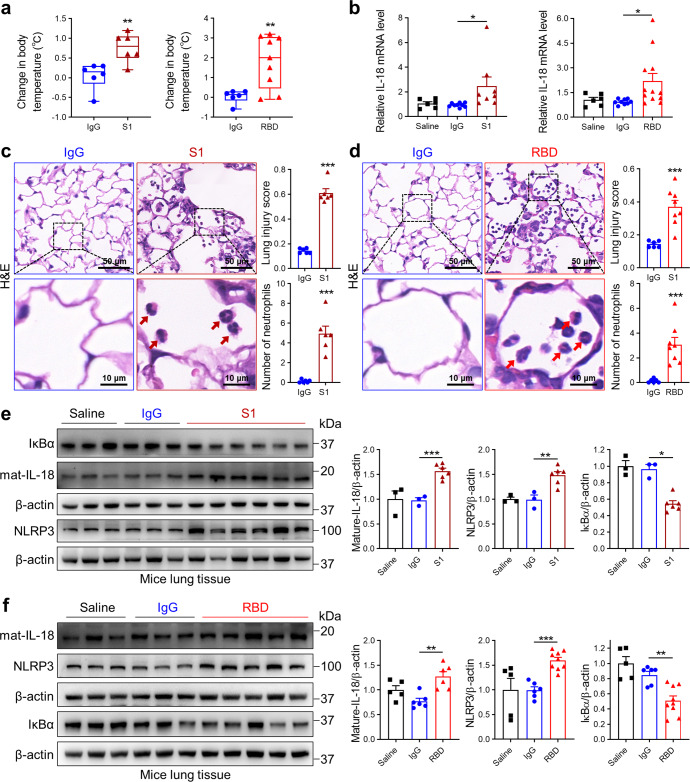
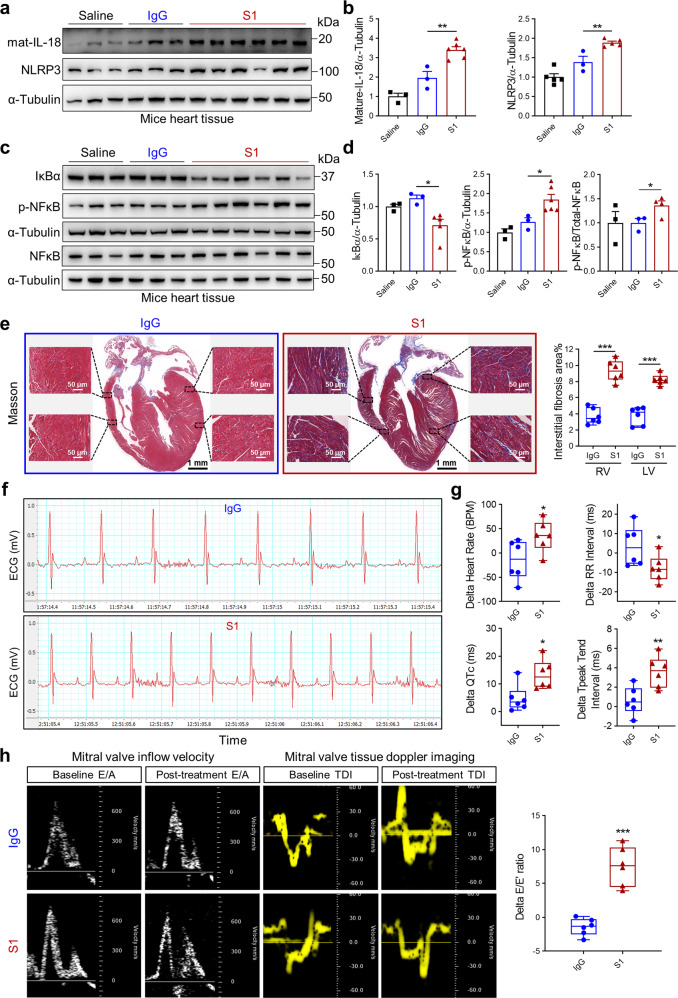
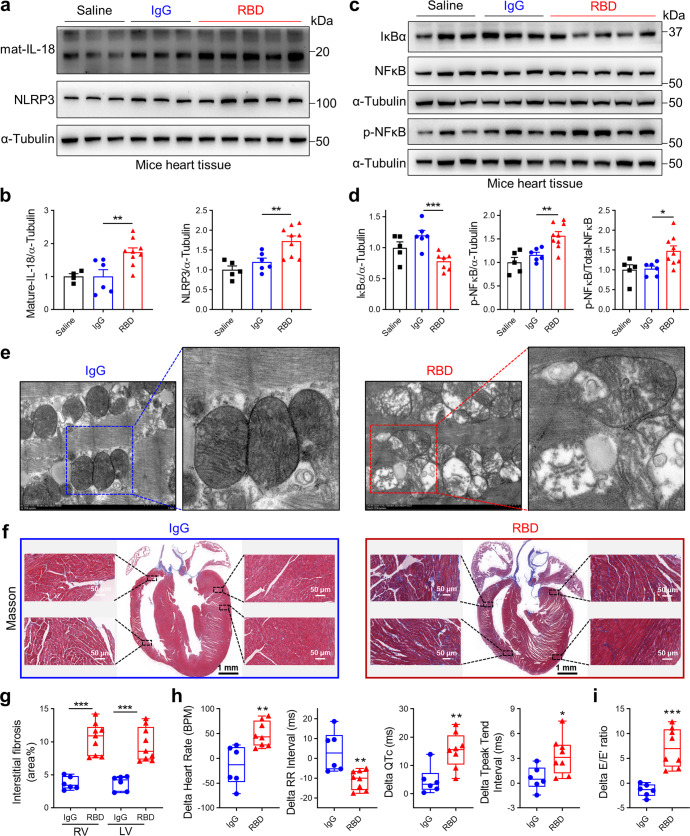
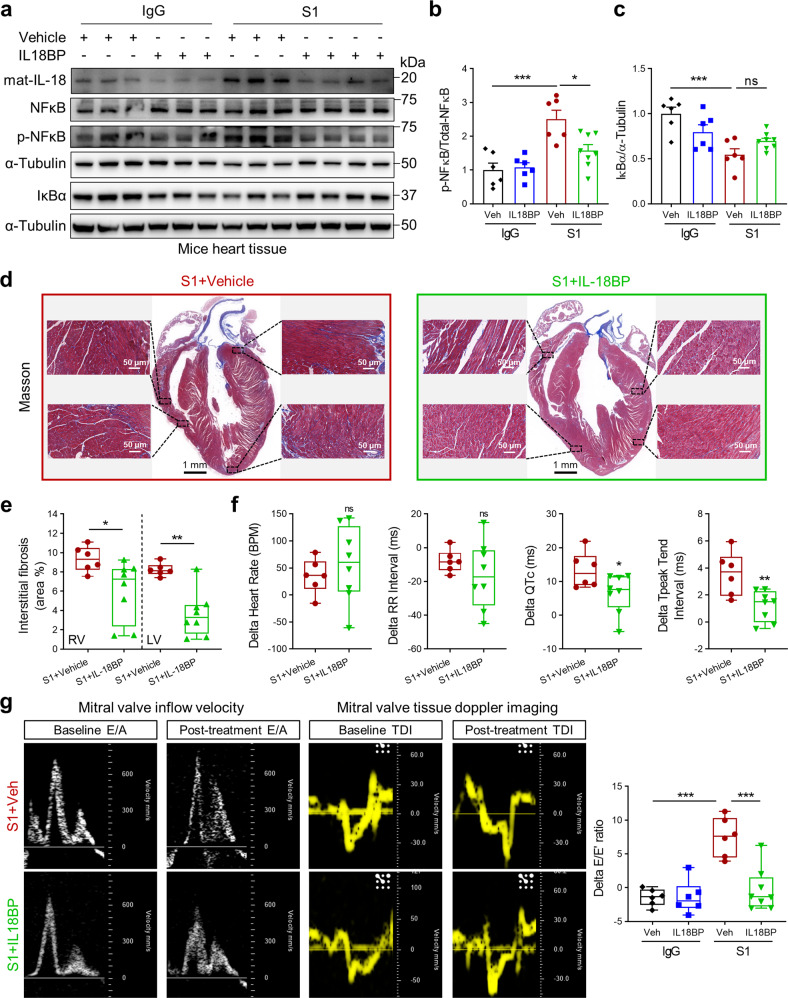
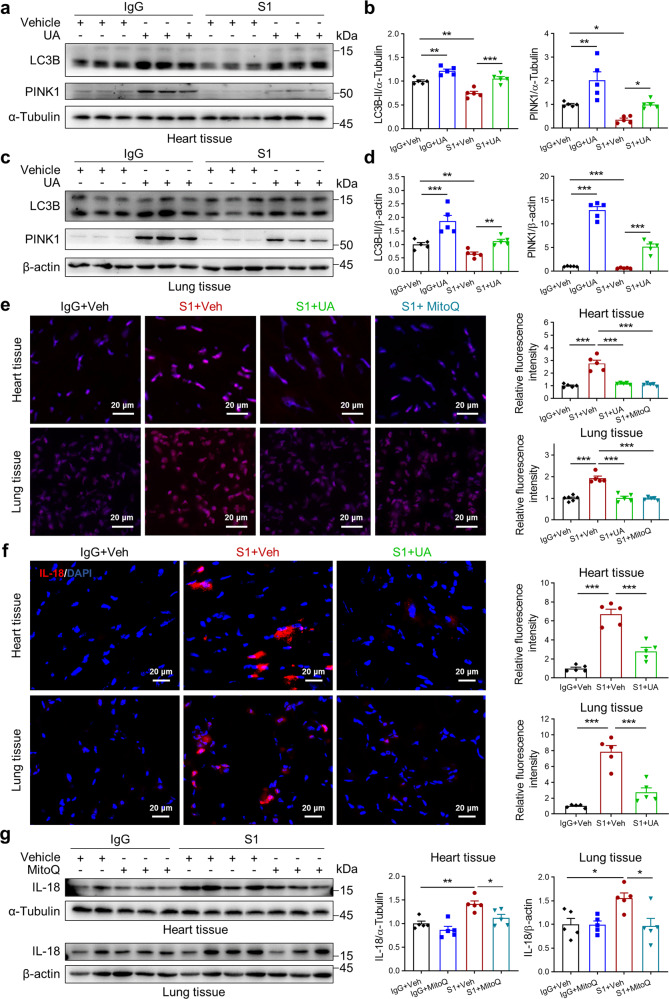
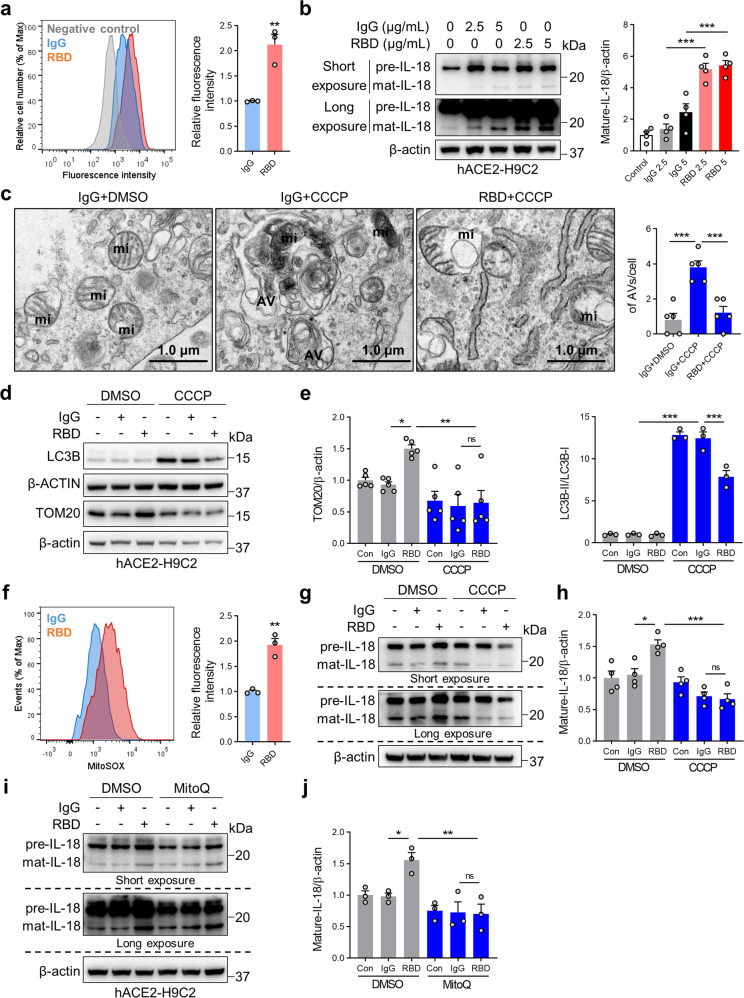
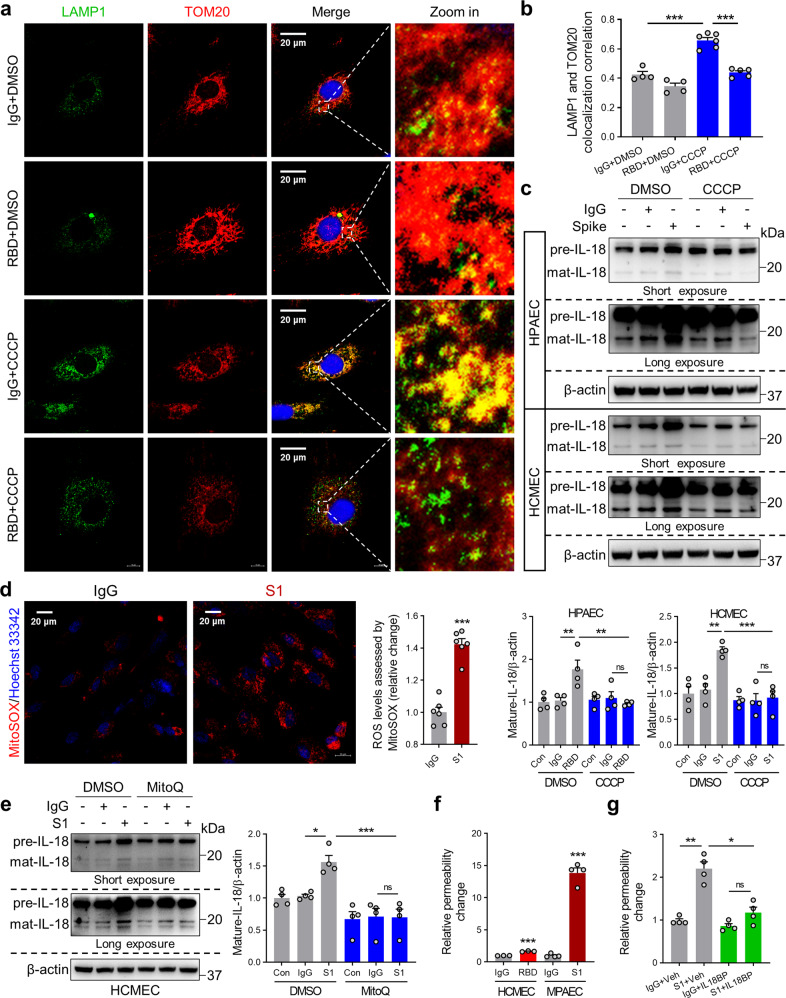
Cardiopulmonary complications are major drivers of mortality caused by the SARS-CoV-2 virus. Interleukin-18, an inflammasome-induced cytokine, has emerged as a novel mediator of cardiopulmonary pathologies but its regulation via SARS-CoV-2 signaling remains unknown. Based on a screening panel, IL-18 was identified amongst 19 cytokines to stratify mortality and hospitalization burden in patients hospitalized with COVID-19. Supporting clinical data, administration of SARS-CoV-2 Spike 1 (S1) glycoprotein or receptor-binding domain (RBD) proteins into human angiotensin-converting enzyme 2 (hACE2) transgenic mice induced cardiac fibrosis and dysfunction associated with higher NF-κB phosphorylation (pNF-κB) and cardiopulmonary-derived IL-18 and NLRP3 expression. IL-18 inhibition via IL-18BP resulted in decreased cardiac pNF-κB and improved cardiac fibrosis and dysfunction in S1- or RBD-exposed hACE2 mice. Through in vivo and in vitro work, both S1 and RBD proteins induced NLRP3 inflammasome and IL-18 expression by inhibiting mitophagy and increasing mitochondrial reactive oxygenation species. Enhancing mitophagy prevented Spike protein-mediated IL-18 expression. Moreover, IL-18 inhibition reduced Spike protein-mediated pNF-κB and EC permeability. Overall, the link between reduced mitophagy and inflammasome activation represents a novel mechanism during COVID-19 pathogenesis and suggests IL-18 and mitophagy as potential therapeutic targets.
心肺并发症是由 SARS-CoV-2 病毒引起的死亡的主要驱动因素。白细胞介素-18 是一种炎症小体诱导的细胞因子,已成为心肺病理的新型介质,但它通过 SARS-CoV-2 信号的调节仍不清楚。基于筛选面板,白细胞介素-18 在 19 种细胞因子中被确定为 COVID-19 住院患者的死亡率和住院负担分层的因子。支持临床数据表明,将 SARS-CoV-2 刺突 1(S1)糖蛋白或受体结合域(RBD)蛋白注入人血管紧张素转换酶 2(hACE2)转基因小鼠中,可诱导与更高的 NF-κB 磷酸化(pNF-κB)和心肺来源的白细胞介素-18 和 NLRP3 表达相关的心脏纤维化和功能障碍。通过白细胞介素-18 结合蛋白(IL-18BP)抑制白细胞介素-18 可减少 S1 或 RBD 暴露的 hACE2 小鼠中的心脏 pNF-κB,并改善心脏纤维化和功能障碍。通过体内和体外工作,S1 和 RBD 蛋白均通过抑制线粒体自噬和增加线粒体活性氧物种来诱导 NLRP3 炎症小体和白细胞介素-18 的表达。增强线粒体自噬可防止 Spike 蛋白介导的白细胞介素-18 表达。此外,白细胞介素-18 抑制减少了 Spike 蛋白介导的 pNF-κB 和 EC 通透性。总的来说,减少的线粒体自噬和炎症小体激活之间的联系代表了 COVID-19 发病机制中的一种新机制,并表明白细胞介素-18 和线粒体自噬是潜在的治疗靶点。