Section of Intensive Plant Food Systems, Albrecht Daniel Thaer-Institute of Agricultural and Horticultural Sciences, Humboldt Universität zu Berlin, Berlin, Germany.
Institut für Gartenbauliche Produktionssysteme, Leibniz Universität Hannover, Hannover, Germany.
Theor Appl Genet. 2023 Mar 10;136(3):34. doi: 10.1007/s00122-023-04264-7.
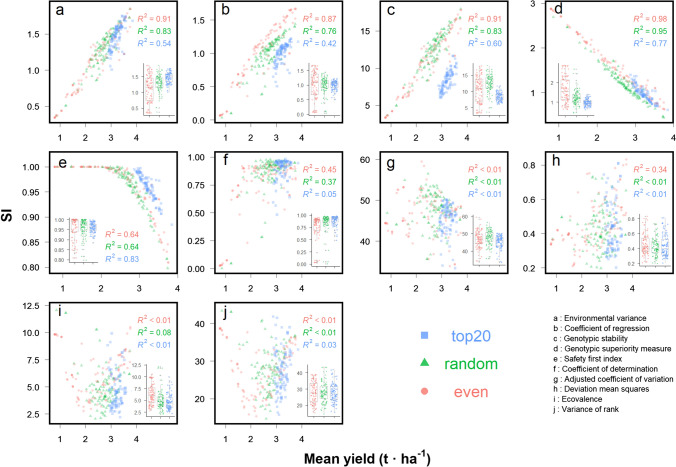
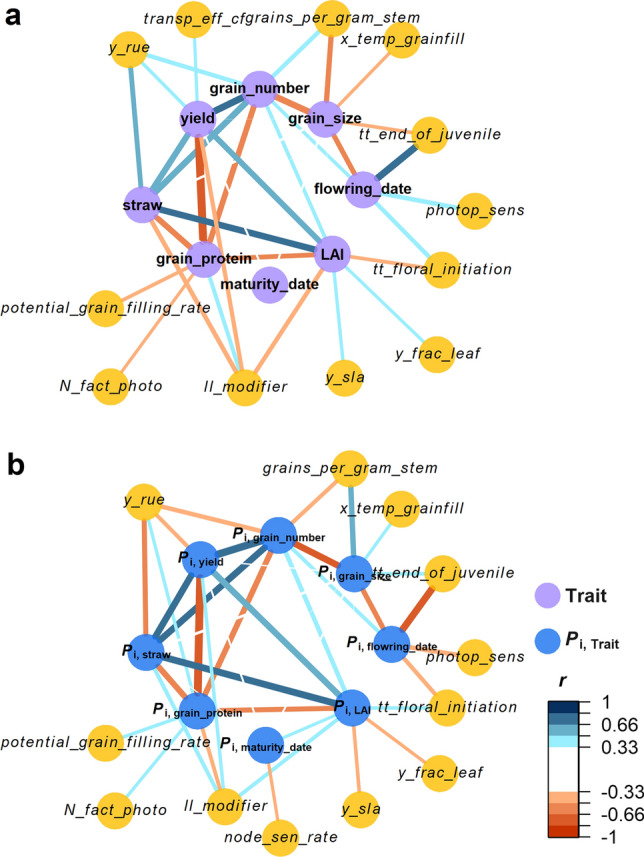
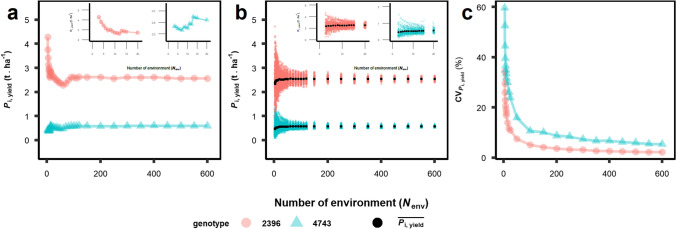
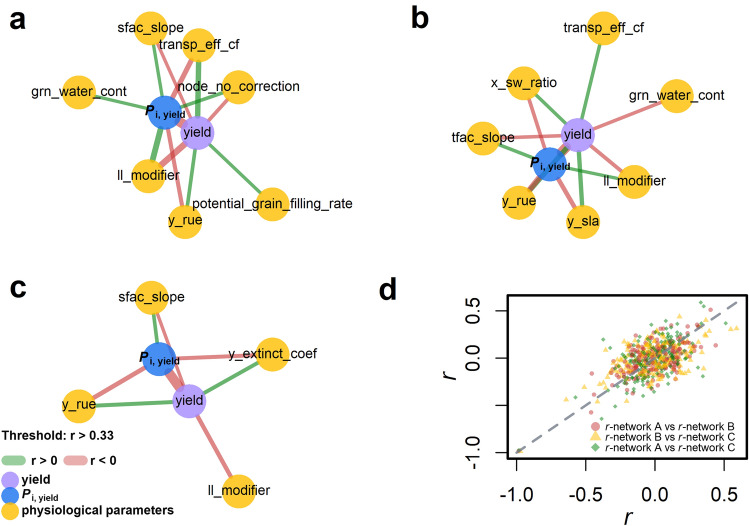
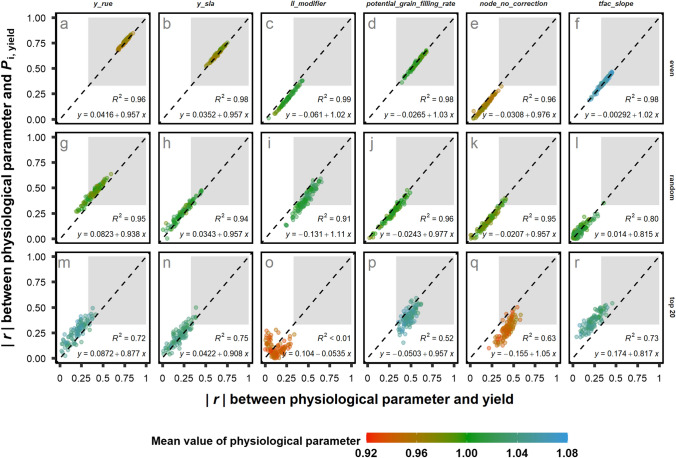
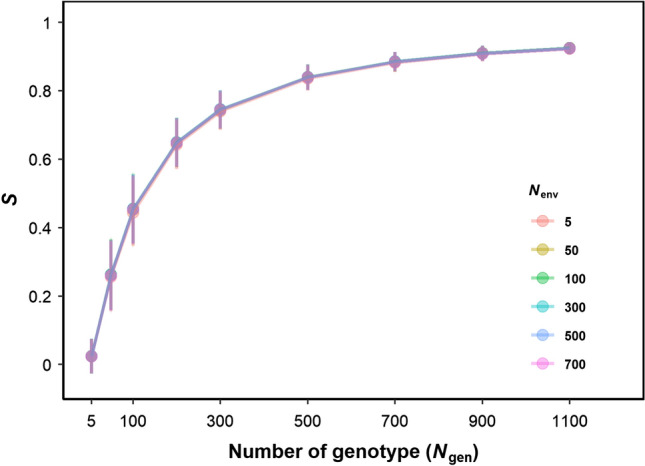
Using in silico experiment in crop model, we identified different physiological regulations of yield and yield stability, as well as quantify the genotype and environment numbers required for analysing yield stability convincingly. Identifying target traits for breeding stable and high-yielded cultivars simultaneously is difficult due to limited knowledge of physiological mechanisms behind yield stability. Besides, there is no consensus about the adequacy of a stability index (SI) and the minimal number of environments and genotypes required for evaluating yield stability. We studied this question using the crop model APSIM-Wheat to simulate 9100 virtual genotypes grown under 9000 environments. By analysing the simulated data, we showed that the shape of phenotype distributions affected the correlation between SI and mean yield and the genotypic superiority measure (P) was least affected among 11 SI. P was used as index to demonstrate that more than 150 environments were required to estimate yield stability of a genotype convincingly and more than 1000 genotypes were necessary to evaluate the contribution of a physiological parameter to yield stability. Network analyses suggested that a physiological parameter contributed preferentially to yield or P. For example, soil water absorption efficiency and potential grain filling rate explained better the variations in yield than in P; while light extinction coefficient and radiation use efficiency were more correlated with P than with yield. The high number of genotypes and environments required for studying P highlight the necessity and potential of in silico experiments to better understand the mechanisms behind yield stability.
利用作物模型中的计算机模拟实验,我们确定了产量和产量稳定性的不同生理调节方式,并定量分析了可靠分析产量稳定性所需的基因型和环境数量。由于对产量稳定性背后的生理机制了解有限,同时确定具有稳定和高产特性的目标性状具有一定难度。此外,对于稳定性指数(SI)的充分性以及评估产量稳定性所需的最小环境和基因型数量,尚未达成共识。我们使用作物模型 APSIM-Wheat 研究了这个问题,该模型模拟了在 9000 个环境中生长的 9100 个虚拟基因型。通过分析模拟数据,我们表明表型分布的形状会影响 SI 和平均产量之间的相关性,在 11 个 SI 中,基因型优势度量(P)受影响最小。我们使用 P 作为指标来证明,需要超过 150 个环境才能可靠地估计一个基因型的产量稳定性,需要超过 1000 个基因型才能评估一个生理参数对产量稳定性的贡献。网络分析表明,一个生理参数优先解释产量或 P 的变化。例如,土壤水分吸收效率和潜在籽粒灌浆速率比 P 更能解释产量的变化,而光衰减系数和辐射利用效率与 P 的相关性比产量更强。研究 P 需要大量的基因型和环境,这突出了计算机模拟实验的必要性和潜力,可以帮助我们更好地理解产量稳定性背后的机制。