Department of Public Policy and Management, Ben-Gurion University of the Negev, Beer-Sheva 84105, Israel.
Int J Environ Res Public Health. 2023 Feb 28;20(5):4335. doi: 10.3390/ijerph20054335.
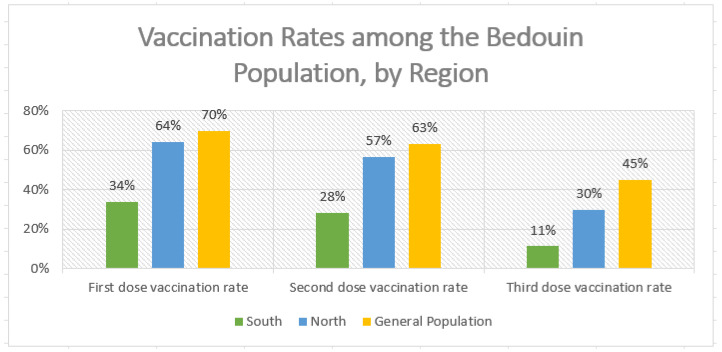
The importance of designing policy measures that government and other public bodies apply to different populations has been escalating in recent decades. This study seeks the best way to induce conservative minority groups to cooperate with healthcare policy. The case study focuses on the Bedouin population of Israel and its willingness to accept COVID-19 vaccination. The study is based on vaccination data from the Israel Ministry of Health for the country's entire Bedouin population, twenty-four semi-structured in-depth interviews with relevant key stakeholders, and the use of game-theory tools to profile the players, the utility functions, and various equilibrium combinations. By comparing the groups and integrating game-theory tools into the process, we reveal variables that may affect healthcare processes among conservative minority communities. Finally, cross-tabulating the results with the interview findings strengthens the insights and allows a culturally adjusted policy to be adopted. The different starting points of different minority populations have implications for the design of requisite policies in both the short and the long terms. The analysis of the game allowed us to indicate the strategy that policymakers should adopt in consideration of variables that should be taken into account in order to improve cooperation and the ability to apply policy. To increase vaccination rates among conservative minority communities in general and the Bedouin population in particular, trust in the government must be increased in the long term. In the short term, trust in the medical profession must be increased, and also health literacy.
近几十年来,设计政府和其他公共机构针对不同人群的政策措施的重要性一直在不断提高。本研究旨在寻求最佳方法,以促使保守的少数群体与医疗保健政策合作。本案例研究以以色列的贝都因人口及其对接种 COVID-19 疫苗的意愿为重点。该研究基于以色列卫生部针对该国全体贝都因人口的疫苗接种数据、对相关利益攸关方的二十四次半结构化深入访谈,以及使用博弈论工具来描述参与者、效用函数和各种均衡组合。通过比较这些群体并将博弈论工具纳入该过程,我们揭示了可能影响保守少数族裔社区医疗保健流程的变量。最后,将结果与访谈结果交叉制表,增强了见解,并允许采用经过文化调整的政策。不同少数群体的不同起点对短期和长期所需政策的设计都有影响。博弈分析使我们能够指出政策制定者在考虑应考虑哪些变量以提高合作和政策实施能力时应采取的策略。为了提高保守的少数族裔社区,特别是贝都因人口的疫苗接种率,从长远来看,必须增强公众对政府的信任。从短期来看,必须提高对医疗行业的信任,同时还要提高健康素养。