Department of Food Technology and Assessment, Institute of Food Sciences, Warsaw University of Life Sciences-SGGW, 02-776 Warsaw, Poland.
Department of Food Engineering and Process Management, Institute of Food Sciences, Warsaw University of Life Sciences-SGGW, 02-776 Warsaw, Poland.
Molecules. 2023 Feb 21;28(5):2018. doi: 10.3390/molecules28052018.
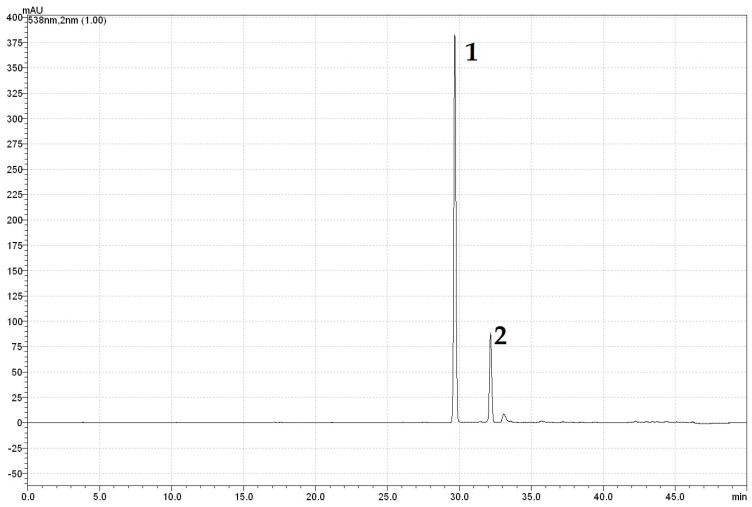
High-pressure homogenization (HPH) is considered an innovative and modern method of processing and preserving liquid and semi-liquid foods. The aim of this research was to examine the impact of HPH processing on the content of betalain pigments and physicochemical properties of beetroot juice. Combinations of the following HPH parameters were tested: the pressure used (50, 100, 140 MPa), the number of cycles (1 and 3) and the applied cooling or no cooling. The physicochemical analysis of the obtained beetroot juices was based on the determination of the extract, acidity, turbidity, viscosity and color values. Use of higher pressures and a greater number of cycles reduces the turbidity (NTU) of the juice. Moreover, in order to maintain the highest possible extract content and a slight color change of the beetroot juice, it was crucial to perform sample cooling after the HPH process. The quantitative and qualitative profiles of betalains have been also determined in the juices. In terms of the content of betacyanins and betaxanthins, the highest values were found in untreated juice at 75.3 mg and 24.8 mg per 100 mL, respectively. The high-pressure homogenization process resulted in a decrease in the content of betacyanins in the range of 8.5-20.2% and of betaxanthins in the range of 6.5-15.0%, depending on the parameters used. Studies have shown that that the number of cycles was irrelevant, but an increase in pressure from 50 MPa to 100 or 140 MPa had a negative effect on pigment content. Additionally, juice cooling significantly limits the degradation of betalains in beetroot juice.
高压均质(HPH)被认为是一种创新的现代液体和半液体食品加工和保存方法。本研究旨在研究 HPH 处理对甜菜根汁中甜菜红素含量和理化性质的影响。测试了以下 HPH 参数的组合:使用的压力(50、100、140 MPa)、循环次数(1 和 3)以及应用冷却或不冷却。获得的甜菜根汁的理化分析基于提取物、酸度、浊度、粘度和颜色值的测定。使用更高的压力和更多的循环次数会降低果汁的浊度(NTU)。此外,为了保持尽可能高的提取物含量和甜菜根汁的轻微颜色变化,在 HPH 处理后对样品进行冷却至关重要。还确定了果汁中甜菜红素的定量和定性特征。就甜菜青素和甜菜黄素的含量而言,未处理的果汁中分别发现最高值为 75.3 毫克和 24.8 毫克/100 毫升。高压均质化过程导致甜菜青素含量下降 8.5-20.2%,甜菜黄素含量下降 6.5-15.0%,具体取决于使用的参数。研究表明,循环次数无关紧要,但压力从 50 MPa 增加到 100 MPa 或 140 MPa 对色素含量有负面影响。此外,冷却果汁可显著限制甜菜根汁中甜菜红素的降解。