State Key Laboratory of Component-based Chinese Medicine, School of Chinese Materia Medica, Tianjin University of Traditional Chinese Medicine, Tianjin 301617, China.
Nutrients. 2023 Feb 24;15(5):1147. doi: 10.3390/nu15051147.
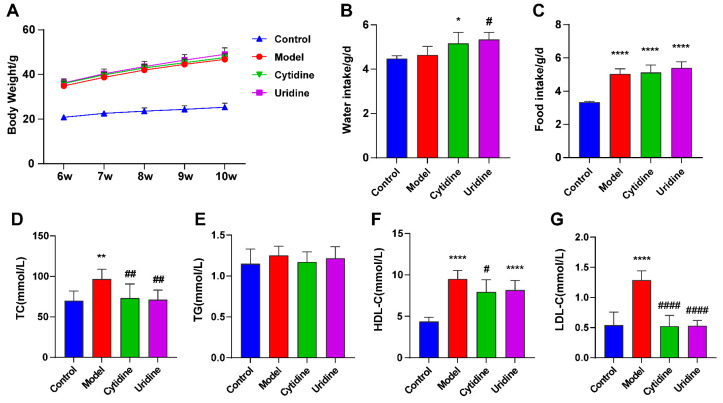
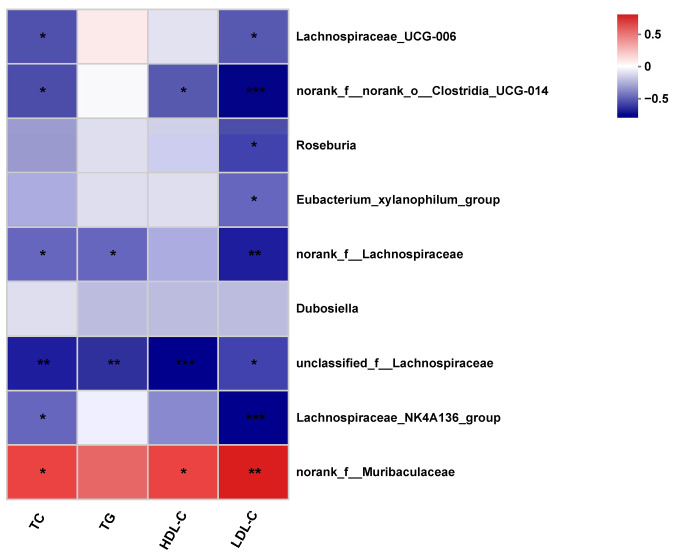
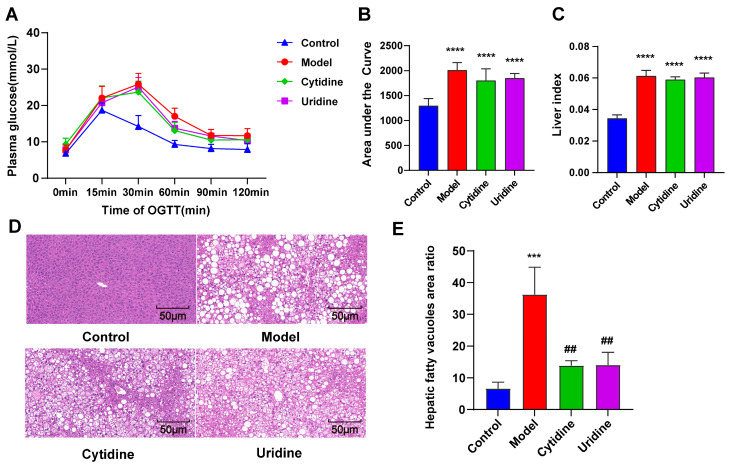
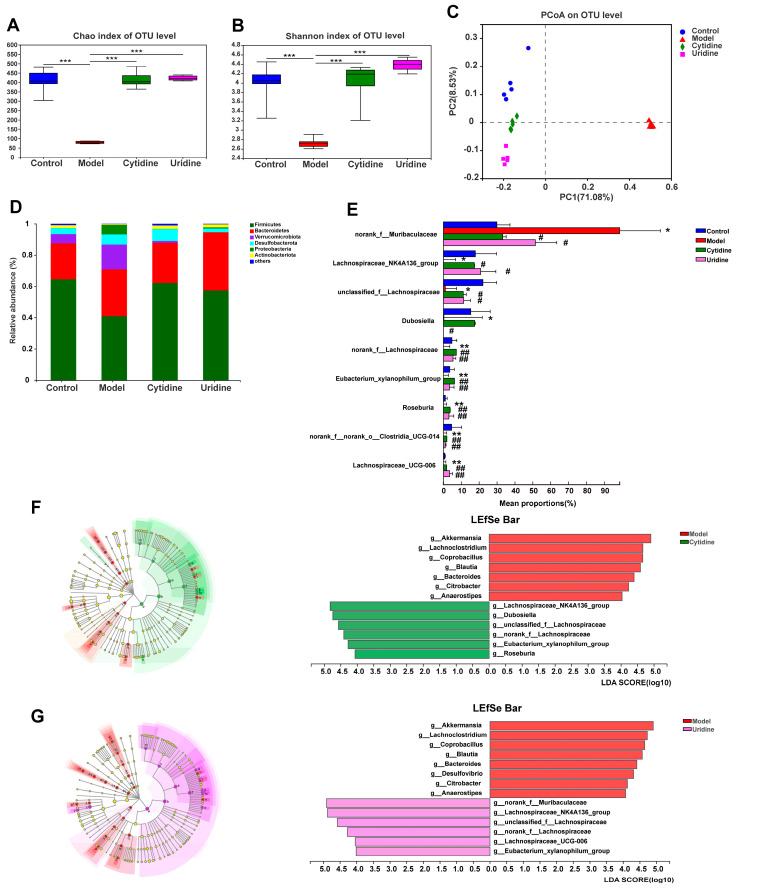
Cytidine and uridine are endogenous metabolites in the pyrimidine metabolism pathway, and cytidine is a substrate that can be metabolized into uridine via cytidine deaminase. Uridine has been widely reported to be effective in regulating lipid metabolism. However, whether cytidine could ameliorate lipid metabolism disorder has not yet been investigated. In this research, ob/ob mice were used, and the effect of cytidine (0.4 mg/mL in drinking water for five weeks) on lipid metabolism disorder was evaluated in terms of an oral glucose tolerance test, serum lipid levels, liver histopathological analysis and gut microbiome analysis. Uridine was used as a positive control. Our findings reveal that cytidine could alleviate certain aspects of dyslipidemia and improve hepatic steatosis via modulating the gut microbiota composition in ob/ob mice, especially increasing the abundance of short-chain fatty acids-producing microbiota. These results suggest that cytidine supplementation could be a potential therapeutic approach for dyslipidemia.
胞苷和尿苷是嘧啶代谢途径中的内源性代谢物,胞苷是一种可通过胞苷脱氨酶代谢为尿苷的底物。尿苷已被广泛报道能有效调节脂代谢。然而,胞苷是否能改善脂代谢紊乱尚未得到研究。本研究采用 ob/ob 小鼠,通过口服葡萄糖耐量试验、血清脂质水平、肝组织病理学分析和肠道微生物组分析,评估胞苷(饮用水中 0.4mg/ml,持续五周)对脂代谢紊乱的影响。尿苷被用作阳性对照。我们的研究结果表明,胞苷通过调节 ob/ob 小鼠的肠道微生物群落组成,特别是增加短链脂肪酸产生菌的丰度,可改善某些方面的血脂异常和肝脂肪变性。这些结果表明,胞苷补充可能是治疗血脂异常的一种潜在方法。