Azizollahi Nastaran, Taheri Ensiyeh, Mehdi Amin Mohammad, Rahimi Arvin, Fatehizadeh Ali, Sun Xun, Manickam Sivakumar
Department of Environmental Health Engineering, School of Health, Isfahan University of Medical Sciences, Isfahan, Iran; Student Research Committee, School of Health, Isfahan University of Medical Sciences, Isfahan, Iran.
Department of Environmental Health Engineering, School of Health, Isfahan University of Medical Sciences, Isfahan, Iran; Environment Research Center, Research Institute for Primordial Prevention of Non-Communicable Disease, Isfahan University of Medical Sciences, Isfahan, Iran.
Ultrason Sonochem. 2023 May;95:106350. doi: 10.1016/j.ultsonch.2023.106350. Epub 2023 Mar 2.
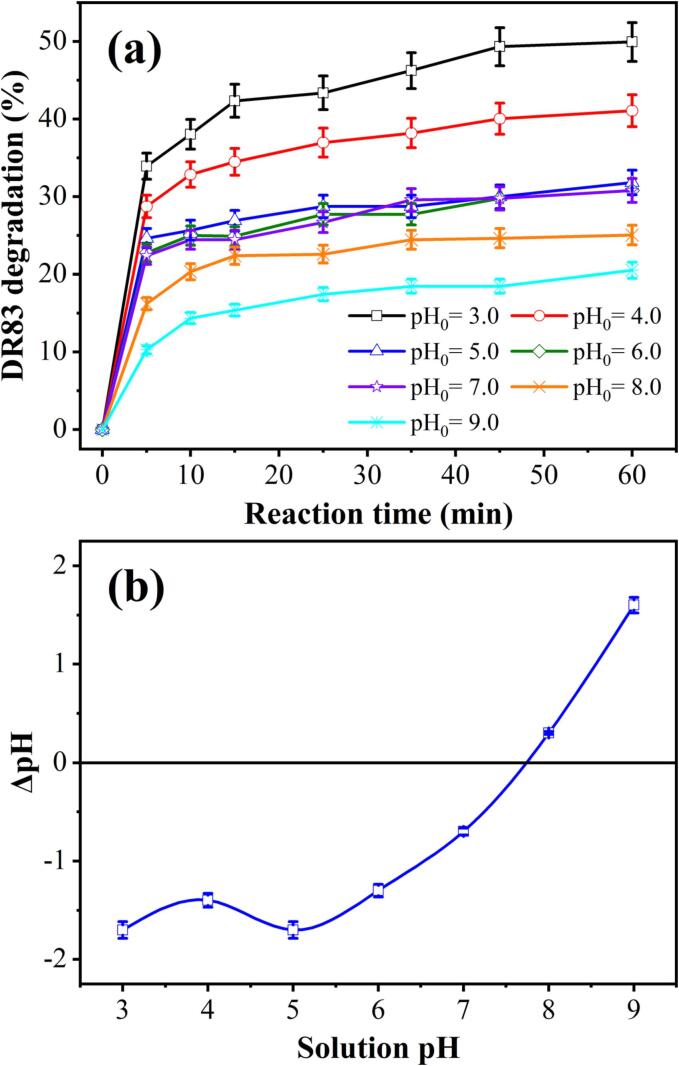
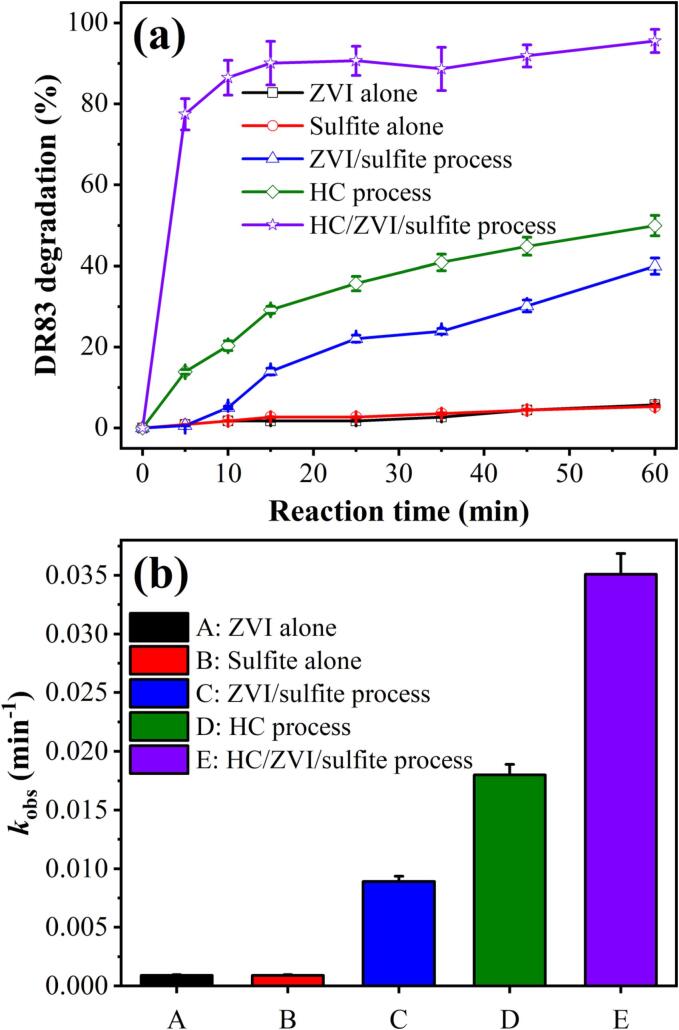
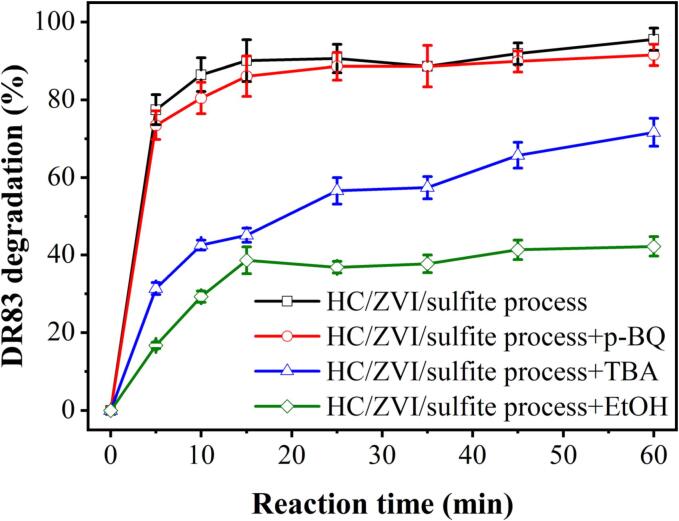
In the present research, hydrodynamic cavitation (HC) and zero-valent iron (ZVI) were used to generate sulfate radicals through sulfite activation as a new source of sulfate for the efficient degradation of Direct Red 83 (DR83). A systematic analysis was carried out to examine the effects of operational parameters, including the pH of the solution, the doses of ZVI and sulfite salts, and the composition of the mixed media. Based on the results, the degradation efficiency of HC/ZVI/sulfite is highly dependent upon the pH of the solution and the dosage of both ZVI and sulfite. Degradation efficiency decreased significantly with increasing solution pH due to a lower corrosion rate for ZVI at high pH. The corrosion rate of ZVI can be accelerated by releasing Fe ions in an acid medium, reducing the concentration of radicals generated even though ZVI is solid/originally non-soluble in water. The degradation efficiency of the HC/ZVI/sulfite process (95.54 % + 2.87%) was found to be significantly higher under optimal conditions than either of the individual processes (<6% for ZVI and sulfite and 68.21±3.41% for HC). Based on the first-order kinetic model, the HC/ZVI/sulfite process has the highest degradation constant of 0.035±0.002 min. The contribution of radicals to the degradation of DR83 by the HC/ZVI/sulfite process was 78.92%, while the contribution of SO and OH radicals was 51.57% and 48.43%, respectively. In the presence of HCO and CO ions, DR83 degradation is retarded, whereas SO and Cl ions promote degradation. To summarise, the HC/ZVI/sulfite treatment can be viewed as an innovative and promising method of treating recalcitrant textile wastewater.
在本研究中,采用水力空化(HC)和零价铁(ZVI)通过亚硫酸盐活化产生硫酸根自由基,作为一种新的硫酸根来源,用于高效降解直接红83(DR83)。进行了系统分析,以研究操作参数的影响,包括溶液的pH值、ZVI和亚硫酸盐的剂量以及混合介质的组成。结果表明,HC/ZVI/亚硫酸盐的降解效率高度依赖于溶液的pH值以及ZVI和亚硫酸盐的用量。随着溶液pH值的升高,降解效率显著降低,这是由于ZVI在高pH值下的腐蚀速率较低。在酸性介质中释放铁离子可加速ZVI的腐蚀速率,尽管ZVI是固体/原本不溶于水,但这会降低产生的自由基浓度。发现在最佳条件下,HC/ZVI/亚硫酸盐工艺的降解效率(95.54% + 2.87%)明显高于任何单个工艺(ZVI和亚硫酸盐的降解效率<6%,HC的降解效率为68.21±3.41%)。基于一级动力学模型,HC/ZVI/亚硫酸盐工艺具有最高的降解常数,为0.035±0.002 min。在HC/ZVI/亚硫酸盐工艺中,自由基对DR83降解的贡献为78.92%,而SO和OH自由基的贡献分别为51.57%和48.43%。在存在HCO和CO离子的情况下,DR83的降解受到抑制,而SO和Cl离子则促进降解。总之,HC/ZVI/亚硫酸盐处理可被视为一种创新且有前景的处理难降解纺织废水的方法。