Guangzhou Eighth People's Hospital, Guangzhou Medical University, Guangzhou, 510060, China.
Institute of Human Virology, Key Laboratory of Tropical Disease Control of Ministry Education, Guangdong Engineering Research Center for Antimicrobial Agent and Immunotechnology, Zhongshan School of Medicine, Sun Yat-sen University, Guangzhou, 510080, China; Guangzhou Laboratory, Bio-Island, Guangzhou, 510320, China.
Virol Sin. 2023 Jun;38(3):398-408. doi: 10.1016/j.virs.2023.03.001. Epub 2023 Mar 11.
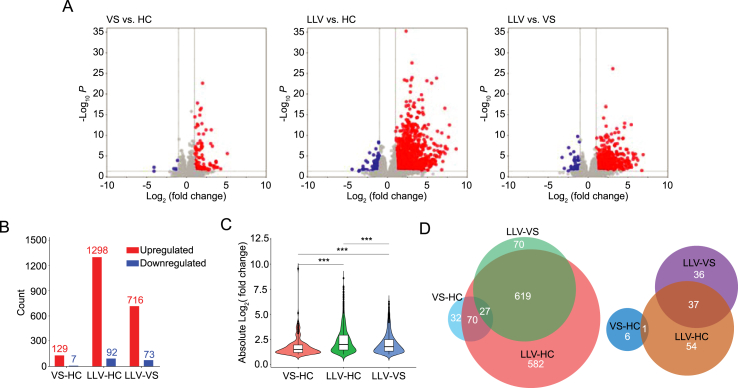
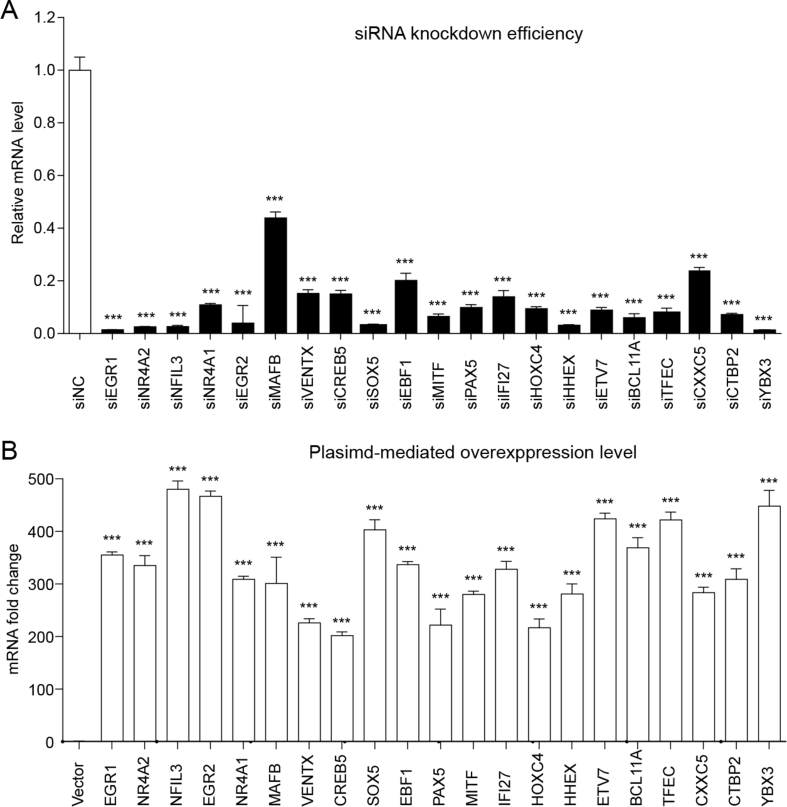
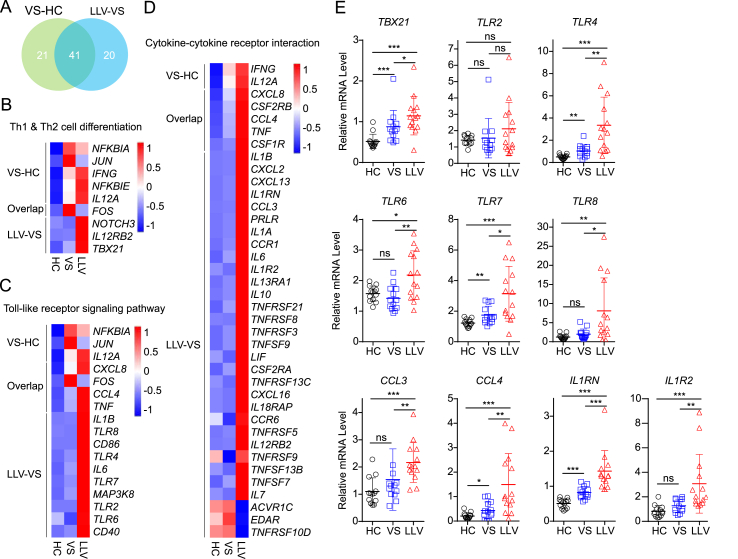
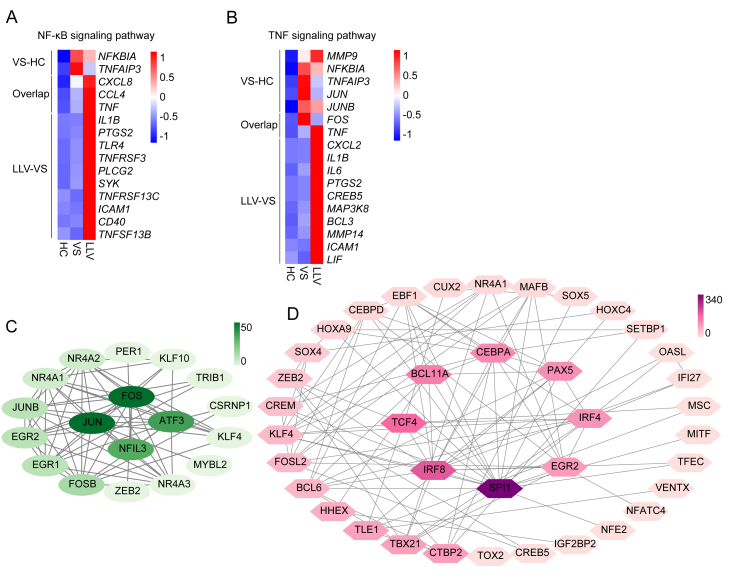
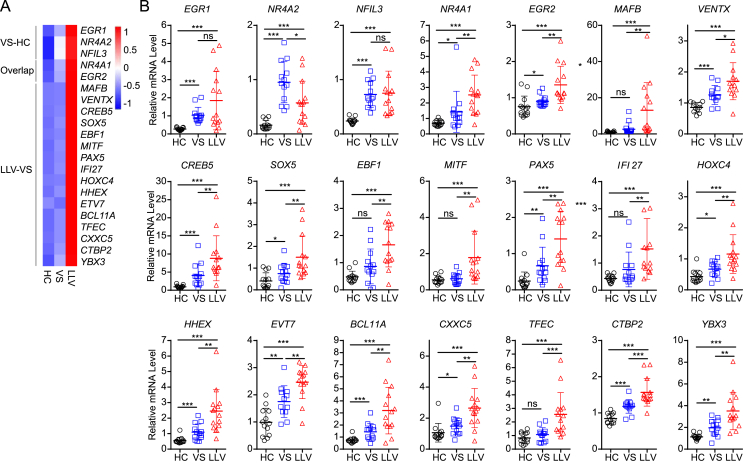
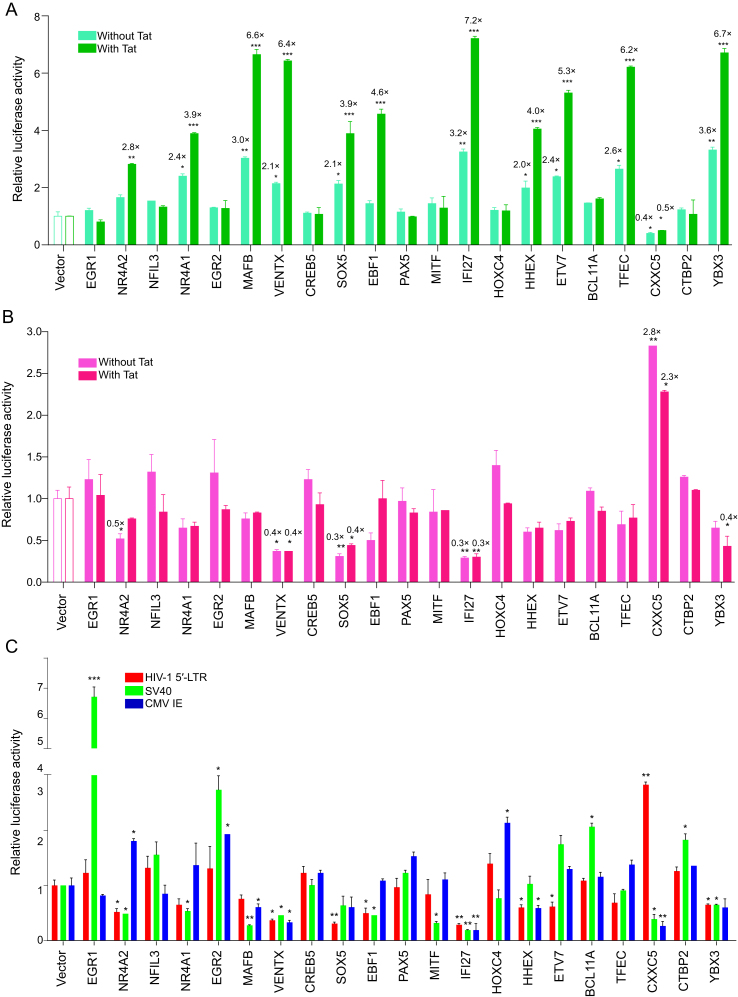
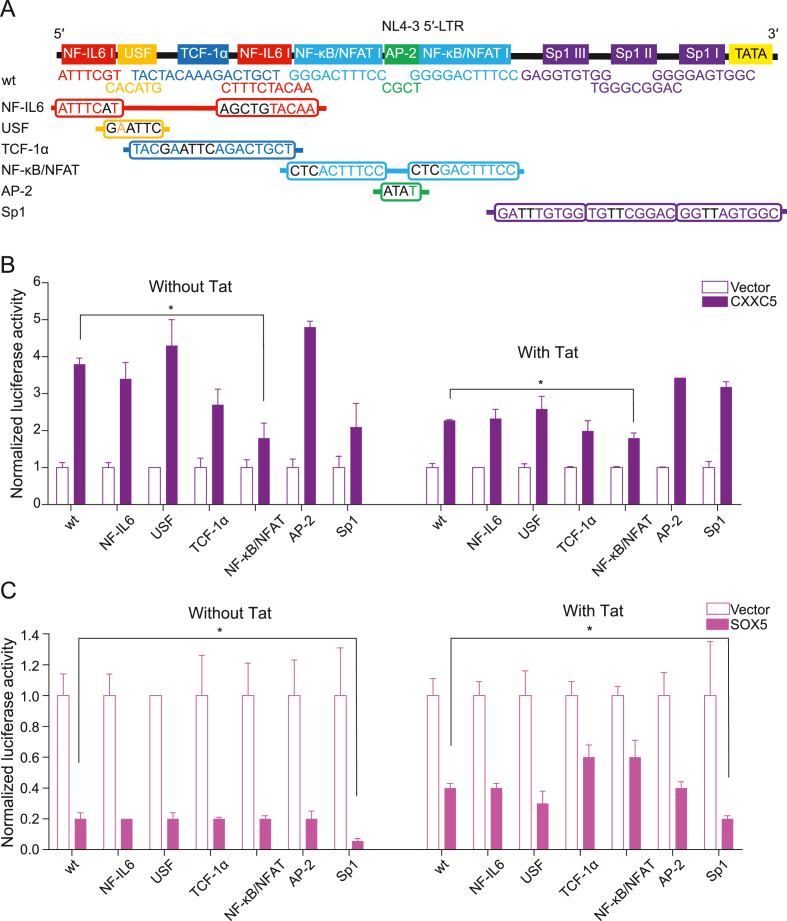
Some HIV-infected individuals receiving ART develop low-level viremia (LLV), with a plasma viral load of 50-1000 copies/mL. Persistent low-level viremia is associated with subsequent virologic failure. The peripheral blood CD4 T cell pool is a source of LLV. However, the intrinsic characteristics of CD4 T cells in LLV which may contribute to low-level viremia are largely unknown. We analyzed the transcriptome profiling of peripheral blood CD4 T cells from healthy controls (HC) and HIV-infected patients receiving ART with either virologic suppression (VS) or LLV. To identify pathways potentially responding to increasing viral loads from HC to VS and to LLV, KEGG pathways of differentially expressed genes (DEGs) were acquired by comparing VS with HC (VS-HC group) and LLV with VS (LLV-VS group), and overlapped pathways were analyzed. Characterization of DEGs in key overlapping pathways showed that CD4 T cells in LLV expressed higher levels of Th1 signature transcription factors (TBX21), toll-like receptors (TLR-4, -6, -7 and -8), anti-HIV entry chemokines (CCL3 and CCL4), and anti-IL-1β factors (ILRN and IL1R2) compared to VS. Our results also indicated activation of the NF-κB and TNF signaling pathways that could promote HIV-1 transcription. Finally, we evaluated the effects of 4 and 17 transcription factors that were upregulated in the VS-HC and LLV-VS groups, respectively, on HIV-1 promoter activity. Functional studies revealed that CXXC5 significantly increased, while SOX5 markedly suppressed HIV-1 transcription. In summary, we found that CD4 T cells in LLV displayed a distinct mRNA profiling compared to that in VS, which promoted HIV-1 replication and reactivation of viral latency and may eventually contribute to virologic failure in patients with persistent LLV. CXXC5 and SOX5 may serve as targets for the development of latency-reversing agents.
一些接受抗逆转录病毒治疗(ART)的 HIV 感染者会出现低水平病毒血症(LLV),其血浆病毒载量为 50-1000 拷贝/ml。持续性低水平病毒血症与随后的病毒学失败相关。外周血 CD4 T 细胞池是 LLV 的来源。然而,导致 LLV 的 CD4 T 细胞的内在特征在很大程度上尚不清楚。我们分析了来自健康对照者(HC)和接受 ART 治疗且病毒学抑制(VS)或 LLV 的 HIV 感染者的外周血 CD4 T 细胞的转录组谱。为了鉴定从 HC 到 VS 和 LLV 时可能对病毒载量增加做出反应的途径,我们通过比较 VS 与 HC(VS-HC 组)和 LLV 与 VS(LLV-VS 组)来获得差异表达基因(DEG)的 KEGG 途径,并分析重叠途径。关键重叠途径中 DEG 的特征表明,与 VS 相比,LLV 中的 CD4 T 细胞表达更高水平的 Th1 特征转录因子(TBX21)、Toll 样受体(TLR-4、-6、-7 和-8)、抗 HIV 进入趋化因子(CCL3 和 CCL4)和抗 IL-1β 因子(ILRN 和 IL1R2)。我们的结果还表明,NF-κB 和 TNF 信号通路的激活可能会促进 HIV-1 转录。最后,我们评估了分别在 VS-HC 和 LLV-VS 组中上调的 4 种和 17 种转录因子对 HIV-1 启动子活性的影响。功能研究表明,CXXC5 显著增加,而 SOX5 则明显抑制 HIV-1 转录。总之,我们发现与 VS 相比,LLV 中的 CD4 T 细胞表现出明显不同的 mRNA 谱,从而促进 HIV-1 复制和病毒潜伏的重新激活,最终可能导致持续性 LLV 患者的病毒学失败。CXXC5 和 SOX5 可作为开发潜伏逆转剂的靶标。