Huang Yan, Zhang Xuehao, Tang Jia, Xia Yuqi, Yang Xiaotong, Zhang Yanmei, Wei Chaogang, Ruan Ruiqi, Ying Hang, Liu Yuhe
School of Medical Technology and Information Engineering, Zhejiang Chinese Medical University, Hangzhou, China.
School of Management, Beijing University of Chinese Medicine, Beijing, China.
Front Psychol. 2023 Feb 22;14:1095777. doi: 10.3389/fpsyg.2023.1095777. eCollection 2023.
The vestibular system is anatomically connected to extensive regions of the cerebral cortex, hippocampus, and amygdala. However, studies focusing on the impact of vestibular impairment on visuospatial cognition ability are limited. This study aimed to develop a mobile tablet-based vestibular cognitive assessment system (VCAS), enhance the dynamic and three-dimensional (3D) nature of the test conditions, and comprehensively evaluate the visuospatial cognitive ability of patients with vestibular dysfunction.
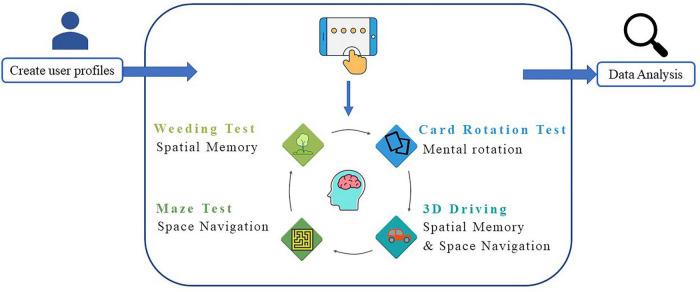
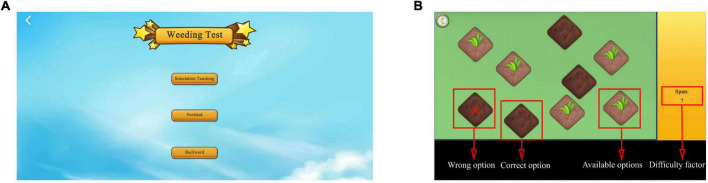
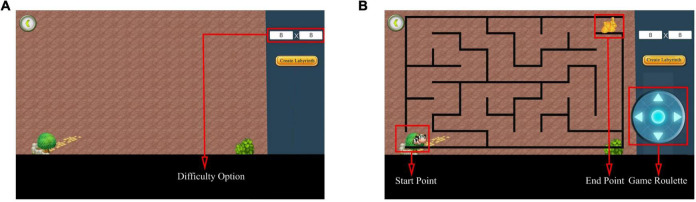
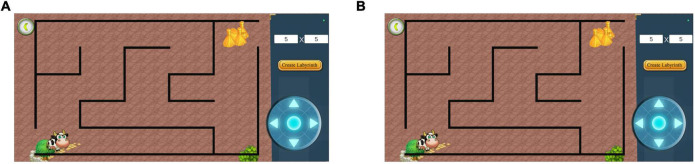
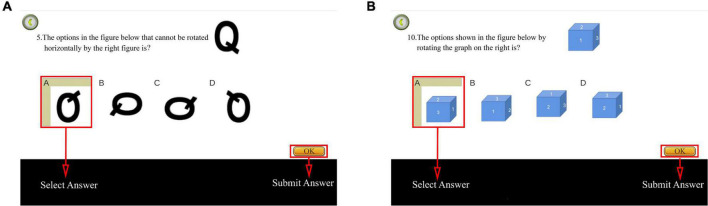
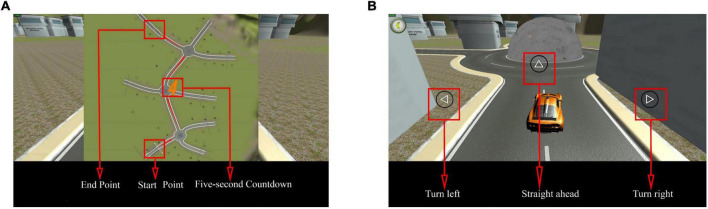
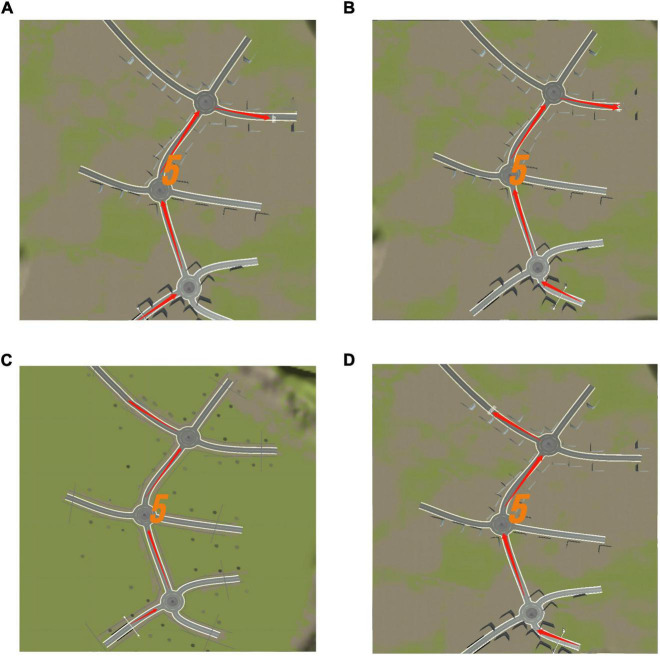
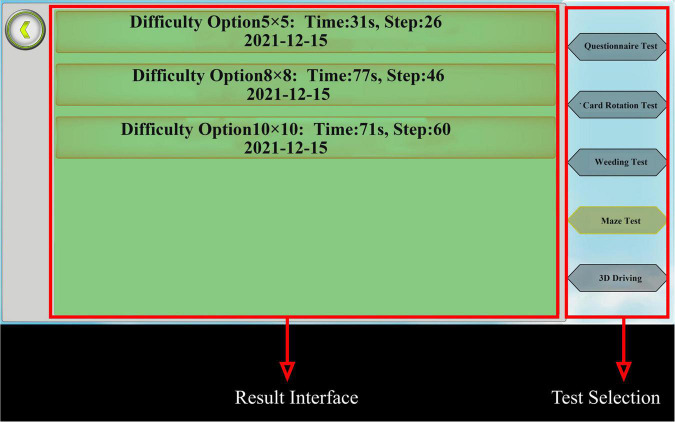
First, the VCAS assessment dimensions (spatial memory, spatial navigation, and mental rotation) and test content (weeding, maze, card rotation, and 3D driving tests) were determined based on expert interviews. Second, VCAS was developed based on Unity3D, using the C# language and ILruntime hot update framework development technology, combined with the A* algorithm, prime tree algorithm, and dynamic route rendering. Further, the online test was built using relevant game business logic. Finally, healthy controls (HC) and 78 patients with vertigo (VP) were recruited for the VCAS test. The validity of VCAS was verified using the test results of random controls.
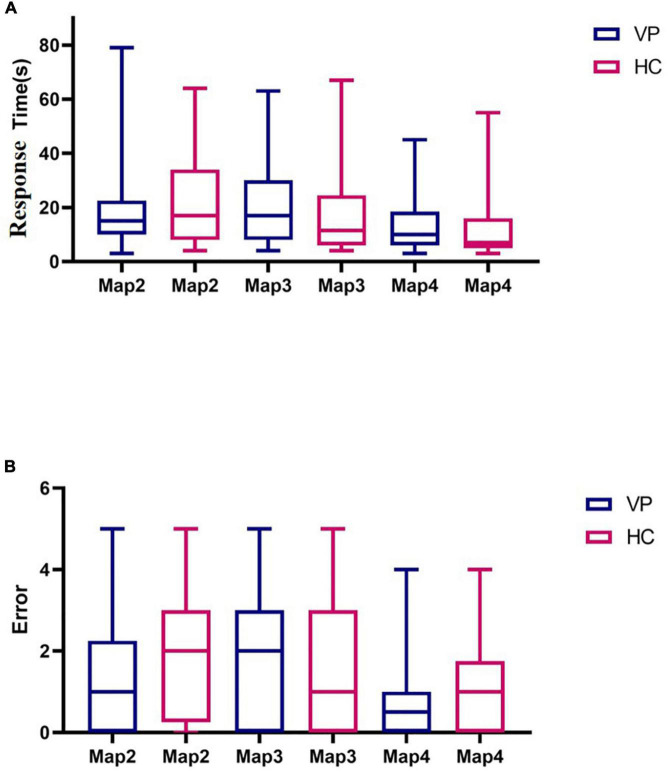
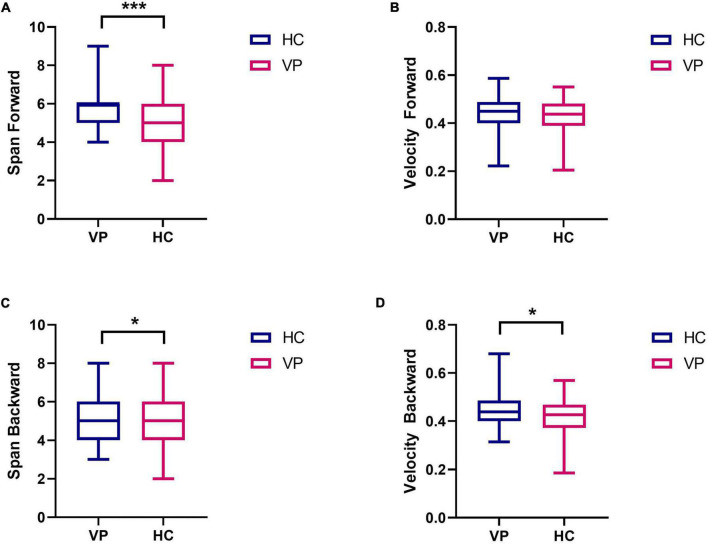
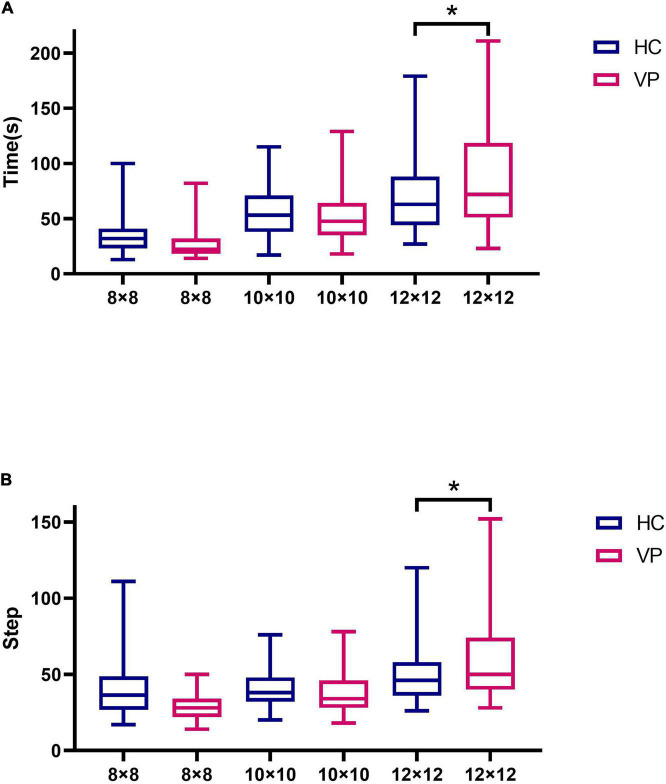
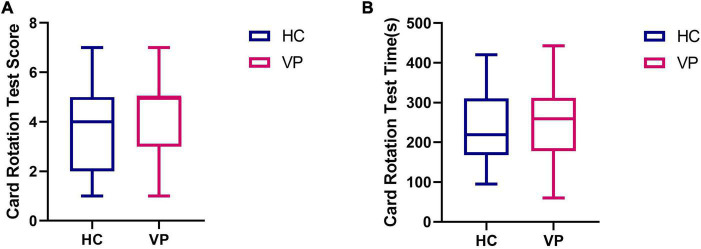
In the weeding test, the HC group had a significantly longer span and faster velocity backward than did the VP group. In the 12 × 12 maze, statistically significant differences in step and time were observed between the two groups, with VP taking longer time and more steps. In the mental rotation task, no significant difference was observed between the two groups. Similarly, no significant difference was found in the performance of the two groups on maps 2, 3, and 4 in the 3D driving task.
Thus, impaired visuospatial cognition in patients with vestibular dysfunction is primarily related to spatial memory and navigation. VCAS is a clinically applicable visuospatial cognitive ability test for VP.
前庭系统在解剖学上与大脑皮层、海马体和杏仁核的广泛区域相连。然而,关注前庭损伤对视空间认知能力影响的研究有限。本研究旨在开发一种基于移动平板电脑的前庭认知评估系统(VCAS),增强测试条件的动态性和三维(3D)特性,并全面评估前庭功能障碍患者的视空间认知能力。
首先,基于专家访谈确定VCAS评估维度(空间记忆、空间导航和心理旋转)和测试内容(除草、迷宫、卡片旋转和3D驾驶测试)。其次,基于Unity3D开发VCAS,使用C#语言和ILruntime热更新框架开发技术,结合A*算法、质数树算法和动态路线渲染。此外,利用相关游戏业务逻辑构建在线测试。最后,招募健康对照(HC)和78例眩晕患者(VP)进行VCAS测试。通过随机对照的测试结果验证VCAS的有效性。
在除草测试中,HC组的向后跨度明显更长,速度更快,优于VP组。在12×12迷宫中,两组在步数和时间上存在统计学显著差异,VP组花费的时间更长,步数更多。在心理旋转任务中,两组之间未观察到显著差异。同样,在3D驾驶任务中,两组在地图2、3和4上的表现也未发现显著差异。
因此,前庭功能障碍患者的视空间认知受损主要与空间记忆和导航有关。VCAS是一种适用于VP患者的临床视空间认知能力测试。