Ai Dongmei, Wang Mingmei, Zhang Qingchuan, Cheng Longwei, Wang Yishu, Liu Xiuqin, Xia Li C
School of Mathematics and Physics, University of Science and Technology Beijing, Beijing, China.
National Engineering Laboratory for Agri-Product Quality Traceability, Beijing Technology and Business University, Beijing, China.
Front Genet. 2023 Feb 23;14:1148470. doi: 10.3389/fgene.2023.1148470. eCollection 2023.
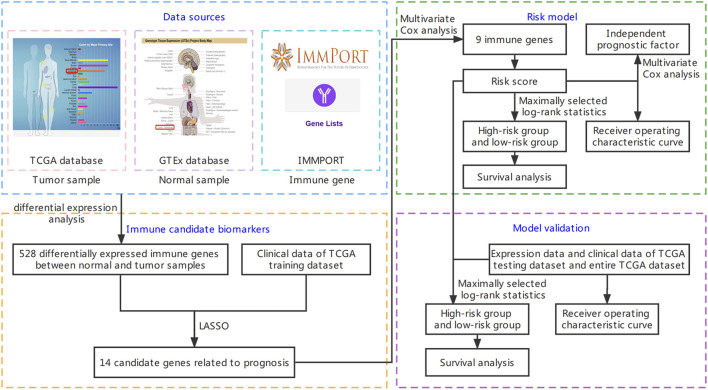
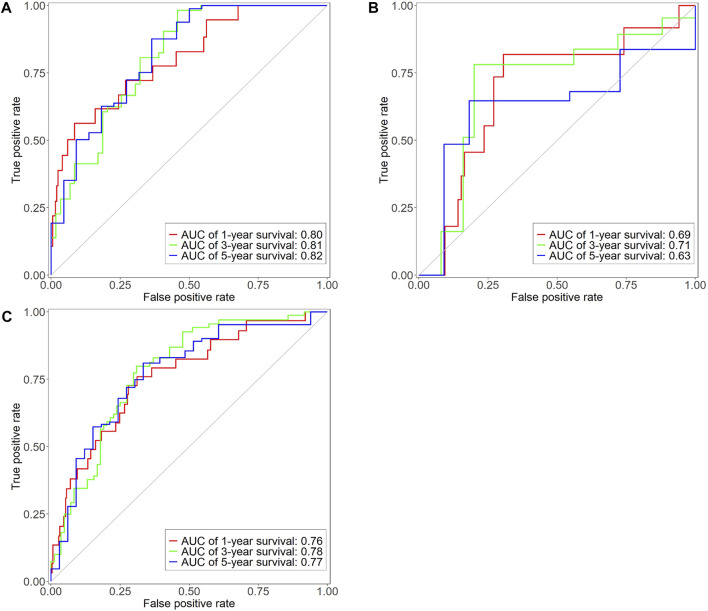
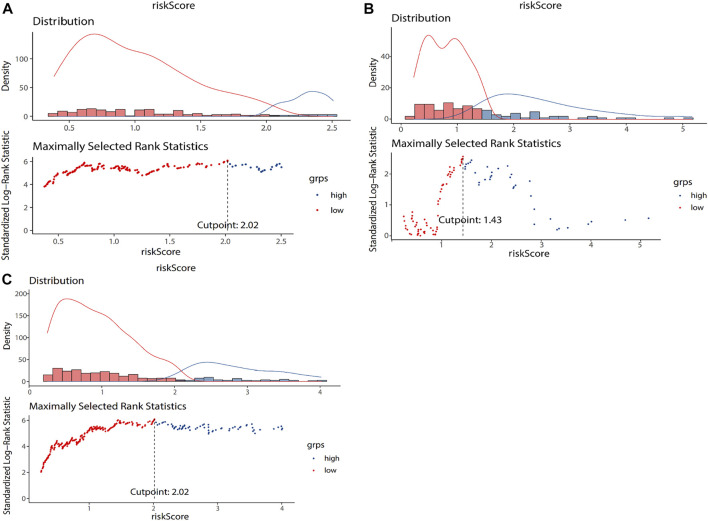
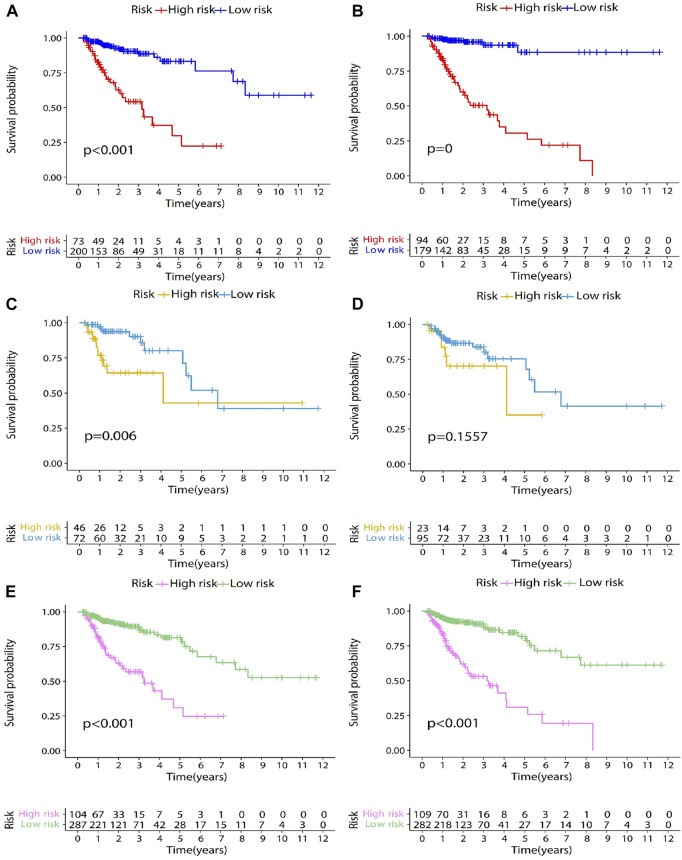
Colon adenocarcinoma is the most common type of colorectal cancer. The prognosis of advanced colorectal cancer patients who received treatment is still very poor. Therefore, identifying new biomarkers for prognosis prediction has important significance for improving treatment strategies. However, the power of biomarker analyses was limited by the used sample size of individual database. In this study, we combined Genotype-Tissue Expression (GTEx) and The Cancer Genome Atlas (TCGA) databases to expand the number of healthy tissue samples. We screened differentially expressed genes between the GTEx healthy samples and TCGA tumor samples. Subsequently, we applied least absolute shrinkage and selection operator (LASSO) regression and multivariate Cox analysis to identify nine prognosis-related immune genes: , , , , , , , , and . We computed the risk scores of samples based on the expression levels of these genes and divided patients into high- and low-risk groups according to this risk score. Survival analysis results showed a significant difference in survival rate between the two risk groups. The high-risk group had a significantly lower overall survival rate and poorer prognosis. We found the receiver operating characteristic based on the risk score was showed to accurately predict patients' prognosis. These prognosis-related immune genes may be potential biomarkers for colorectal cancer diagnosis and treatment. Our open-source code is freely available from GitHub at https://github.com/gutmicrobes/Prognosis-model.git.
结肠腺癌是结直肠癌最常见的类型。接受治疗的晚期结直肠癌患者的预后仍然很差。因此,识别用于预后预测的新生物标志物对改善治疗策略具有重要意义。然而,生物标志物分析的效能受到单个数据库所使用样本量的限制。在本研究中,我们合并了基因型-组织表达(GTEx)和癌症基因组图谱(TCGA)数据库,以增加健康组织样本的数量。我们筛选了GTEx健康样本与TCGA肿瘤样本之间的差异表达基因。随后,我们应用最小绝对收缩和选择算子(LASSO)回归和多变量Cox分析来识别9个与预后相关的免疫基因: , , , , , , , 和 。我们根据这些基因的表达水平计算样本的风险评分,并根据该风险评分将患者分为高风险组和低风险组。生存分析结果显示,两个风险组之间的生存率存在显著差异。高风险组的总生存率显著较低,预后较差。我们发现基于风险评分的受试者工作特征曲线能够准确预测患者的预后。这些与预后相关的免疫基因可能是结直肠癌诊断和治疗的潜在生物标志物。我们的开源代码可从GitHub上免费获取,网址为https://github.com/gutmicrobes/Prognosis-model.git。