Chiangkhong Araya, Suwanwong Charin, Wongrostrai Yupha
Kuakarun Faculty of Nursing, Navamindradhiraj University, Bangkok, Thailand.
Behavioral Science Research Institute, Srinakharinwirot University, Bangkok, Thailand.
Heliyon. 2023 Feb 22;9(3):e13949. doi: 10.1016/j.heliyon.2023.e13949. eCollection 2023 Mar.
Stroke recurrence is increasing in the working-age population. This study aimed to summarize and evaluate the risk factors for recurrent stroke among the working-age population.
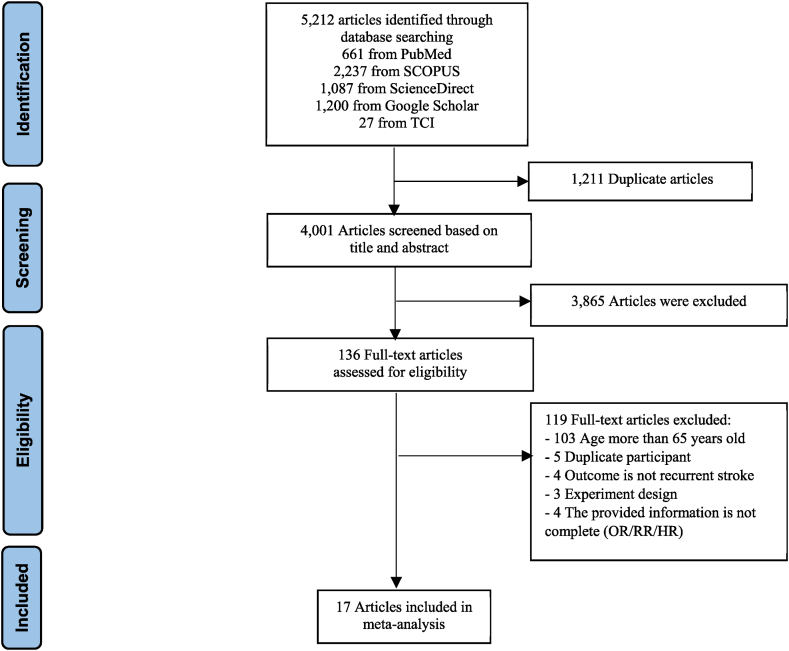
Relevant studies were extracted from several databases following Preferred Reporting Items for Systematic Reviews and Meta-Analyses guidelines. Fixed- or random-effects estimates of the pooled odds ratio (OR) and 95% confidence interval (CI) of risk factors for recurrent stroke were generated based on heterogeneity. Subgroup and publication bias analyses were also performed.
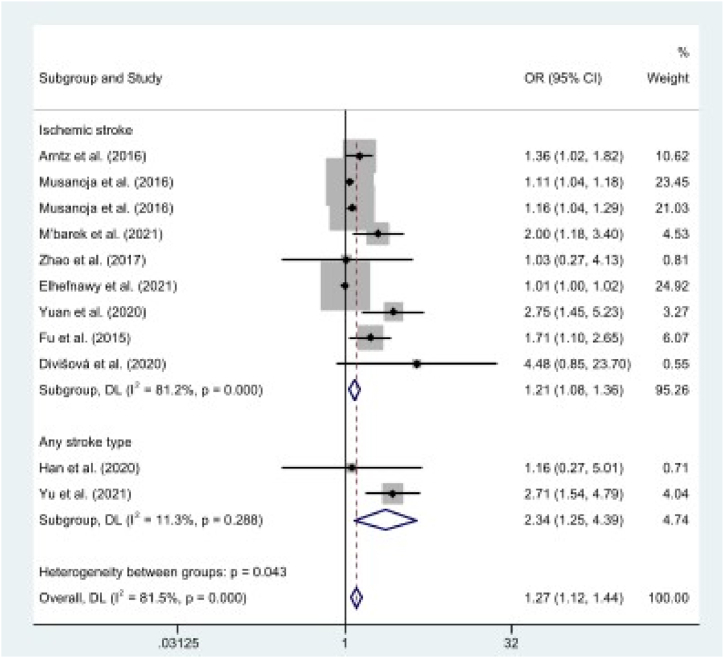
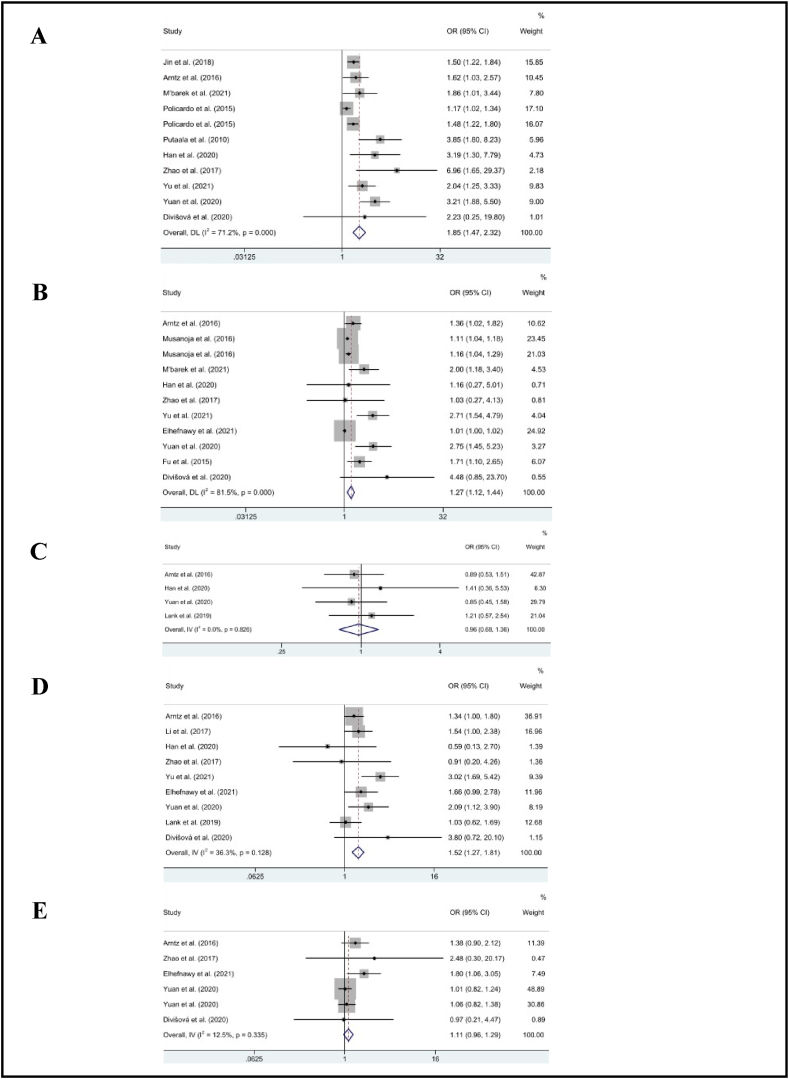
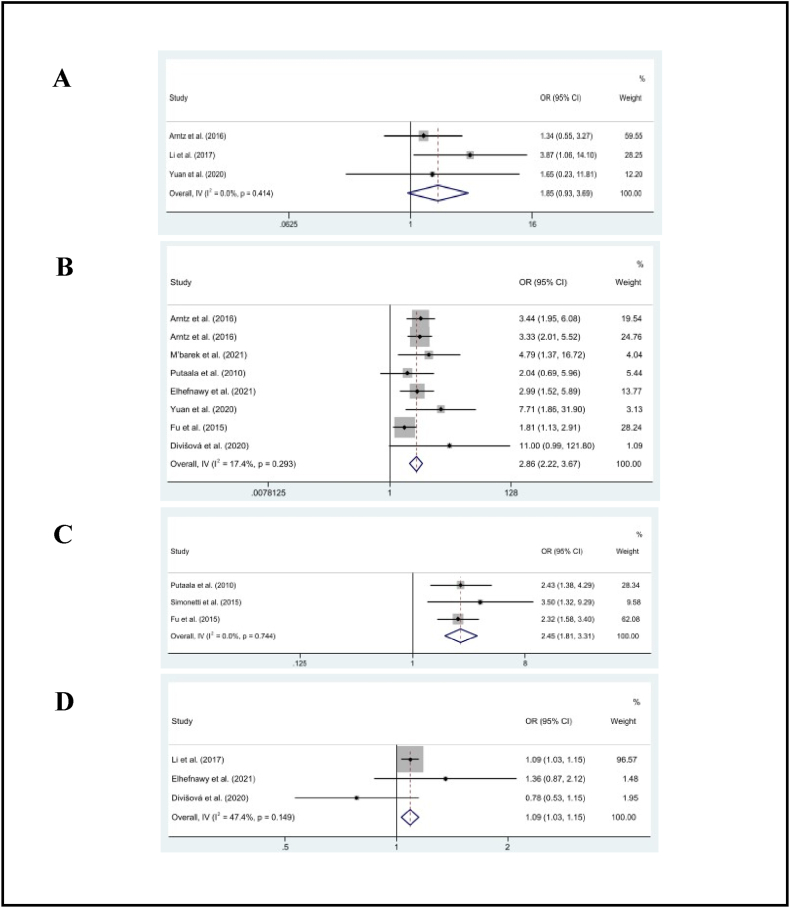
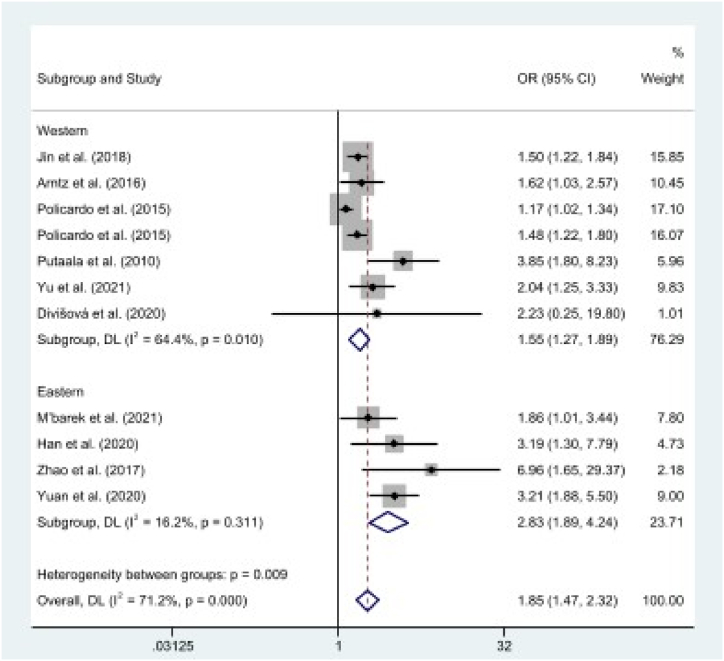
Seventeen studies were included in the meta-analysis. Pooled effects results revealed that the risk of recurrent stroke in the working-age group was as follows: Diabetes (OR = 1.85, 95% CI: 1.47, 2.32), hypertension (OR = 1.27, 95% CI: 1.12, 1.44), smoking (OR = 1.52, 95% CI: 1.27, 1.81), history of cardiac disease (OR = 2.86, 95% CI: 2.22, 3.67), history of stroke (OR = 2.45, 95% CI: 1.81, 3.31), and National Institutes of Health stroke severity score (OR = 1.09, 95% CI: 1.03, 1.15).
These findings suggest that several factors, such as diabetes, hypertension, smoking, history of cardiac disease and stroke, and severity of a stroke, are potential risk factors for recurrent stroke in the working-age group. Therefore, strategies to reduce those risk factors should be adopted and attention paid to prevent recurrent stroke among working-age populations.
中风复发在工作年龄人群中呈上升趋势。本研究旨在总结和评估工作年龄人群中风复发的危险因素。
按照系统评价和Meta分析的首选报告项目指南,从多个数据库中提取相关研究。根据异质性生成复发性中风危险因素的合并比值比(OR)和95%置信区间(CI)的固定效应或随机效应估计值。还进行了亚组分析和发表偏倚分析。
17项研究纳入了Meta分析。合并效应结果显示,工作年龄组复发性中风的风险如下:糖尿病(OR = 1.85,95% CI:1.47,2.32)、高血压(OR = 1.27,95% CI:1.12,1.44)、吸烟(OR = 1.52,95% CI:1.27,1.81)、心脏病史(OR = 2.86,95% CI:2.22,3.67)、中风史(OR = 2.45,95% CI:1.81,3.31)和美国国立卫生研究院中风严重程度评分(OR = 1.09,95% CI:1.03,1.15)。
这些发现表明,糖尿病、高血压、吸烟、心脏病史和中风史以及中风严重程度等几个因素是工作年龄组复发性中风的潜在危险因素。因此,应采取策略降低这些危险因素,并重视预防工作年龄人群中风复发。