Department of Pathology, Seoul National University Bundang Hospital, Seongnam, Republic of Korea.
Department of Pathology, Seoul National University Hospital, Seoul National University College of Medicine, Seoul, Republic of Korea.
Cancer Med. 2023 May;12(9):10371-10384. doi: 10.1002/cam4.5769. Epub 2023 Mar 14.
We aimed to determine the molecular and immune microenvironment characteristics of HER2-positive gastric cancer (GC) related to the patient's response to first-line trastuzumab-based treatment.
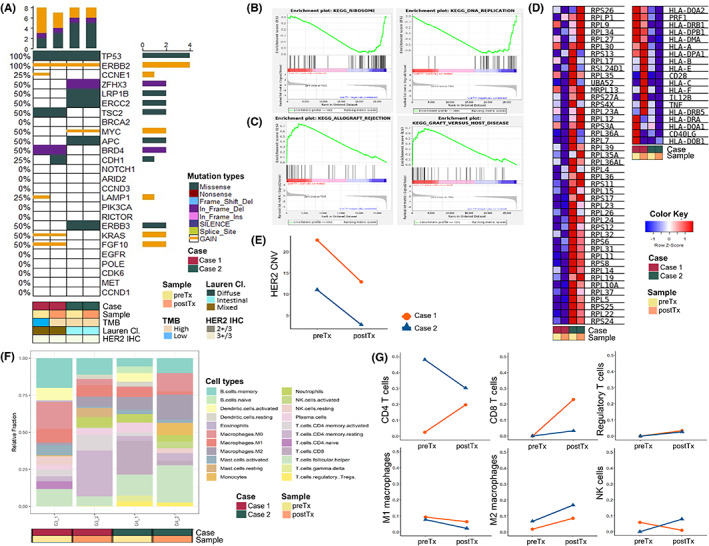
Eighty-three cases of HER2-positive advanced gastric adenocarcinoma patients treated with trastuzumab were enrolled. Targeted deep sequencing and transcriptome analysis were performed on selected 21 cases (exploration cohort) along with two post-treatment samples. The results were compared between patients progressed before 6 months (Group 2) and others (Group 1), and were validated by FISH and immunohistochemistry in total cohort. Tumor-infiltrating immune cells were evaluated using RNA sequencing data and multiplex immunohistochemistry. Progression-free survival (PFS) analysis was performed.
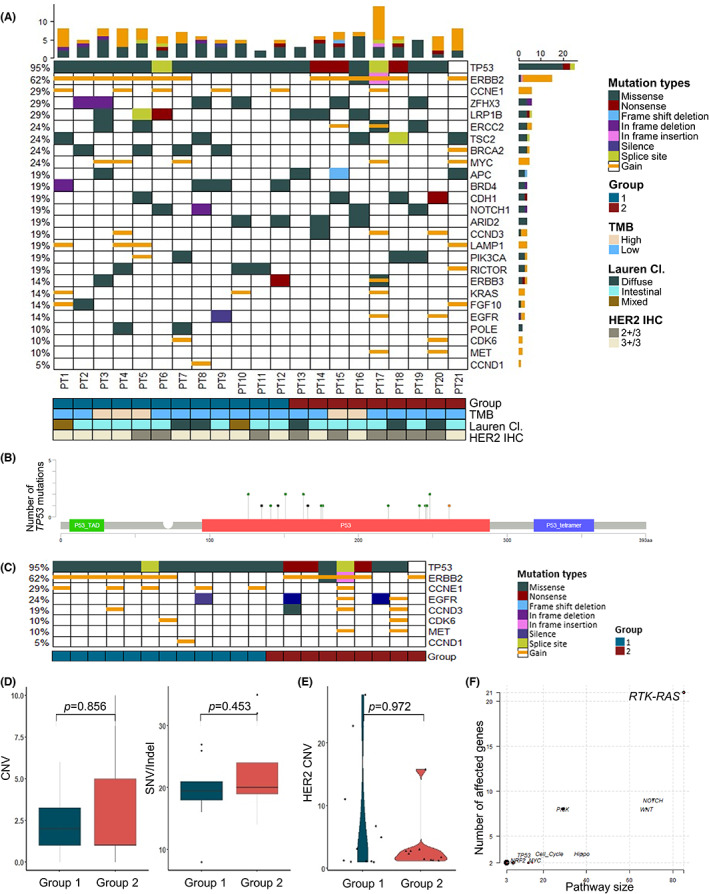
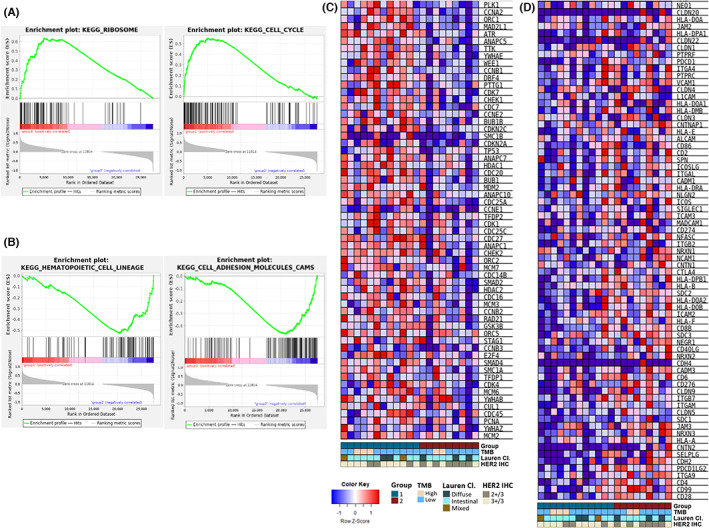
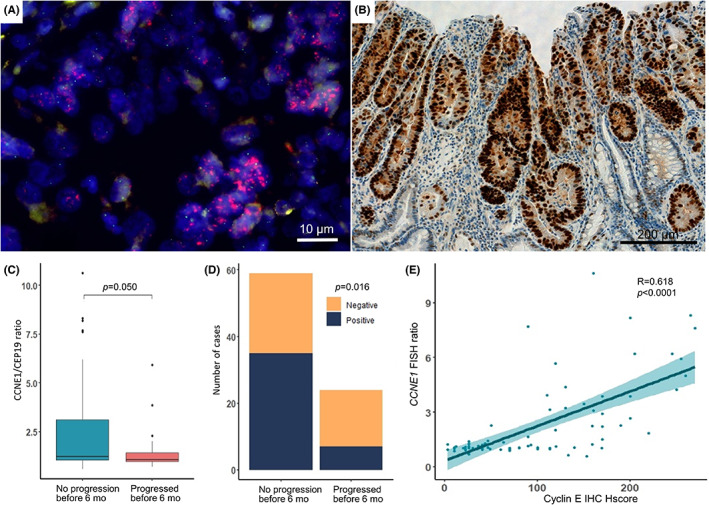
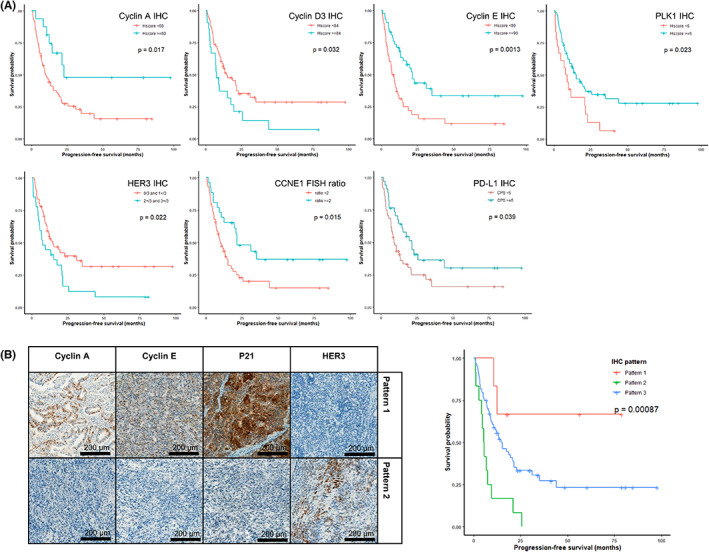
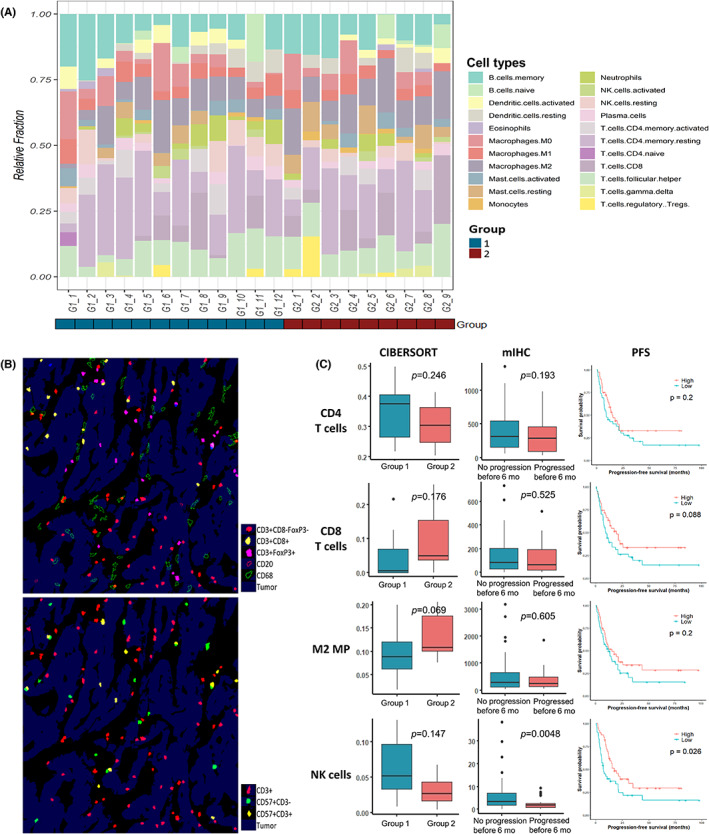
Group 1 showed frequent amplification of G1/S cell cycle checkpoint-related genes and upregulated KEGG pathways related to cell proliferation. In contrast, Group 2 had more frequent EGFR, HER3, and MET amplification and higher RNA expression in immune-related KEGG pathways than Group 1. In total cohort, significant predictors of better PFS were cell cycle-related including CCNE1 amplification, Cyclin A and PLK1 overexpression, and decreased Cyclin D3 and HER3 expression (p < 0.05), or immune-related including high density of CD3 CD57 NK cells and PD-L1 combined positive score ≥5 (p < 0.05). The best prognostic predictors were a combination of Cyclin A, Cyclin E, p21, and HER3 (p < 0.001).
HER2-positive GC with favorable response to trastuzumab were characterized by cell cycle-related gene alterations and increased CD3 CD57 NK cell infiltration. These findings would be helpful to the fine modulation of therapeutic strategies for patients with HER2-positive GC.
本研究旨在确定与患者对一线曲妥珠单抗治疗反应相关的 HER2 阳性胃癌(GC)的分子和免疫微环境特征。
纳入 83 例接受曲妥珠单抗治疗的 HER2 阳性晚期胃腺癌患者。对选定的 21 例患者(探索队列)以及 2 例治疗后样本进行靶向深度测序和转录组分析。将进展时间<6 个月(组 2)和>6 个月(组 1)的患者进行比较,并在总队列中通过 FISH 和免疫组化进行验证。使用 RNA 测序数据和多重免疫组化评估肿瘤浸润免疫细胞。进行无进展生存期(PFS)分析。
组 1 表现出 G1/S 细胞周期检查点相关基因的频繁扩增和与细胞增殖相关的 KEGG 途径上调。相比之下,组 2 中 EGFR、HER3 和 MET 扩增更为频繁,免疫相关 KEGG 途径的 RNA 表达更高。在总队列中,细胞周期相关的有意义的 PFS 预测因子包括 CCNE1 扩增、Cyclin A 和 PLK1 过表达以及 Cyclin D3 和 HER3 表达降低(p<0.05),或免疫相关的包括 CD3 CD57 NK 细胞高密度和 PD-L1 联合阳性评分≥5(p<0.05)。最佳预后预测因子是 Cyclin A、Cyclin E、p21 和 HER3 的组合(p<0.001)。
对曲妥珠单抗有良好反应的 HER2 阳性 GC 表现为细胞周期相关基因改变和 CD3 CD57 NK 细胞浸润增加。这些发现有助于精细调节 HER2 阳性 GC 患者的治疗策略。