Faculty of Civil Engineering, K.N. Toosi University of Technology, No. 1346, Vali Asr Street, Mirdamad Intersection, Tehran, Iran.
Department of Polymer Engineering, Amirkabir University of Technology, Tehran, 1591634311, Iran.
Sci Rep. 2023 Mar 14;13(1):4266. doi: 10.1038/s41598-023-29898-x.
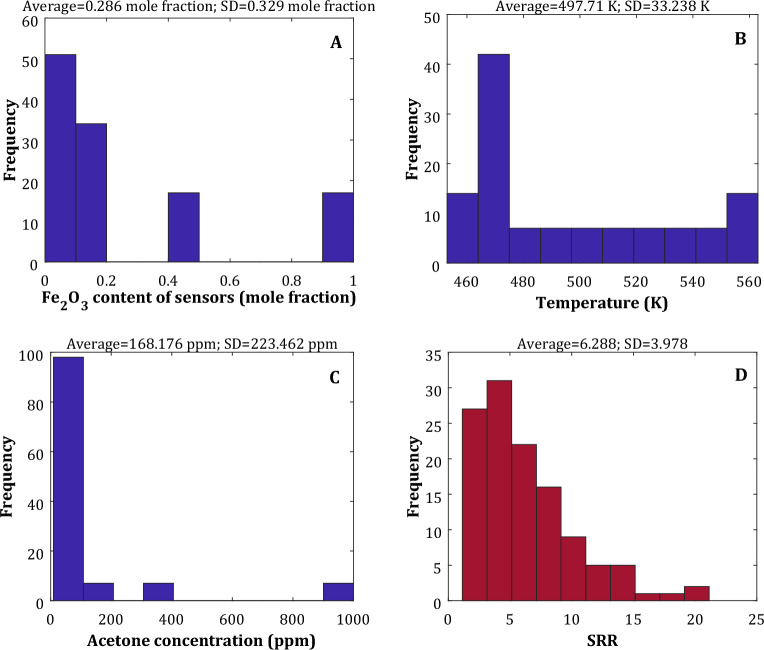
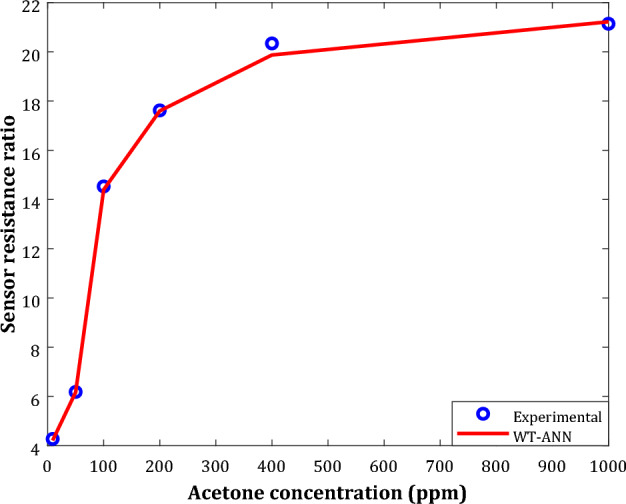
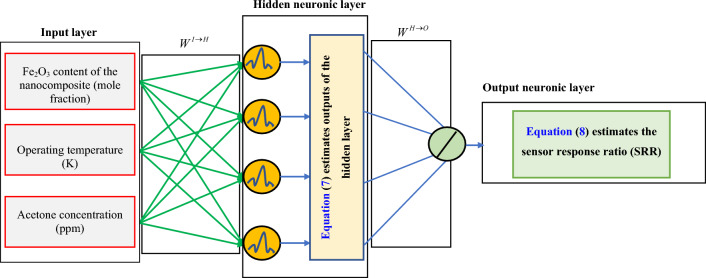
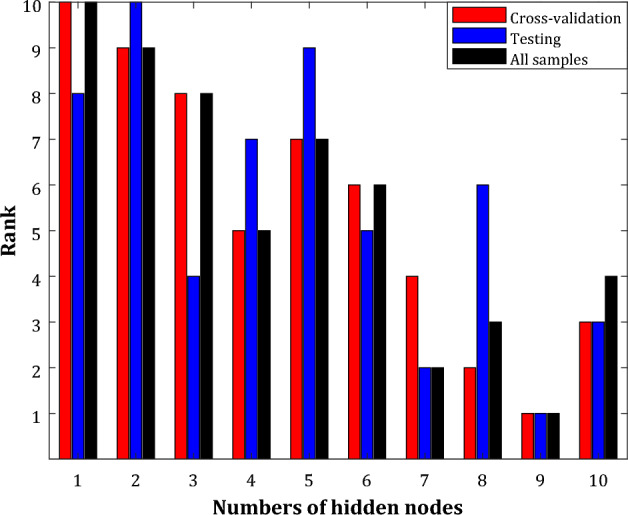
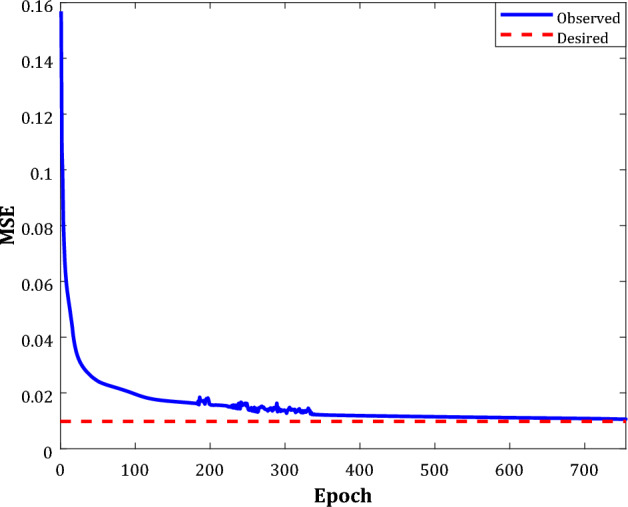
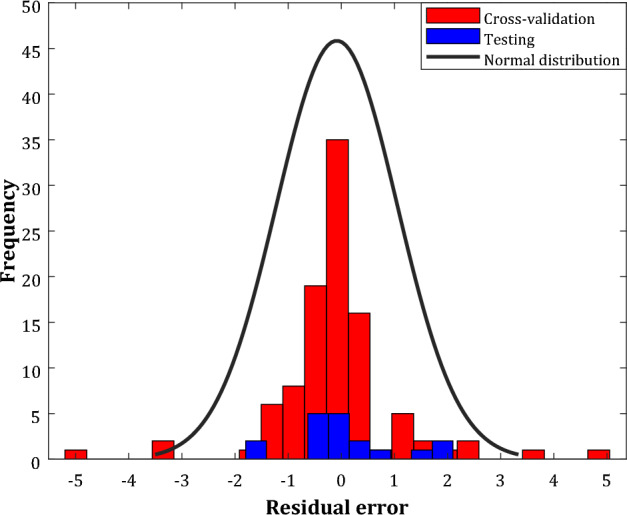
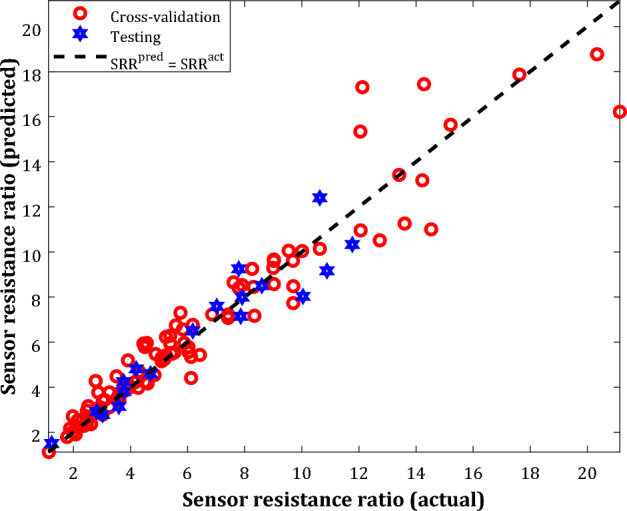
This study applies a hybridized wavelet transform-artificial neural network (WT-ANN) model to simulate the acetone detecting ability of the Indium oxide/Iron oxide (InO/FeO) nanocomposite sensors. The WT-ANN has been constructed to extract the sensor resistance ratio (SRR) in the air with respect to the acetone from the nanocomposite chemistry, operating temperature, and acetone concentration. The performed sensitivity analyses demonstrate that a single hidden layer WT-ANN with nine nodes is the highest accurate model for automating the acetone-detecting ability of the InO/FeO sensors. Furthermore, the genetic algorithm has fine-tuned the shape-related parameters of the B-spline wavelet transfer function. This model accurately predicts the SRR of the 119 nanocomposite sensors with a mean absolute error of 0.7, absolute average relative deviation of 10.12%, root mean squared error of 1.14, and correlation coefficient of 0.95813. The InO-based nanocomposite with a 15 mol percent of FeO is the best sensor for detecting acetone at wide temperatures and concentration ranges. This type of reliable estimator is a step toward fully automating the gas-detecting ability of InO/FeO nanocomposite sensors.
本研究应用了一种混合小波变换-人工神经网络(WT-ANN)模型来模拟氧化铟/氧化铁(InO/FeO)纳米复合材料传感器对丙酮的检测能力。WT-ANN 是为了从纳米复合材料化学、工作温度和丙酮浓度中提取出传感器在空气中的电阻比(SRR)而构建的。进行的灵敏度分析表明,具有九个节点的单个隐藏层 WT-ANN 是自动化 InO/FeO 传感器丙酮检测能力的最高准确模型。此外,遗传算法还对 B 样条小波传递函数的形状相关参数进行了微调。该模型准确地预测了 119 个纳米复合材料传感器的 SRR,平均绝对误差为 0.7,绝对平均相对偏差为 10.12%,均方根误差为 1.14,相关系数为 0.95813。在宽温度和浓度范围内,基于 InO 的纳米复合材料中含有 15 mol%的 FeO 是检测丙酮的最佳传感器。这种可靠的估计器是朝着完全自动化 InO/FeO 纳米复合材料传感器的气体检测能力迈出的一步。