Surgical Oncology, Huntsman Cancer Institute, University of Utah, Salt Lake City, Utah.
X4 Pharmaceuticals, Boston, Massachusetts.
Cancer Res Commun. 2022 Aug 31;2(8):904-913. doi: 10.1158/2767-9764.CRC-22-0090. eCollection 2022 Aug.
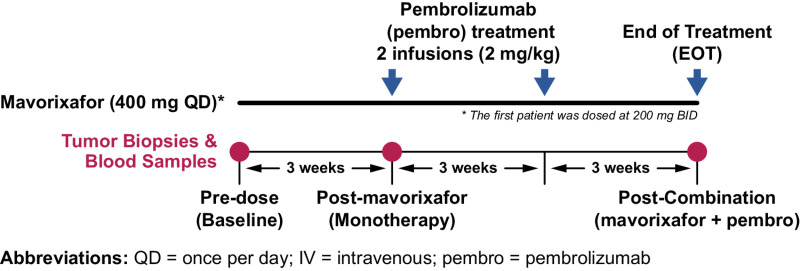
Mavorixafor is an oral, selective inhibitor of the CXCR4 chemokine receptor that modulates immune cell trafficking. A biomarker-driven phase Ib study (NCT02823405) was conducted in 16 patients with melanoma to investigate the hypothesis that mavorixafor favorably modulates immune cell profiles in the tumor microenvironment (TME) and to evaluate the safety of mavorixafor alone and in combination with pembrolizumab.
Serial biopsies of melanoma lesions were assessed after 3 weeks of mavorixafor monotherapy and after 6 weeks of combination treatment for immune cell markers by NanoString analysis for gene expression and by multiplexed immunofluorescent staining for protein expression. Serum samples taken at biopsy timepoints were evaluated for key chemokine and cytokine alterations using the Myriad Rules Based Medicine multiplex immunoassays.
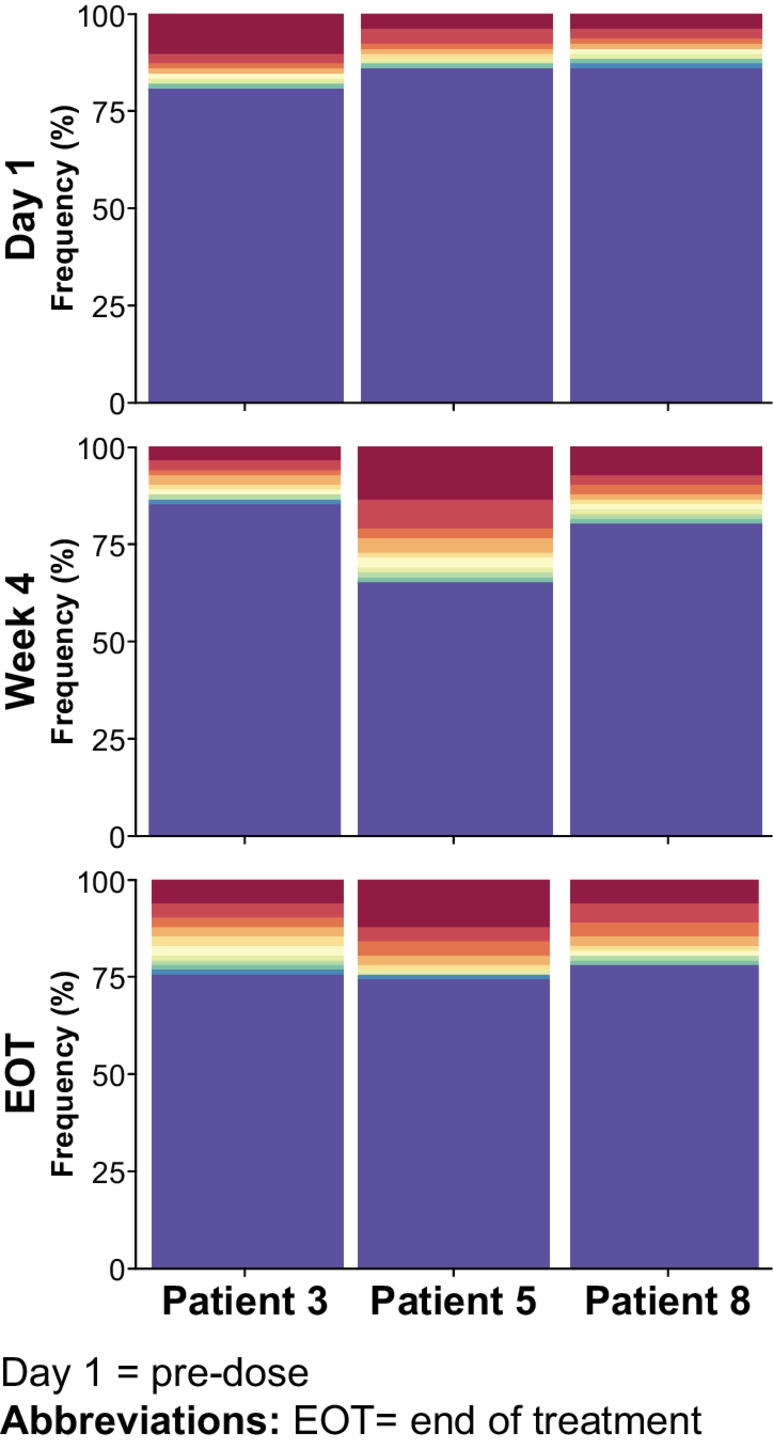
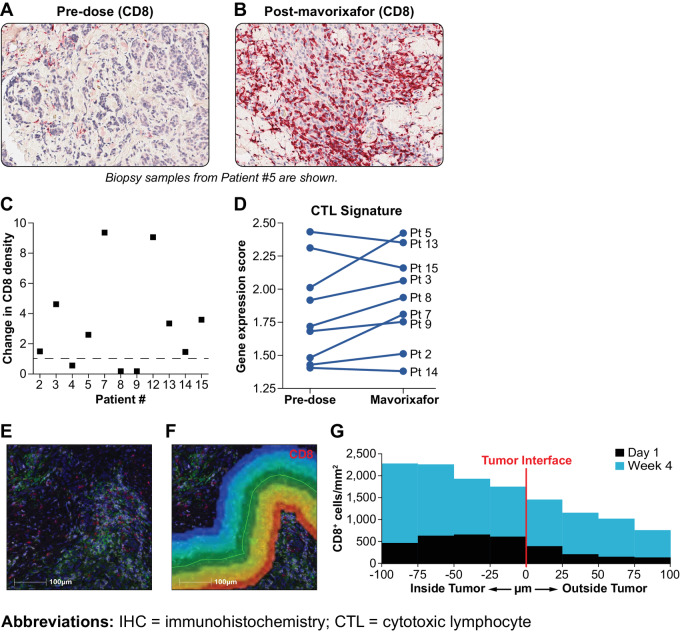
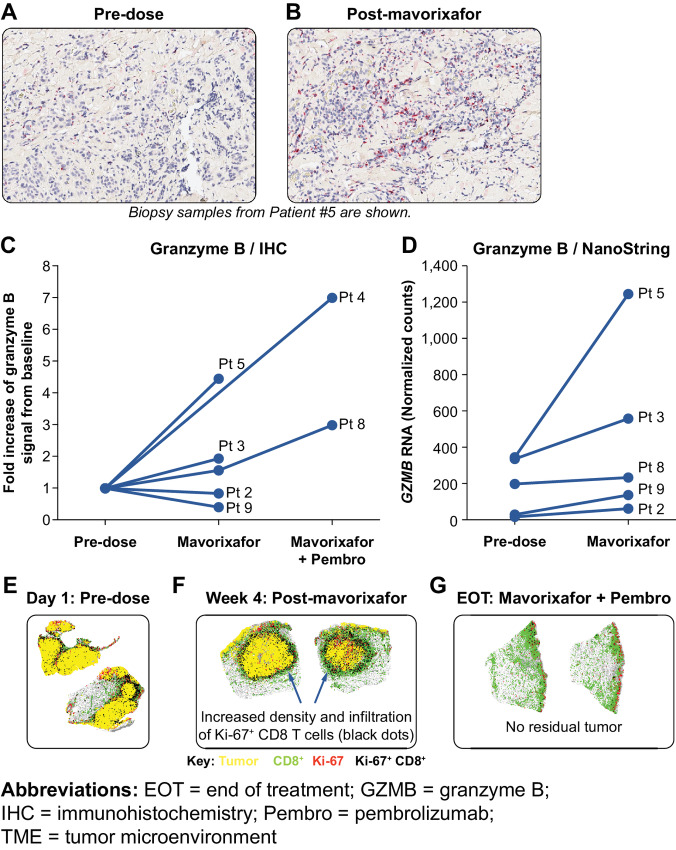
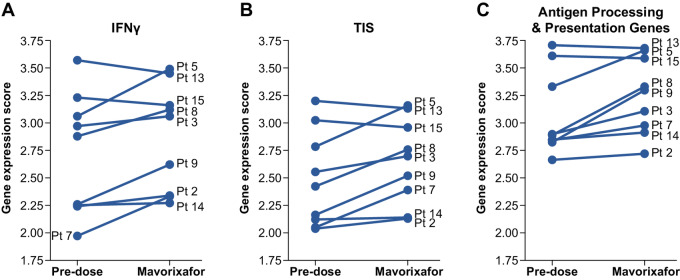
Within the TME, mavorixafor alone increased CD8 T-cell infiltration, granzyme B signal, antigen presentation machinery, and both tumor inflammatory signature (TIS) and IFNγ gene expression signature scores. Increases in the key serum cytokines CXCL9 and CXCL10 were further enhanced when mavorixafor was combined with pembrolizumab. Adverse events (AE), as assessed by the investigator according to NCI Common Terminology Criteria for Adverse Events (v4.03), related to either mavorixafor or pembrolizumab (≥15%) were diarrhea, fatigue, maculopapular rash, and dry eye. Reported AEs were all ≤ grade 3.
CONCLUSION/DISCUSSION: Treatment with single-agent mavorixafor resulted in enhanced immune cell infiltration and activation in the TME, leading to increases in TIS and IFNγ gene signatures. Mavorixafor as a single agent, and in combination with pembrolizumab, has an acceptable safety profile. These data support further investigation of the use of mavorixafor for patients unresponsive to checkpoint inhibitors.
Despite survival improvements in patients with melanoma treated with checkpoint inhibitor therapy, a significant unmet medical need exists for therapies that enhance effectiveness. We propose that mavorixafor sensitizes the melanoma tumor microenvironment and enhances the activity of checkpoint inhibitors, and thereby may translate to a promising treatment for broader patient populations.
马沃里昔福是一种口服、选择性趋化因子受体 4(CXCR4)抑制剂,可调节免疫细胞的迁移。一项基于生物标志物的 Ib 期研究(NCT02823405)在 16 名黑色素瘤患者中进行,旨在研究马沃里昔福是否能改善肿瘤微环境(TME)中的免疫细胞特征的假设,并评估马沃里昔福单药及联合帕博利珠单抗的安全性。
在马沃里昔福单药治疗 3 周和联合治疗 6 周后,通过纳诺格分析基因表达和多重免疫荧光染色检测蛋白质表达,对黑色素瘤病变的连续活检进行评估,以检测免疫细胞标志物。在活检时间点采集的血清样本使用 Myriad Rules Based Medicine 多重免疫分析评估关键趋化因子和细胞因子的变化。
在 TME 中,马沃里昔福单药治疗可增加 CD8 T 细胞浸润、颗粒酶 B 信号、抗原呈递机制以及肿瘤炎症特征(TIS)和 IFNγ 基因表达特征评分。当马沃里昔福与帕博利珠单抗联合使用时,关键血清细胞因子 CXCL9 和 CXCL10 的增加进一步增强。根据 NCI 常见不良事件术语标准(v4.03),研究者评估的不良事件(AE)与马沃里昔福或帕博利珠单抗相关(≥15%)包括腹泻、疲劳、斑丘疹、干眼。报告的不良事件均为 3 级以下。
结论/讨论:单一药物马沃里昔福治疗可导致 TME 中免疫细胞浸润和激活增强,从而导致 TIS 和 IFNγ 基因特征增加。马沃里昔福单药及联合帕博利珠单抗的安全性良好。这些数据支持进一步研究马沃里昔福在对检查点抑制剂无反应的患者中的应用。
尽管接受检查点抑制剂治疗的黑色素瘤患者的生存率有所提高,但仍存在重大的未满足的医疗需求,需要开发能提高疗效的疗法。我们提出,马沃里昔福使黑色素瘤肿瘤微环境敏感,并增强检查点抑制剂的活性,因此可能为更广泛的患者群体提供一种有前途的治疗方法。