Mutono Nyamai, Wright Jim A, Mutunga Mumbua, Mutembei Henry, Thumbi S M
Wangari Maathai Institute for Peace and Environmental Studies, University of Nairobi, Nairobi, Kenya.
Center for Epidemiological Modelling and Analysis, University of Nairobi, Nairobi, Kenya.
Front Health Serv. 2022 Nov 16;2:788173. doi: 10.3389/frhs.2022.788173. eCollection 2022.
Geographic accessibility is an important determinant of healthcare utilization and is critical for achievement of universal health coverage. Despite the high disease burden and severe traffic congestion in many African cities, few studies have assessed how traffic congestion impacts geographical access to healthcare facilities and to health professionals in these settings. In this study, we assessed the impact of traffic congestion on access to healthcare facilities, and to the healthcare professionals across the healthcare facilities.
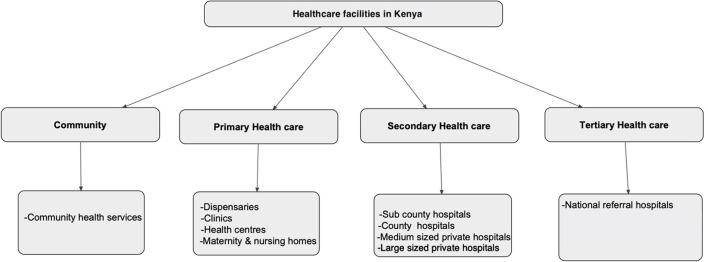
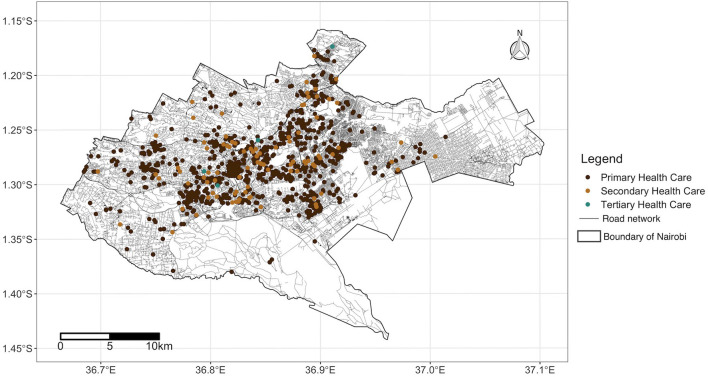
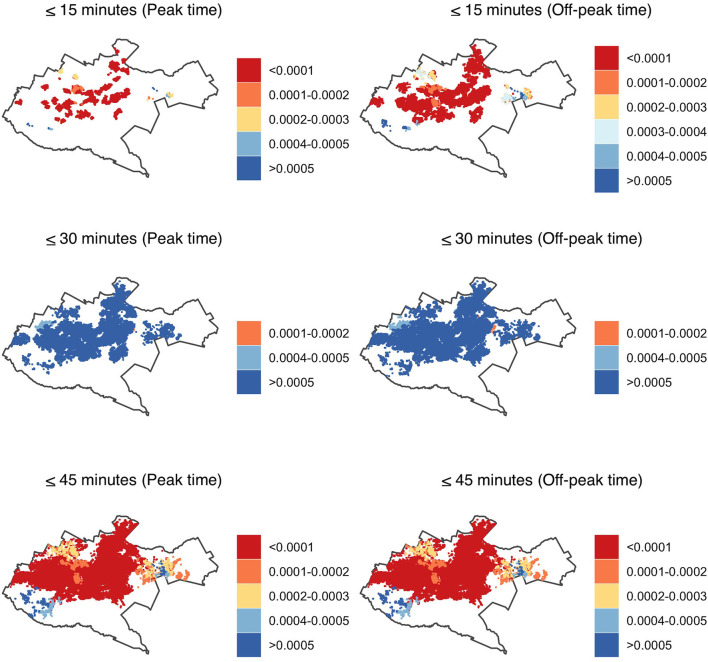
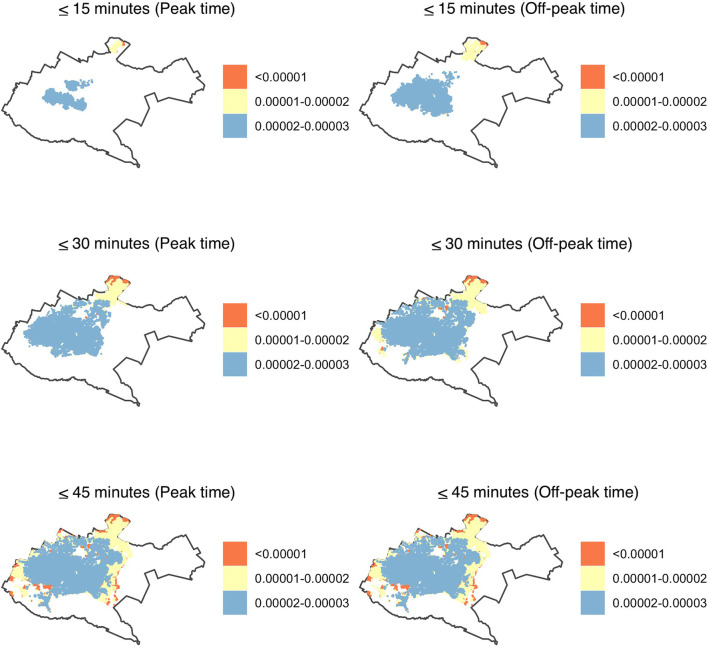
Using data on health facilities obtained from the Ministry of Health in Kenya, we mapped 944 primary, 94 secondary and four tertiary healthcare facilities in Nairobi County. We then used traffic probe data to identify areas within a 15-, 30- and 45-min drive from each health facility during peak and off-peak hours and calculated the proportion of the population with access to healthcare in the County. We employed a 2-step floating catchment area model to calculate the ratio of healthcare and healthcare professionals to population during these times.
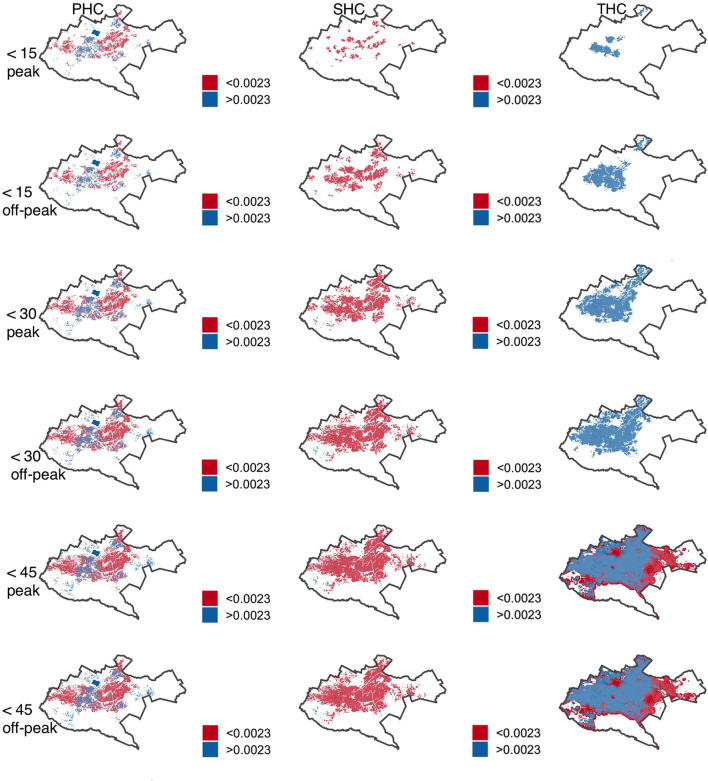
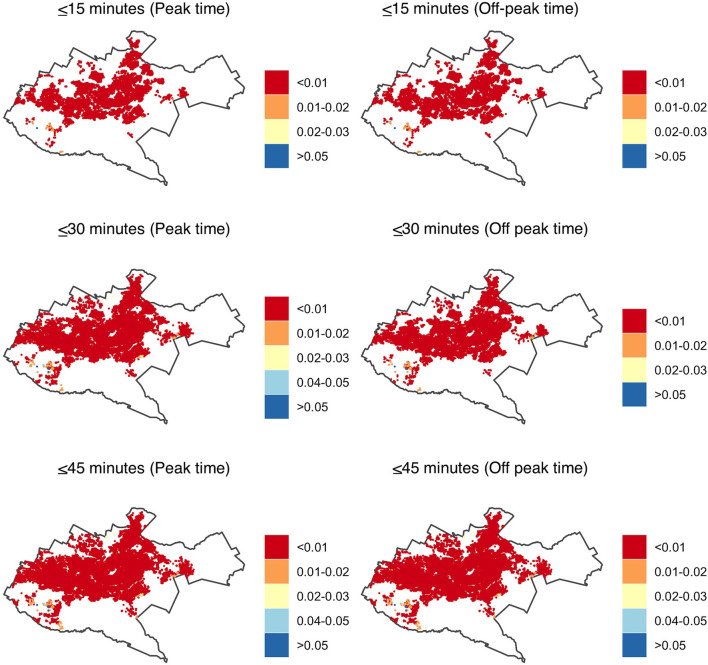
During peak hours, <70% of Nairobi's 4.1 million population was within a 30-min drive from a health facility. This increased to >75% during off-peak hours. In 45 min, the majority of the population had an accessibility index of one health facility accessible to more than 100 people (<0.01) for primary health care facilities, one to 10,000 people for secondary facilities, and two health facilities per 100,000 people for tertiary health facilities. Of people with access to health facilities, a sub-optimal ratio of <4.45 healthcare professionals per 1,000 people was observed in facilities offering primary and secondary healthcare during peak and off-peak hours.
Our study shows access to healthcare being negatively impacted by traffic congestion, highlighting the need for multisectoral collaborations between urban planners, health sector and policymakers to optimize health access for the city residents. Additionally, growing availability of traffic probe data in African cities should enable similar analysis and understanding of healthcare access for city residents in other countries on the continent.
地理可达性是医疗服务利用的重要决定因素,对于实现全民健康覆盖至关重要。尽管许多非洲城市疾病负担高且交通拥堵严重,但很少有研究评估交通拥堵如何影响这些地区获得医疗设施和医疗专业人员的地理可达性。在本研究中,我们评估了交通拥堵对获得医疗设施以及对各医疗设施中医疗专业人员的影响。
利用从肯尼亚卫生部获得的卫生设施数据,我们绘制了内罗毕县944家初级、94家中级和4家三级医疗设施的地图。然后,我们使用交通探测数据确定在高峰和非高峰时段距离每个医疗设施15分钟、30分钟和45分钟车程内的区域,并计算该县有机会获得医疗服务的人口比例。我们采用两步浮动集水区模型来计算这些时间段内医疗设施和医疗专业人员与人口的比例。
在高峰时段,内罗毕410万人口中不到70%的人在30分钟车程内可到达医疗设施。在非高峰时段,这一比例增加到超过75%。在45分钟内,大多数人口的可达性指数为:初级卫生保健设施每100多人可使用一个设施(<0.01),中级设施每10000人可使用一个设施,三级卫生设施每10万人可使用两个设施。在可获得医疗设施的人群中,在高峰和非高峰时段提供初级和中级医疗服务的设施中,每1000人拥有的医疗专业人员比例低于4.45,处于次优水平。
我们的研究表明交通拥堵对获得医疗服务产生了负面影响,凸显了城市规划者、卫生部门和政策制定者之间开展多部门合作以优化城市居民医疗服务可及性的必要性。此外,非洲城市中交通探测数据的日益普及应能使人们对该大陆其他国家城市居民的医疗服务可及性进行类似的分析和理解。